SHAWORDS

A society to which preestablished forms, crystallized by law, are repu — Peter Kropotkin

"A society to which preestablished forms, crystallized by law, are repugnant; which looks for harmony in an ever-changing and fugitive equilibrium between a multitude of varied forces and influences of every kind, following their own course, — these forces promoting themselves the energies which are favorable to their march toward progress, toward the liberty of developing in broad daylight and counter-balancing one another. This conception and ideal of society is certainly not new. On the contrary, when we analyze the history of popular institutions — the clan, the village community, the guild and even the urban commune of the Middle Ages in their first stages, — we find the same popular tendency to constitute a society according to this idea..."
P
Peter Kropotkin
Peter Kropotkin
author134 quotes

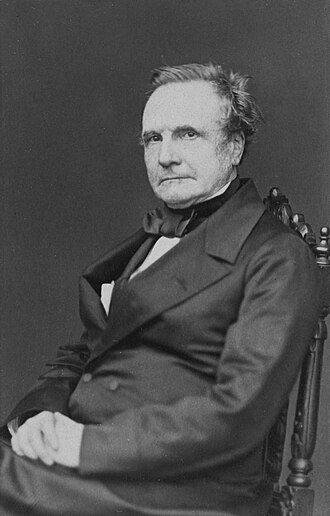
Pyotr Alexeyevich Kropotkin was a Russian anarchist political philosopher and geographer known as a proponent of anarchist communism.

More by Peter Kropotkin

View all →
Quote
"These societies already begin to encroach everywhere on the functions of the State, and strive to substitute free action of volunteers for that of a centralized State. In England we see arise insurance companies against theft; societies for coast defense, volunteer societies for land defense, which the State endeavors to get under its thumb, thereby making them instruments of domination, although their original aim was to do without the State. Were it not for Church and State, free societies would have already conquered the whole of the immense domain of education. And, in spite of all difficulties, they begin to invade this domain as well, and make their influence already felt. And when we mark the progress already accomplished in that direction, in spite of and against the State, which tries by all means to maintain its supremacy of recent origin; when we see how voluntary societies invade everything and are only impeded in their development by the State, we are forced to recognize a powerful tendency, a latent force in modern society."
P
Peter Kropotkin

Quote
"A soon as we study animals — not in laboratories and museums only, but in the forest and prairie, in the steppe and in the mountains — we at once perceive that though there is an immense amount of warfare and extermination going on amidst various species, and especially amidst various classes of animals, there is, at the same time, as much, or perhaps even more, of mutual support, mutual aid, and mutual defence amidst animals belonging to the same species or, at least, to the same society. Sociability is as much a law of nature as mutual struggle. Of course it would be extremely difficult to estimate, however roughly, the relative numerical importance of both these series of facts. But if we resort to an indirect test, and ask Nature: "Who are the fittest: those who are continually at war with each other, or those who support one another?" we at once see that those animals which acquire habits of mutual aid are undoubtedly the fittest. They have more chances to survive, and they attain, in their respective classes, the highest development and bodily organization. If the numberless facts which can be brought forward to support this view are taken into account, we may safely say that mutual aid is as much a law of animal life as mutual struggle; but that as a factor of evolution, it most probably has a far greater importance, inasmuch as it favors the development of such habits and characters as insure the maintenance and further development of the species, together with the greatest amount of welfare and enjoyment of life for the individual, with the least waste of energy."
P
Peter Kropotkin

More on Success

View all →
Quote
"One of the first major steps in the direction of modern skepticism came through the victory of Occam over Aquinas in a controversy about language. The statement that modi essendi were replaced by modi significandi et intelligendi, or that ontological referents were abandoned in favor of pragmatic significations, describes broadly the change in philosophy which continues to our time. From Occam to Bacon, from Bacon to Hobbes, and from Hobbes to contemporary semanticists, the progression is clear: ideas become psychological figments, words become useful signs. ... To one completely committed to this realm of becoming, as are the empiricists, the claim to apprehend verities is a sign of . Probably we have here but a highly sophisticated expression of the doctrine that ideals are hallucination and that the only normal, sane person is the healthy extrovert, making instant, instinctive adjustments to the stimuli of the material world."
O
Ontology
Quote
"I, too, believed it was impossible to change the existing society into one that would be for the benefit of all; neither could I espouse any given ideal for society. But [...] I felt that even if one did not have an ideal vision of society, one could have one’s work to do. Whether it was successful or not was not our concern; it was enough that we believed it to be a valid work. The accomplishment of that work, I believed, was what our real life was about. Yes. I want to carry out a work of my own; for I feel that by so doing our lives are rooted in the here and now, not in some far-off ideal goal."
P
Purpose
Quote
"The war was finished. It had lasted ten equivalent years and taken ten million lives. Thus it was neither of long duration nor of serious attrition. It hadnt any great significance; it was not intended to have. It did not prove a point, since all points had long ago been proven. What it did, perhaps, was to emphasize an aspect, sharpen a concept, underline a trend. On the whole it was a successful operation. Economically and ecologically it was of healthy effect, and who should grumble? And after wars, men go home. No, no, men start for home. Its not the same."
R
R. A. Lafferty