Quote
"Every man is made a fool through his own wisdom."
F
Fools"A wise man changes his mind sometimes, but a fool never. To change your mind is the best evidence you have one. The last redoubt holding out for me was the year-day principle (on which I had written a defense in 1972 for the Southern Publishing Association Daniel volume which was published in 1978). This collapsed when I handled hundreds of books of commentary on Revelation in the Library of Congress stacks and found that the respective authors had in many cases suggested dates that seemed appropriate for their own time but ridiculous later. It became clear that we, as Adventists, had done the same as our predecessors."
"Every man is made a fool through his own wisdom."
"Hope maketh fol man ofte blenkes."
"A young man sees a terribly venomous snake in his small village. Nervous, he watches the snake carefully until it leaves.The young man follows the snake into the forest. He clears the branches out of its path and helps it over obstacles. He even works to keep it fed. Many nights pass and still the young man continues to follow the snake. He even follows it into the sands of the great desert. In the desert, the snake eventually grows hungry. It turns and bites the young man, its poison quickly working its way into his system. Finally curious, the snake looks at the boy as he lays dying and asks, "Why were you foolish enough to follow me all the way out into the desert?" The boy looks back and replies, "Did I follow you? I thought I was leading you away from everyone else..." And then he died."
"The world is filled with fools, but none of them considers himself one, or tries not to be one."
"Twenty-seven millions, mostly fools."
"Trouble comes looking for you if you’re a fool."
"In a Thumbnail Sketch here is [the Multiple Drafts theory of consciousness] so far:There is no single, definitive "stream of consciousness," because there is no central Headquarters, no Cartesian Theatre where "it all comes together" for the perusal of a Central Meaner. Instead of such a single stream (however wide), there are multiple channels in which specialist circuits try, in parallel pandemoniums, to do their various things, creating Multiple Drafts as they go. Most of these fragmentary drafts of "narrative" play short-lived roles in the modulation of current activity but some get promoted to further functional roles, in swift succession, by the activity of a virtual machine in the brain. The seriality of this machine (its "von Neumannesque" character) is not a "hard-wired" design feature, but rather the upshot of a succession of coalitions of these specialists.The basic specialists are part of our animal heritage. They were not developed to perform peculiarly human actions, such as reading and writing, but ducking, predator-avoiding, face-recognizing, grasping, throwing, berry-picking, and other essential tasks. They are often opportunistically enlisted in new roles, for which their talents may more or less suit them. The result is not bedlam only because the trends that are imposed on all this activity are themselves part of the design. Some of this design is innate, and is shared with other animals. But it is augmented, and sometimes even overwhelmed in importance, by microhabits of thought that are developed in the individual, partly idiosyncratic results of self-exploration and partly the predesigned gifts of culture. Thousands of memes, mostly borne by language, but also by wordless "images" and other data structures, take up residence in an individual brain, shaping its tendencies and thereby turning it into a mind."
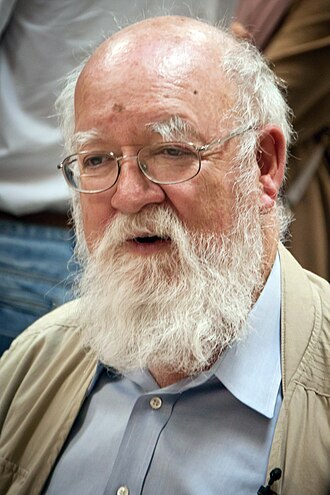 Daniel Dennett
"Joseph Browne, Maras secretary at the time of the coup:"
"When you are no more, only then for the first time will you be."
"Attila conceived himself to have a divine claim to the dominion of the earth: — the Spaniards subdued the Indians under plea of converting them to Christianity; hanging thirteen refractory ones in honour of Jesus Christ and his apostles: and we English justify our colonial aggressions by saying that the Creator intends the Anglo-Saxon race to people the world! An insatiate lust of conquest transmutes manslaying into a virtue; and, amongst more races than one, implacable revenge has made assassination a duty. A clever theft was praiseworthy amongst the Spartans; and it is equally so amongst Christians, provided it be on a sufficiently large scale. Piracy was heroism with Jason and his followers; was so also with the Norsemen; is so still with the Malays; and there is never wanting some golden fleece for a pretext. Amongst money-hunting people a man is commended in proportion to the number of hours he spends in business; in our day the rage for accumulation has apotheosized work; and even the miser is not without a code of morals by which to defend his parsimony. The ruling classes argue themselves into the belief that property should be represented rather than person — that the landed interest should preponderate. The pauper is thoroughly persuaded that he has a right to relief. The monks held printing to be an invention of the devil; and some of our modern sectaries regard their refractory brethren as under demoniacal possession. To the clergy nothing is more obvious than that a state-church is just, and essential to the maintenance of religion. The sinecurist thinks himself rightly indignant at any disregard of his vested interests. And so on throughout society."
"Ashes to ashes, funk to funky We know Major Toms a junkie Strung out in heavens high Hitting an all-time low"
"Every friend says, “I am your friend, too,” but some friends are only friends in name. Is it not a deadly grief when a companion or friend turns into an enemy? O evil intention! From where have you sprung, to cover the earth with deceit? One kind of comrade takes advantage of his friend’s good fortune; in time of trouble he turns against him. Another kind shares his friend’s suffering, for the sake of a meal; when it comes to a fight, he thinks only of saving himself. Do not neglect a friend or forget him once you are wealthy."