Quote
"The uniqueness of every painting was once part of the uniqueness of the place where it resided."
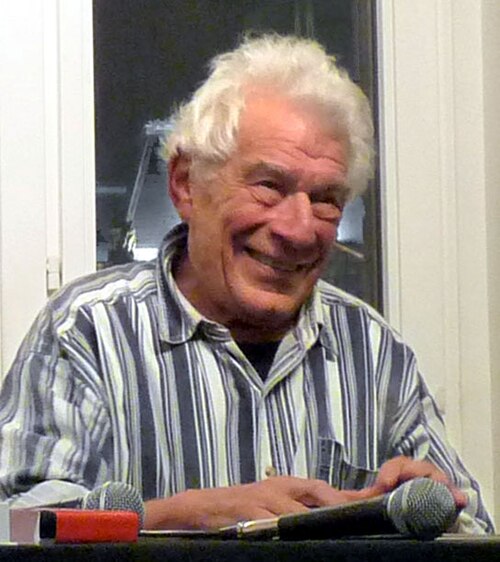 John Berger
"According to usage and conventions which are at last being questioned but have by no means been overcome, the social presence of a woman is different in kind from that of a man. A man’s presence is dependent upon the promise of power which he embodies. If the promise is large and credible his presence is striking. If it is small or incredible, he is found to have little presence. The promised power may be moral, physical, temperamental, economic, social, sexual – but its object is always exterior to the man. A man’s presence suggests what he is capable of doing to you or for you. His presence may be fabricated, in the sense that he pretends to be capable of what he is not. But the pretence is always towards a power which he exercises on others. By contrast, a woman’s presence expresses her own attitude to herself, and defines what can and cannot be done to her. Her presence is manifest in her gestures, voice, opinions, expressions, clothes, chosen surroundings, taste – indeed there is nothing she can do which does not contribute to her presence. Presence for a woman is so intrinsic to her person that men tend to think of it as an almost physical emanation, a kind of heat or smell or aura."
John Peter Berger was an English art critic, novelist, painter and poet. His novel G. won the 1972 Booker Prize. His essay on art criticism Ways of Seeing, written as an accompaniment to the BBC series of the same name, is hugely culturally influential and continues to be widely read today. He lived in France for over fifty years.
"The uniqueness of every painting was once part of the uniqueness of the place where it resided."
John Berger"Seeing comes before words. The child looks and recognizes before it can speak. But there is also another sense in which seeing comes before words. It is seeing which establishes our place in the surrounding world; we explain that world with words, but words can never undo the fact that we are surrounded by it. The relation between what we see and what we know is never settled."
John Berger"Images were first made to conjure up the appearances of something that was absent. Gradually it became evident that an image could outlast what it represented; it then showed how something or somebody had once looked – and thus by implication how the subject had once been seen by other people. Later still the specific vision of the image-maker was also recognized as part of the record. An image became a record of how X had seen Y."
John Berger"A peasant becomes fond of his pig and is glad to salt away its pork. What is significant, and is so difficult for the urban stranger to understand, is that the two statements in that sentence are connected by an and and not by a but."
John Berger"Yet why should an artists way of looking at the world have any meaning for us? Why does it give us pleasure? Because, I believe, it increases our awareness of our own potentiality. Not of course our awareness of our potentiality as artists ourselves. But a way of looking at the world implies a certain relationship with the world, and every relationship implies action. The kind of actions implied vary a great deal. ... A work of art can, to some extent, increase an awareness of different potentialities in different people. The important point is that a valid work of art promises in some way or another the possibility of an increase, an improvement. Nor need the word be optimistic to achieve this; indeed, its subject may be tragic. For it is not the subject that makes the promise, it is the artists way of viewing his subject. Goyas way of looking at a massacre amounts to the contention that we ought to be able to do without massacres."
John Berger"Nowhere in a zoo can a stranger encounter the look of an animal. At the most, the animal’s gaze flickers and passes on. They look sideways. They look blindly beyond. They scan mechanically. … That look between animal and man, which may have played a crucial role in the development of human society, and with which, in any case, all men had always lived until less than a century ago, has been extinguished. Looking at each animal, the unaccompanied zoo visitor is alone."
John Berger"In the life of the mass-order, the culture of the generality tends to conform to the demands of the average human being. Spirituality decays through being diffused among the masses when knowledge is impoverished in every possible way by rationalisation until it becomes accessible to the crude understanding of all."
"I say this to you because we Spaniards are a forgetful people, because we are used to living for the moment, because we do not look back, because we do not know how to see the chain of heroes, because we do not contemplate the sum of sacrifices."
 Francisco Franco
"Sharon Tate was my best friend. Once, we were roommates. She introduced me to my husband. She was the godmother to my baby daughter who is named for her. In the six years time that I knew her, she never said an unkind word about anyone."
"Long time to see. (VS: Tapion)"
"Most mathematicians prove what they can, von Neumann proves what he wants." Once in a discussion about the rapid growth of mathematics in modern times, von Neumann was heard to remark that whereas thirty years ago a mathematician could grasp all of mathematics, that is impossible today. Someone asked him: "What percentage of all mathematics might a person aspire to understand today?" Von Neumann went into one of his five-second thinking trances, and said: "About 28 percent."
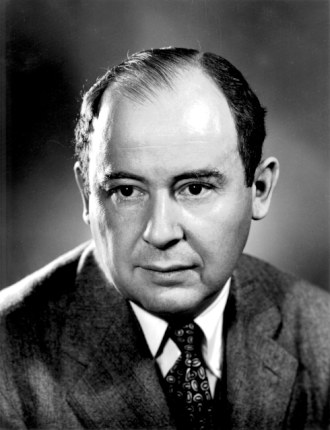 John von Neumann
"Children must be free to think in all directions irrespective of the peculiar ideas of parents who often seal their childrens minds with preconceived prejudices and false concepts of past generations. Unless we are very careful, very careful indeed, and very conscientious, there is still great danger that our children may turn out to be the same kind of people we are."