SHAWORDS

Again and again the imaginary plan on which one attempts to build up t — Max Planck

HomeMax PlanckQuote
"Again and again the imaginary plan on which one attempts to build up that order breaks down and then we must try another. This imaginative vision and faith in the ultimate success are indispensable. The pure rationalist has no place here."
M
Max Planck
Max Planck
author54 quotes

Max Karl Ernst Ludwig Planck was a German theoretical physicist. He won the 1918 Nobel Prize in Physics "for the services he rendered to the advancement of physics by his discovery of energy quanta."

More by Max Planck

View all →
Quote
"Besides inventing quantum theory, Planck had made another great contribution to science by welcoming and generously supporting the young Albert Einstein. In 1905, when Einstein, then an unknown employee of the Swiss patent office in Bern, sent five revolutionary papers to the physics journal that Planck edited in Berlin, Planck immediately recognized them as works of genius and published them quickly without sending them to referees. He did not agree with all of Einstein’s ideas, but he published all of them. He helped Einstein to move ahead in the academic world, and in 1913 invited him to a full professorship in Berlin. For twenty years Planck and Einstein were friends and colleagues in Berlin, leaders of a scientific community that remained creative and vibrant, in spite of the political and economic disarray that surrounded them. Planck was the rock-solid central figure of German science, with the vision to promote the unorthodox and unpatriotic citizen-of-the-world Einstein."
M
Max Planck
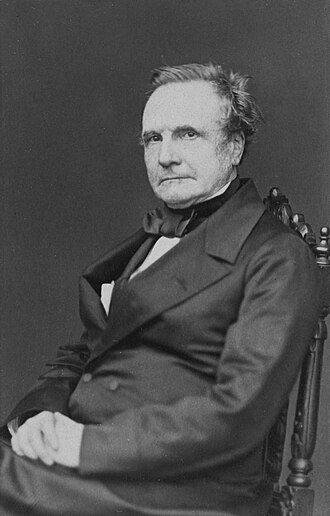

Quote
"I also knew the formula that expresses the energy distribution in the normal spectrum. A theoretical interpretation therefore had to be found at any cost, no matter how high. It was clear to me that classical physics could offer no solution to this problem, and would have meant that all energy would eventually transfer from matter to radiation. ...This approach was opened to me by maintaining the two . The two laws, it seems to me, must be upheld under all circumstances. For the rest, I was ready to sacrifice every one of my previous convictions about physical laws. ...[One] finds that the continuous loss of energy into radiation can be prevented by assuming that energy is forced at the outset to remain together in certain quanta. This was purely a formal assumption and I really did not give it much thought except that no matter what the cost, I must bring about a positive result."
M
Max Planck
Quote
"Long and tedious reflection cannot enable us to shape our decisions and attitudes properly; only that definite and clear instruction which we gain can form a direct inner link to God. This instruction alone is able to give us the inner firmness and lasting peace of mind which must be regarded as the highest boon in life. And if we ascribe to God, in addition to His omnipotence and omniscience, also the attributes of goodness and love, recourse to Him produces an increased feeling of safety and happiness in the human being thirsting for solace. Against this conception not even the slightest objection can be raised from the point of natural science, for as we pointed it out before, questions of ethics are entirely outside of its realm."
M
Max Planck
Quote
"Als Physiker, der sein ganzes Leben der nüchternen Wissenschaft, der Erforschung der Materie widmete, bin ich sicher von dem Verdacht frei, für einen Schwarmgeist gehalten zu werden. Und so sage ich nach meinen Erforschungen des Atoms dieses: Es gibt keine Materie an sich. Alle Materie entsteht und besteht nur durch eine Kraft, welche die Atomteilchen in Schwingung bringt und sie zum winzigsten Sonnensystem des Alls zusammenhält. Da es im ganzen Weltall aber weder eine intelligente Kraft noch eine ewige Kraft gibt—es ist der Menschheit nicht gelungen, das heißersehnte Perpetuum mobile zu erfinden—so müssen wir hinter dieser Kraft einen bewußten intelligenten Geist annehmen. Dieser Geist ist der Urgrund aller Materie."
M
Max Planck

More on Success

View all →
Quote
"One of the first major steps in the direction of modern skepticism came through the victory of Occam over Aquinas in a controversy about language. The statement that modi essendi were replaced by modi significandi et intelligendi, or that ontological referents were abandoned in favor of pragmatic significations, describes broadly the change in philosophy which continues to our time. From Occam to Bacon, from Bacon to Hobbes, and from Hobbes to contemporary semanticists, the progression is clear: ideas become psychological figments, words become useful signs. ... To one completely committed to this realm of becoming, as are the empiricists, the claim to apprehend verities is a sign of . Probably we have here but a highly sophisticated expression of the doctrine that ideals are hallucination and that the only normal, sane person is the healthy extrovert, making instant, instinctive adjustments to the stimuli of the material world."
O
Ontology
Quote
"I, too, believed it was impossible to change the existing society into one that would be for the benefit of all; neither could I espouse any given ideal for society. But [...] I felt that even if one did not have an ideal vision of society, one could have one’s work to do. Whether it was successful or not was not our concern; it was enough that we believed it to be a valid work. The accomplishment of that work, I believed, was what our real life was about. Yes. I want to carry out a work of my own; for I feel that by so doing our lives are rooted in the here and now, not in some far-off ideal goal."
P
Purpose
Quote
"The war was finished. It had lasted ten equivalent years and taken ten million lives. Thus it was neither of long duration nor of serious attrition. It hadnt any great significance; it was not intended to have. It did not prove a point, since all points had long ago been proven. What it did, perhaps, was to emphasize an aspect, sharpen a concept, underline a trend. On the whole it was a successful operation. Economically and ecologically it was of healthy effect, and who should grumble? And after wars, men go home. No, no, men start for home. Its not the same."
R
R. A. Lafferty