Quote
"Do you really believe ... that everything historians tell us about men – or about women – is actually true? You ought to consider the fact that these histories have been written by men, who never tell the truth except by accident.”"
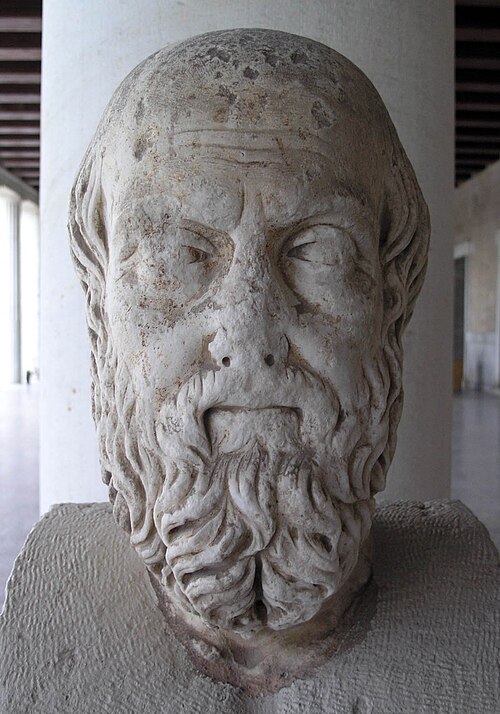 Historian
"All historians, one may say without exception, and in no half-hearted manner, but making this the beginning and end of their labour, have impressed on us that the soundest education and training for a life of active politics is the study of History, and that surest and indeed the only method of learning how to bear bravely the vicissitudes of fortune, is to recall the calamities of others."
A historian is a scholar who studies and writes about the past and is regarded as an authority on it. Historians are concerned with the continuous, methodical narrative and research of past events as relating to the human race; as well as the study of all history in time. Some historians are recognized by publications or training and experience. "Historian" became a professional occupation in the
"Do you really believe ... that everything historians tell us about men – or about women – is actually true? You ought to consider the fact that these histories have been written by men, who never tell the truth except by accident.”"
Historian"History presents an historian with the task of producing a dialogue between the past and the present. But as these temporal co-ordinates cannot be fixed, history becomes a continuous interaction between the historian and the past."
Historian"Some historians reluctance to utilize victim testimony in their con-struction of Holocaust history may be a result of a prejudice among them to utilize only official documents or to combat accusations of Holocaust deniers by being able to demonstrate the facts through the words of the Nazis themselves."
Historian"Classical historians take as their subject the conflict between great political powers, for example, Greece and Persia (Herodotus), Athens and Sparta (Thucydides), Rome and Carthage (Livy), Rome and Greece (Polybius), or the struggle for power within a particular state, for example, Athens (Thucydides), republican Rome (Sallust), imperial Rome (Tacitus)."
Historian"For her class of people, a “professional historian” is a historian with academic status. They are very status-conscious and constantly pull rank, especially when faced with informed arguments. For a scholar, this is weak, but for sophomores, it is uppermost in their minds: climbing the status ladder. When you know the academic circles, you become far less inclined to be over-awed by academic status: many professors have obvious ideological prejudices and bend their findings to suit their presuppositions. Moreover, in many countries to some extent, and certainly in India, scholars in the humanities are selected for ideological conformity with the dominant school. After nearly half a century, this has led to a situation where a post of “eminence” is simply equivalent with ideological conformity, at least passively (not raising your head), often actively (furthering the dominant paradigm)."
Historian"The treatment of the period of Reconstruction reflects small credit upon American historians as scientists. We have too often a deliberate attempt so to change the facts of history that the story will make pleasant reading for Americans."
Historian"Be the change that you wish to see in the world."
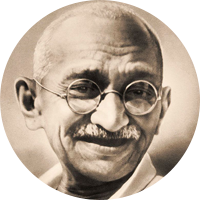 Mahatma Gandhi
"we are engaged in a grim experiment never before attempted. We are subjecting whole populations to exposure to chemicals which animal experiments have proved to be extremely poisonous and in many cases cumulative in their effect. These exposures now begin at or before birth and-unless we change our methods-will continue through the lifetime of those now living. No one knows what the result will be, because we have no previous experience to guide us."
"pity this busy monster, manunkind, not. Progress is a comfortable disease: your victim (death and life safely beyond) plays with the bigness of his littleness"
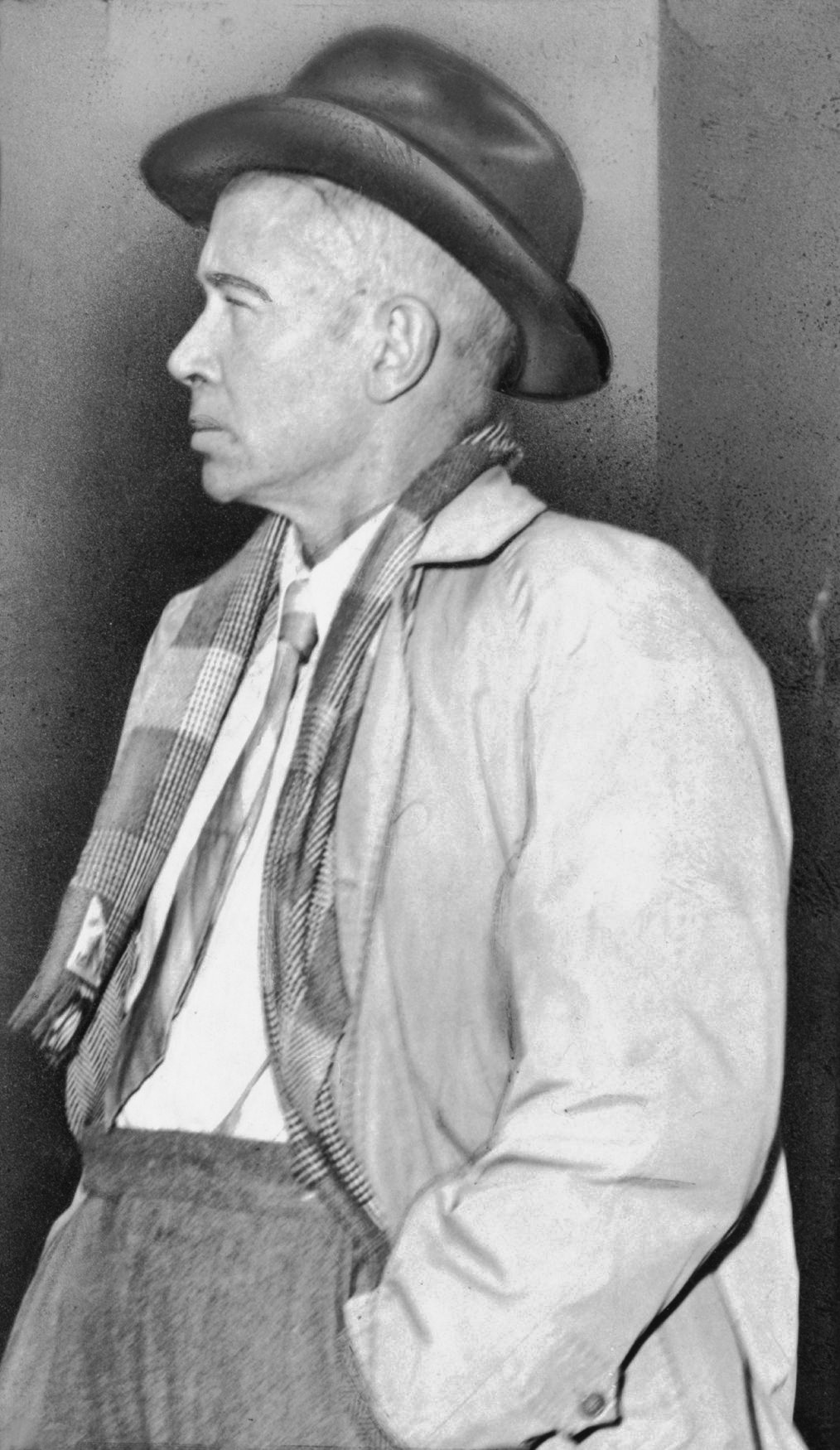 E. E. Cummings
"I believe that the unity of man as opposed to other living things derives from the fact that man is the conscious life of himself. Man is conscious of himself, of his future, which is death, of his smallness, of his impotence; he is aware of others as others; man is in nature, subject to its laws even if he transcends it with his thought."
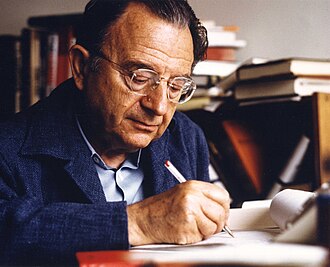 Erich Fromm
"“We need brains, is the bottom line,” Ivy said. “We’re not hunter-gatherers anymore. We’re all living like patients in the intensive care unit of a hospital. What keeps us alive isn’t bravery, or athleticism, or any of those other skills that were valuable in a caveman society. It’s our ability to master complex technological skills. It is our ability to be nerds. We need to breed nerds.”"
"I have been clinically depressed for most of my life. I once used drugs to fix it. Then I stopped. I stopped because I decided they were making me stupid, and Id rather be miserable than stupid. I am what I am."