Quote
"He came like a sledgehammer, like a giant out of the mountain with a sledgehammer, writing with a sledgehammer..."
R
Richard Wright"And still when the delicate and unconscious machinery of race relations slips, there will be murder again. How can law contradict the lives of millions of people and hope to be administered successfully?"
"He came like a sledgehammer, like a giant out of the mountain with a sledgehammer, writing with a sledgehammer..."
"But the moment he makes the attempt his words falter, for he is confronted and defied by the inexplicable array of his own emotions. Emotions are subjective and he can communicate them only when he clothes them in objective guise; and how can he ever be so arrogant as to know when he is dressing up the right emotion in the right Sunday suit?"
"Maybe anythings right, he mumbled. Yes, if the world as men had made it was right, then anything else was right, any act a man took to satisfy himself, murder, theft, torture.He straightened with a start. What was happening to him? ... He was going to do something, but what? Yes, he was afraid of himself, afraid of doing some nameless thing."
"The moment we act as if its true, then its true."
"I dont know if Native Son is a good book or a bad book. And I dont know if the book Im working on now will be a good book or a bad book. And I really dont care. The mere writing of it will be more fun and a deeper satisfaction than any praise or blame from anybody. I feel that Im lucky to be alive to write novels today, when the whole world is caught in the pangs of war and change."
"But, because the blacks were so close to the very civilization which sought to keep them out, because they could not help but react in some way to its incentives and prizes, and because the very tissue of their consciousness received its tone and timbre from the strivings of that dominant civilization, oppression spawned among them a myriad variety of reactions, reaching from outright blind rebellion to sweet, other-worldly submissiveness."
"One of the first major steps in the direction of modern skepticism came through the victory of Occam over Aquinas in a controversy about language. The statement that modi essendi were replaced by modi significandi et intelligendi, or that ontological referents were abandoned in favor of pragmatic significations, describes broadly the change in philosophy which continues to our time. From Occam to Bacon, from Bacon to Hobbes, and from Hobbes to contemporary semanticists, the progression is clear: ideas become psychological figments, words become useful signs. ... To one completely committed to this realm of becoming, as are the empiricists, the claim to apprehend verities is a sign of . Probably we have here but a highly sophisticated expression of the doctrine that ideals are hallucination and that the only normal, sane person is the healthy extrovert, making instant, instinctive adjustments to the stimuli of the material world."
"To have success in science, you need some luck. But to succeed in science, you need a lot more than luck. And its not enough to be smart — lots of people are very bright and get nowhere in life. In my view, you have to combine intelligence with a willingness not to follow conventions when they block your path forward."
"I, too, believed it was impossible to change the existing society into one that would be for the benefit of all; neither could I espouse any given ideal for society. But [...] I felt that even if one did not have an ideal vision of society, one could have one’s work to do. Whether it was successful or not was not our concern; it was enough that we believed it to be a valid work. The accomplishment of that work, I believed, was what our real life was about. Yes. I want to carry out a work of my own; for I feel that by so doing our lives are rooted in the here and now, not in some far-off ideal goal."
"We have already mentioned what may, perhaps, appear paradoxical to some of our readers, — that the division of labour can be applied with equal success to mental as to mechanical operations, and that it ensures in both the same economy of time."
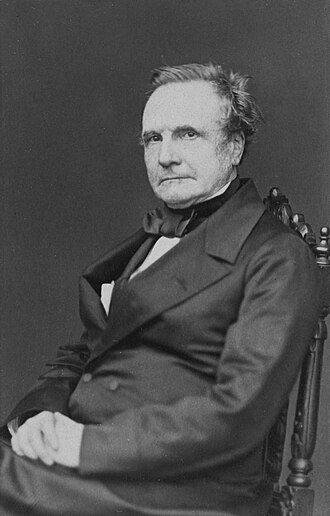 Charles Babbage
"The war was finished. It had lasted ten equivalent years and taken ten million lives. Thus it was neither of long duration nor of serious attrition. It hadnt any great significance; it was not intended to have. It did not prove a point, since all points had long ago been proven. What it did, perhaps, was to emphasize an aspect, sharpen a concept, underline a trend. On the whole it was a successful operation. Economically and ecologically it was of healthy effect, and who should grumble? And after wars, men go home. No, no, men start for home. Its not the same."
"The final test of a leader is that he leaves behind him in other men the conviction and the will to carry on. ... The genius of a good leader is to leave behind him a situation which common sense, without the grace of genius, can deal with successfully."
 Leadership