SHAWORDS

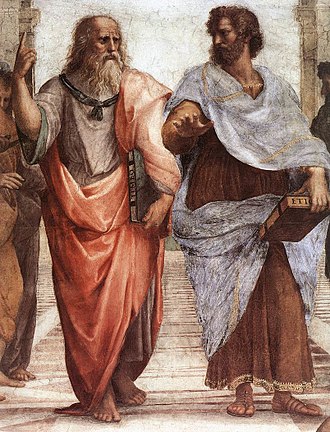
Aristotle feels this so strongly with reference to Platos external, as — Teleology

HomeTeleologyQuote
"Aristotle feels this so strongly with reference to Platos external, as contrasted with his own immanent, teleology that, forgetting his own concession elsewhere, he once roundly asserts that the final cause is not touched by the Ideas. Again, what is the relation of the Idea of the Good to other ends (Ideas) or to the special functions of things? Efficient causes Plato attributes at one time to Idea, at another to soul: which is his real doctrine? and what is the relation of Idea to soul? Aristotle, therefore, while willing to admit that Plato made stammering efforts in the direction of efficient and final causes, was perfectly justified in thinking that he had not fully worked them out."
Teleology
Teleology
Teleology
author36 quotes

Teleology or finality is a philosophical approach to discussing causality, which explains causes in terms of ends, purposes, or goals.

More by Teleology

View all →
Quote
"If time is treated in modern physics as a dimension on a par with the dimensions of space, why should we a priori exclude the possibility that we are pulled as well as pushed along its axis? The future has, after all, as much or as little reality as the past, and there is nothing logically inconceivable in introducing, as a working hypothesis, an element of finality, supplementary to the element of causality, into our equations. It betrays a great lack of imagination to believe that the concept of "purpose" must necessarily be associated with some anthropomorphic deity."
TeleologyTeleology