Quote
"To do nothing now is to let our children lament that they never knew the magnificent diversity of humankind because our generation let disappear those cultures that might have taught it to them."
P
Peter Farb"Balanced reciprocity is as much a social compact as it is an economic advantage. It is particularly important in hunting-gathering societies, where no individual could possibly accumulate a surplus, live independently of other members of the band, or become so successful in the quest for food as never to need meat from someone elses kill."
Peter Farb (1929–1980) was an American author, anthropologist, linguist and naturalist.
"To do nothing now is to let our children lament that they never knew the magnificent diversity of humankind because our generation let disappear those cultures that might have taught it to them."
"Perhaps we, who for so long regarded ourselves as bringers of light to the shadowy recesses of North America, will finally admit that there is much about which the Indians can illuminate us."
"The movement known as the Ghost Dance first appeared around 1870... soon after the Union Pacific Railroad completed its first transcontinental run. ...that event inspired the vision of the prophet Wodziwob, who declared that a big train was coming to bring back dead ancestors... a cataclysm would swallow up all the whites and leave behind their goods for his followers."
"Almost every messianic movement in the world came into being as a result of hallucinatory visions of a prophet. One point must be emphasized about the prophet of a messianic movement: He is not a schizophrenic, as was so long assumed. A schizophrenic with religious paranoia will state that he is God, Jesus, the Great Spirit, or some other supernatural being. The prophet, on the other hand, never states that he is supernatural—only that he has been in contact with supernatural powers. (Of course, after his death, his disciples tend to deify him or at least give him saintly status.)"
"...the intensity of the indignation was in direct proportion to a Whites distance from the Indian. On the frontier, the Indian was regarded as a besotted savage; but along the eastern seaboard, where the Spaniards, Dutch, English, and later Americans had long since exterminated all the Indians, philosophers and divines began to defend the Red Man."
"The members of a society do not make conscious choices in arriving at a particular way of life. Rather, they make unconscious adaptations. ...they know only that a particular choice works, even though it may appear bizarre to an outsider."
"We have created a wealthy society with tens of millions of talented, resourceful individuals who play virtually no role whatsoever as citizens. Bringing these people in — with their networks of influence, their knowledge, and their resources — is the key to creating the capacity for shared intelligence that we need to solve our problems."
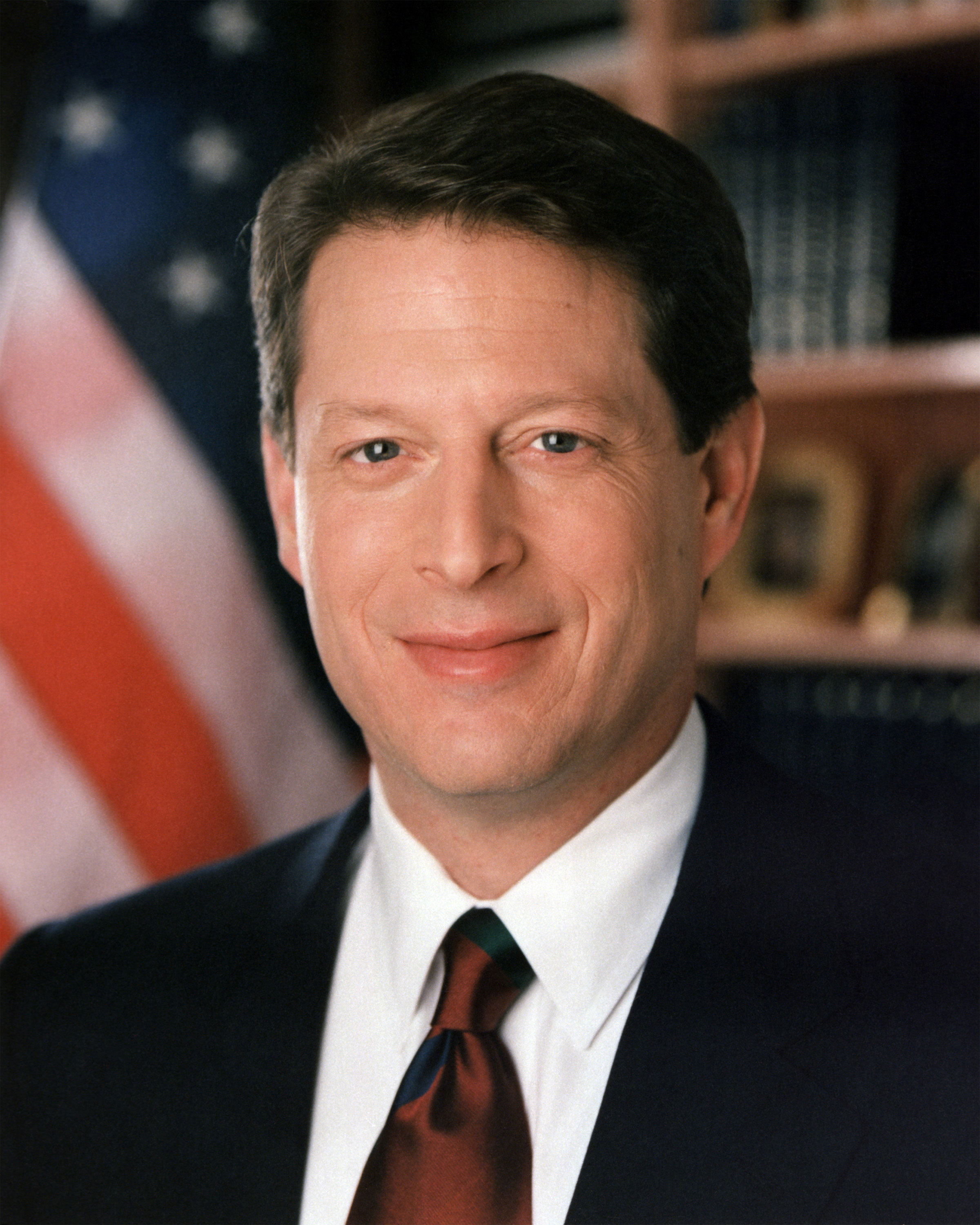 Al Gore
"As in respect of the first wonder we are all on the same level, how comes it that the philosophic mind should, in all ages, be the privilege of a few? The most obvious reason is this: The wonder takes place before the period of reflection, and (with the great mass of mankind) long before the individual is capable of directing his attention freely and consciously to the feeling, or even to its exciting causes. Surprise (the form and dress which the wonder of ignorance usually puts on) is worn away, if not precluded, by custom and familiarity."
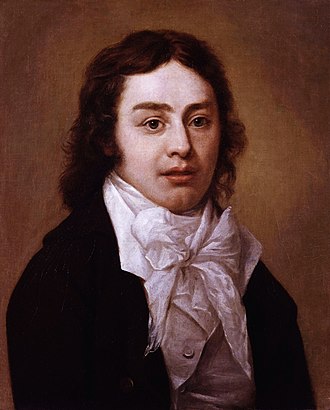 Samuel Taylor Coleridge
"The dualistic philosophy reigned supreme in Europe, dominating the development of Western science. But with the advent of atomic physics, findings based on demonstrable experiment were seen to negate the dualistic theory, and the trend of thought since then has been back to the monistic conception of the ancient Taoists."
"Under the rule of a repressive whole, liberty can be made into a powerful instrument of domination. The range of choice open to the individual is not the decisive factor in determining the degree of human freedom, but what can be chosen and what is chosen by the individual."
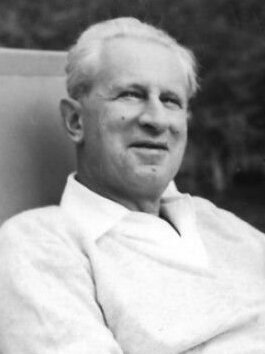 Herbert Marcuse
"All economic activity is carried out through time. Every individual economic process occupies a certain time, and all linkages between economic processes necessarily involve longer or shorter periods of time."
"I believe that the main lesson which our generation has learnt is that we must find a new limit for the activities of government, a limit which leaves ample scope for sensible experimentation but which secures the freedom of the individual as the mainspring of all social and political activity. The whole purpose of these lectures has been to suggest that we can find such a limit if we are willing to revive and develop the ancient ideal of the Rule of Law."