Quote
"False and doubtful positions, relied upon as unquestionable maxims, keep those who build on them in the dark from truth. Such are usually the prejudices imbibed from education, party, reverence, fashion, interest, et cetera."
J
John Locke"Beating is the worst, and therefore the last means to be usd in the correction of children, and that only in the cases of extremity, after all gently ways have been tryd, and proved unsuccessful; which, if well observd, there will very seldom be any need of blows."
John Locke was an English philosopher and physician, widely regarded as one of the most influential of the Enlightenment thinkers and commonly known as the "father of liberalism". His important works include A Letter Concerning Toleration (1689), Two Treatises of Government (1689/90), both published anonymously, and An Essay Concerning Human Understanding (1689/90). His writing on toleration conte
"False and doubtful positions, relied upon as unquestionable maxims, keep those who build on them in the dark from truth. Such are usually the prejudices imbibed from education, party, reverence, fashion, interest, et cetera."
"This is that which I think great readers are apt to be mistaken in; those who have read of everything, are thought to understand everything too; but it is not always so. Reading furnishes the mind only with materials of knowledge; it is thinking that makes what we read ours. We are of the ruminating kind, and it is not enough to cram ourselves with a great load of collections ; unless we chew them over again, they will not give us strength and nourishment."
"I doubt not, but from self-evident Propositions, by necessary Consequences, as incontestable as those in Mathematics, the measures of right and wrong might be made out."
"New opinions are always suspected, and usually opposed, without any other reason but because they are not already common."
"This life affords no solid satisfaction, but in the consciousness of having done well, and the hopes of another life."
"Let me give two cautions. 1) The one is, that you keep them to the practice of what you would have grow into a habit with them, by kind words, and gentle admonitions, rather as minding them of what they forget, than by harsh rebukes and chiding, as if they were wilfully guilty. 2) Another thing you are to take care of, is, not to endeavour to settle too many habits at once, lest by variety you confound them, and so perfect none. When constant custom has made any one thing easy and natural to em, and they practice it without reflection, you may then go on to another."
"One of the first major steps in the direction of modern skepticism came through the victory of Occam over Aquinas in a controversy about language. The statement that modi essendi were replaced by modi significandi et intelligendi, or that ontological referents were abandoned in favor of pragmatic significations, describes broadly the change in philosophy which continues to our time. From Occam to Bacon, from Bacon to Hobbes, and from Hobbes to contemporary semanticists, the progression is clear: ideas become psychological figments, words become useful signs. ... To one completely committed to this realm of becoming, as are the empiricists, the claim to apprehend verities is a sign of . Probably we have here but a highly sophisticated expression of the doctrine that ideals are hallucination and that the only normal, sane person is the healthy extrovert, making instant, instinctive adjustments to the stimuli of the material world."
"To have success in science, you need some luck. But to succeed in science, you need a lot more than luck. And its not enough to be smart — lots of people are very bright and get nowhere in life. In my view, you have to combine intelligence with a willingness not to follow conventions when they block your path forward."
"I, too, believed it was impossible to change the existing society into one that would be for the benefit of all; neither could I espouse any given ideal for society. But [...] I felt that even if one did not have an ideal vision of society, one could have one’s work to do. Whether it was successful or not was not our concern; it was enough that we believed it to be a valid work. The accomplishment of that work, I believed, was what our real life was about. Yes. I want to carry out a work of my own; for I feel that by so doing our lives are rooted in the here and now, not in some far-off ideal goal."
"We have already mentioned what may, perhaps, appear paradoxical to some of our readers, — that the division of labour can be applied with equal success to mental as to mechanical operations, and that it ensures in both the same economy of time."
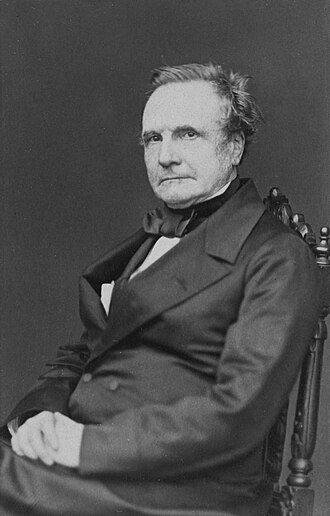 Charles Babbage
"The war was finished. It had lasted ten equivalent years and taken ten million lives. Thus it was neither of long duration nor of serious attrition. It hadnt any great significance; it was not intended to have. It did not prove a point, since all points had long ago been proven. What it did, perhaps, was to emphasize an aspect, sharpen a concept, underline a trend. On the whole it was a successful operation. Economically and ecologically it was of healthy effect, and who should grumble? And after wars, men go home. No, no, men start for home. Its not the same."
"The final test of a leader is that he leaves behind him in other men the conviction and the will to carry on. ... The genius of a good leader is to leave behind him a situation which common sense, without the grace of genius, can deal with successfully."
 Leadership