Quote
"Human nature is intractable stuff, hard jagged stuff, the kind of stuff that dreams are wrecked on."
H
Human nature"Before all other things, man is distinguished by his pursuit and investigation of Truth. And hence, when free from needful business and cares, we delight to see, to hear, and to communicate, and consider a knowledge of many admirable and abstruse things necessary to the good conduct and happiness of our lives: whence it is clear that whatsoever is True, simple, and direct, the same is most congenial to our nature as men. Closely allied with this earnest longing to see and know the truth, is a kind of dignified and princely sentiment which forbids a mind, naturally well constituted, to submit its faculties to any but those who announce it in precept or in doctrine, or to yield obedience to any orders but such as are at once just, lawful, and founded on utility. From this source spring greatness of mind and contempt of worldly advantages and troubles."
Human nature comprises the fundamental dispositions and characteristics—including ways of thinking, feeling, and acting—that humans are said to have naturally. The term is often used to denote the essence of humankind; however, this usage has proven to be controversial in that there is dispute as to whether or not such an essence actually exists.
"Human nature is intractable stuff, hard jagged stuff, the kind of stuff that dreams are wrecked on."
"Thus we discover that this blind and impersonal process produced humans not in a lightning flash, not in a sudden instant of creation, but as the result of accumulation. The origin of humans is not something that can be pinpointed at five million years, or one million years, or 100,000 years in the past, but, rather, occurs continuously over time. Our origin is the whole pattern of evolution, although there are key events that we must discover and identify. The things that make us human are acquired as a complex mosaic—we became upright four million years ago; we began to make tools two million years ago; we began to live all over the earth less than one million years ago; and possibly we only acquired language in the last 100,000 years or so. Each of these factors is an essential part of the process of becoming human. What makes human evolution such an endlessly fascinating story is trying to visualize the stages, imagining what sort of a creature could walk upright but not talk, make tools but not use fire, survive the rigors of the Ice Age but know nothing of agriculture and a settled way of life."
"In the course of evolution nature has gone to endless trouble to see that every individual is unlike every other individual. ... Physically and mentally, each one of us is unique. Any culture which, in the interests of efficiency or in the name of some political or religious dogma, seeks to standardize the human individual, commits an outrage against man’s biological nature."
"Everyone who achieves strives for totality, and the value of his achievement lies in that totality—that is, in the fact that the whole, undivided nature of a human being should be expressed in his achievement. But when determined by our society, as we see it today, achievement does not express a totality; it is completely fragmented and derivative. It is not uncommon for the community to be the site where a joint and covert struggle is waged against higher ambitions and more personal goals. ... The socially relevant achievement of the average person serves in the vast majority of cases to repress the original and nonderivative, inner aspirations of the human being."
"Therapeutic re-education … teaches the patient-student how to live with the contradictions that combine to make him into a unique personality; this is does in contrast to the older moral pedagogies, which tried to re-order the contradictions into a hierarchy of superior and inferior, good and evil. ... What hope there is derives from Freud’s assumption that human nature is not so much a hierarchy of high-low, and good-bad, as his predecessors believed, but rather a jostling democracy of contending predispositions, deposited in every nature in roughly equal intensities. … Psychoanalysis if full of such mad logic; it is convincing only if the student of his own life accepts Freud’s egalitarian revision of the traditional idea of a hierarchical human nature."
"History often reproduces without reference to nationality some particular human type or class which becomes active and predominant for a time, and fades away when its task is finished. It is, however, not utterly lost, for the germ of it lies dormant yet ready to re-appear when the exigencies of the moment recall it. The reserve forces of human nature are inexhaustible and inextinguishable."
"In the life of the mass-order, the culture of the generality tends to conform to the demands of the average human being. Spirituality decays through being diffused among the masses when knowledge is impoverished in every possible way by rationalisation until it becomes accessible to the crude understanding of all."
"I did not go to join Kurtz there and then. I did not. I remained to dream the nightmare out to the end, and to show my loyalty to Kurtz once more. Destiny. My destiny! Droll thing life is — that mysterious arrangement of merciless logic for a futile purpose. The most you can hope from it is some knowledge of yourself — that comes too late — a crop of unextinguishable regrets. I have wrestled with death. It is the most unexciting contest you can imagine. It takes place in an impalpable grayness, with nothing underfoot, with nothing around, without spectators, without clamor, without glory, without the great desire of victory, without the great fear of defeat, in a sickly atmosphere of tepid skepticism, without much belief in your own right, and still less in that of your adversary. If such is the form of ultimate wisdom, then life is a greater riddle than some of us think it to be. I was within a hairs-breadth of the last opportunity for pronouncement, and I found with humiliation that probably I would have nothing to say. This is the reason why I affirm that Kurtz was a remarkable man. He had something to say. He said it. Since I had peeped over the edge myself, I understand better the meaning of his stare, that could not see the flame of the candle, but was wide enough to embrace the whole universe, piercing enough to penetrate all the hearts that beat in the darkness. He had summed up — he had judged. The horror! He was a remarkable man. After all, this was the expression of some sort of belief; it had candor, it had conviction, it had a vibrating note of revolt in its whisper, it had the appalling face of a glimpsed truth — the strange commingling of desire and hate."
"Ive been taking a closer look at these graduates. They are actually taller, stronger, smarter than we were, smart enough maybe to take our mistakes as their messages, to make our weaknesses their lessons, and to make our example — good and not so good — part of their education."
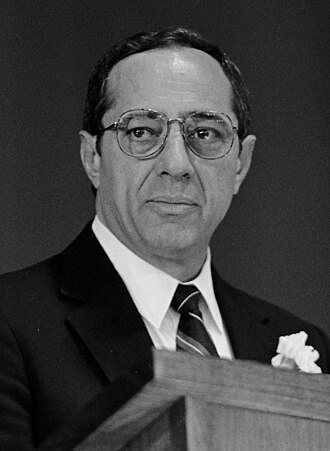 Mario Cuomo
"All men suppose what is called Wisdom to deal with the first causes and the principles of things; so that, as has been said before, the man of experience is thought to be wiser than the possessors of any sense-perception whatever, the artist wiser than the men of experience, the masterworker than the mechanic, and the theoretical kinds of knowledge to be more of the nature of Wisdom than the productive."
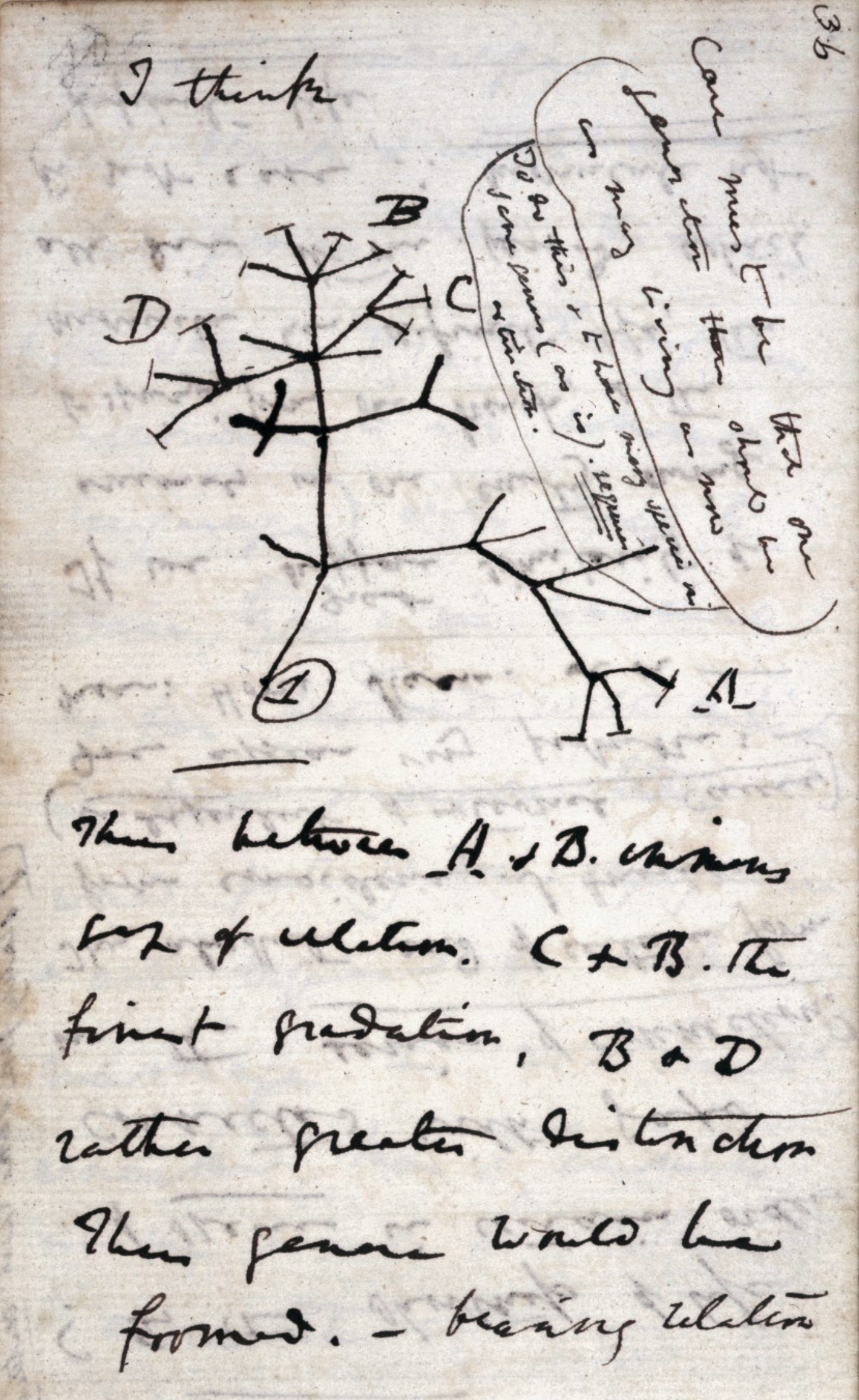 Theory
"My specific... object has been to contain, within the prescribed limits, the whole of the students course, from the confines of elementary algebra and trigonometry, to the entrance of the highest works on mathematical physics. A learner who has a good knowledge of the subjects just named, and who can master the present treatise, taking up elementary works on conic sections, application of algebra to geometry, and the theory of equations, as he wants them, will, I am perfectly sure, find himself able to conquer the difficulties of anything he may meet with; and need not close any book of Laplace, Lagrange, Legendre, Poisson, Fourier, Cauchy, Gauss, Abel, Hindenburgh and his followers. or of any one of our English mathematicians, under the idea that it is too hard for him."
"Religious faith in the case of the Hindus has never been allowed to run counter to scientific laws, moreover the former is never made a condition for the knowledge they teach, but there are always scrupulously careful to take into consideration the possibility that by reason both the agnostic and atheist may attain truth in their own way. Such tolerance may be surprising to religious believers in the West, but it is an integral part of Vedantic belief."
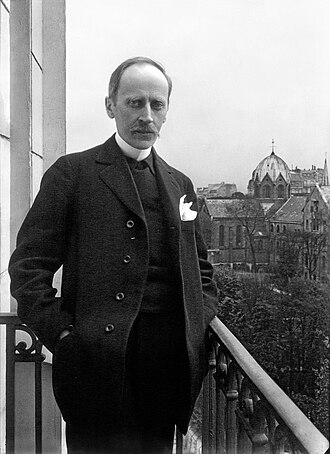 Romain Rolland