Quote
"If you have accomplished all that you have planned for yourself, you have not planned enough."
 Edward Everett Hale
"Can it be possible that all human sympathies can thrive, and all human powers be exercised, and all human joys increase, if we live with all our might with the thirty or forty people next to us, telegraphing kindly to all other people, to be sure? Can it be possible that our passion for large cities, and large parties, and large theatres, and large churches, develops no faith nor hope nor love which would not find aliment and exercise in a little "world of our own"?"
Edward Everett Hale was an American author, historian, and Unitarian minister, best known for his writings such as "The Man Without a Country", published in Atlantic Monthly, in support of the Union during the Civil War. He was the grand-nephew of Nathan Hale, the American spy during the Revolutionary War.
"If you have accomplished all that you have planned for yourself, you have not planned enough."
Edward Everett Hale"I am only one, but I am one. I can’t do everything, but I can do something. The something I ought to do, I can do. And by the grace of God, I will"
Edward Everett Hale"No matter what happens to you, no matter who flatters you or who abuses you, never look at another flag, never let a night pass but you pray God to bless that flag. Remember, boy, that behind all these men you have to do with, behind officers, and government, and people even, there is the Country Herself, your Country, and that you belong to Her as you belong to your own mother. Stand by Her, boy, as you would stand by your mother, if those devils there had got hold of her to-day."
Edward Everett Hale"That day the whole world held festival. All schools were dismissed, — all banks and workshops and factories closed, — all "unnecessary labor suspended," as the great salutes and the great chimes came booming out, which announced the agreement of a world of self-forgetting men. That day, do I say? Every day from that day was festival, — century after century. So soon as the world once learned the infinite blessing of Active Love, and stayed it by Faith, and enjoyed it in Hope, there was no danger that the world should unlearn that lesson. That lesson — if this vision of a possibility prove true — comes to the world by no change of law; by no new revelation, nor other gospel than the world has now. It comes simply as man after man and woman after woman lead such unselfish lives, as all of us see sometimes, as all would be glad to live..."
Edward Everett Hale"He loved his country as no other man has loved her; but no man deserved less at her hands."
Edward Everett Hale"Look up and not down, look forward and not back, look out and not in, and lend a hand!"
Edward Everett Hale"At one point a heated discussion arose over the possible interpretation of Lolita as a grandiose metaphor of the classic Europeans hopeless love for young, seductive, barbaric America. In his afterword to the novel Nabokov himself mentions this as the naive theory of one of the publishers who turned the book down. And although there cant be the slightest doubt that Nabokov did not mean to limit Lolita to that interpretation, there is no reason to exclude it as one of the novels many dimensions. The point, I felt, became obvious when one drew the line between Lolita as a delightfully frivolous story on the verge of pornography and Lolita as a literary masterpiece, the only convincing love story of our century."
 Lolita
"Lovely food, for rabbits, that is."
"One makes mistakes; that is life. But it is never a mistake to have loved."
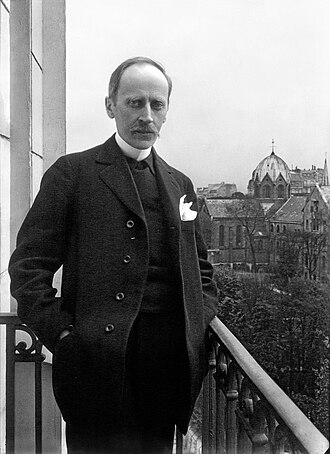 Romain Rolland
"[explaining to Ernie how April apologized to him] She just showed up at the factory, took off her coat, and begged me to take her. We made love in a way that Ive only ever seen in nature films."
 MouseHunt (film)
"Love is always love, come whence it may. A heart that beats at your approach, an eye that weeps when you go away are things so rare, so sweet, so precious that they must never be despised."
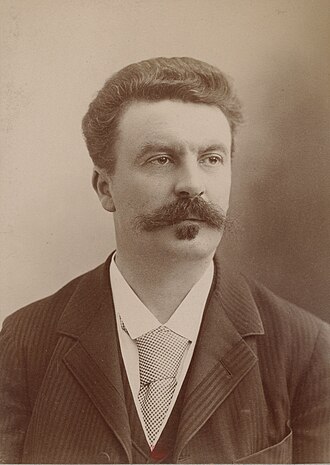 Guy de Maupassant
"He was obeyed, yet he inspired neither love nor fear, nor even respect. He inspired uneasiness. That was it! Uneasiness. Not a definite mistrust — just uneasiness — nothing more. You have no idea how effective such a... a... faculty can be. He had no genius for organizing, for initiative, or for order even. That was evident in such things as the deplorable state of the station. He had no learning, and no intelligence. His position had come to him — why? Perhaps because he was never ill . . . He had served three terms of three years out there . . . Because triumphant health in the general rout of constitutions is a kind of power in itself."