Quote
"The immense accumulations of fixed capital which, to the great benefit of mankind, were built up during the half century before the war, could never have come about in a Society where wealth was divided equitably."
J
John Maynard Keynes"Capitalism, wisely managed, can probably be made more efficient for attaining economic ends than any alternative system yet in sight, but... in itself it is in many ways extremely objectionable. Our problem is to work out a social organisation which shall be as efficient as possible without offending our notions of a satisfactory way of life."
John Maynard Keynes, 1st Baron Keynes, was an English economist whose writings are considered the basis for the school of thought known as Keynesian economics, as well as its various offshoots. Originally trained in mathematics, he built on and refined earlier work on the causes of business cycles. His ideas, further developed after his death as New Keynesianism, are seen as foundational to mainst
"The immense accumulations of fixed capital which, to the great benefit of mankind, were built up during the half century before the war, could never have come about in a Society where wealth was divided equitably."
"Free trade is profoundly based on the assumption of equilibrium conditions and in particular that wages always fall to their strict economic level. If they do not, and if for several reasons we do not desire them to, then it is only by means of a tariff that the ideal distribution of resources between different uses, which free trade aims at, can be achieved; and there is an unanswerable theoretical case for a countervailing import duty (and also for an export bounty) equivalent to the difference between the actual wage and the economic wage. ... I am no longer a free trader – and I believe that practically no-one else is – in the old sense of the term to the extent of believing in a very high degree of national specialisation and in abandoning any industry which is unable for the time being to hold its own. Where wages are immobile, this would be an extraordinarily dangerous doctrine to follow."
"The real struggle today, just as in the second quarter of the nineteenth century, is between a view of the world termed liberalism or radicalism, for which the primary object of government and of foreign policy is peace, freedom of trade and intercourse, and economic wealth and that other view, militarist or rather diplomatic, which thinks in terms of power, prestige, national or personal glory, the imposition of a culture and hereditary or racial prejudice. To the good English radical, the latter is so unreal, so crazy in its combination of futility and evil, that he is often in danger of forgetting or disbelieving its actual existence."
"The division of the spoils between the victors will also provide employment for a powerful office, whose doorsteps the greedy adventurers and jealous concession hunters of twenty or thirty nations will crowd and defile."
"The supporters of Monetary Reform, of which I... am a more convinced adherent than before, as the most important and significant measure Great Britain can take to increase economic welfare, must expound their arguments more fully... before they can overwhelm the forces of old custom and general ignorance... [F]luctuations of trade and employment... the greatest and the most remediable of the economic diseases of modern society... are mainly diseases of our credit and banking system..."
"To see the British Prime Minister watching the company, with six or seven senses not available to ordinary men, judging character, motive, and subconscious impulse, perceiving what each was thinking and even what each was going to say next, and compounding with telepathic instinct the argument or appeal best suited to the vanity, weakness, or self-interest of his immediate auditor, was to realize that the poor President would be playing blind mans bluff in that party."
"Be the change that you wish to see in the world."
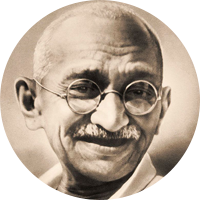 Mahatma Gandhi
"we are engaged in a grim experiment never before attempted. We are subjecting whole populations to exposure to chemicals which animal experiments have proved to be extremely poisonous and in many cases cumulative in their effect. These exposures now begin at or before birth and-unless we change our methods-will continue through the lifetime of those now living. No one knows what the result will be, because we have no previous experience to guide us."
"pity this busy monster, manunkind, not. Progress is a comfortable disease: your victim (death and life safely beyond) plays with the bigness of his littleness"
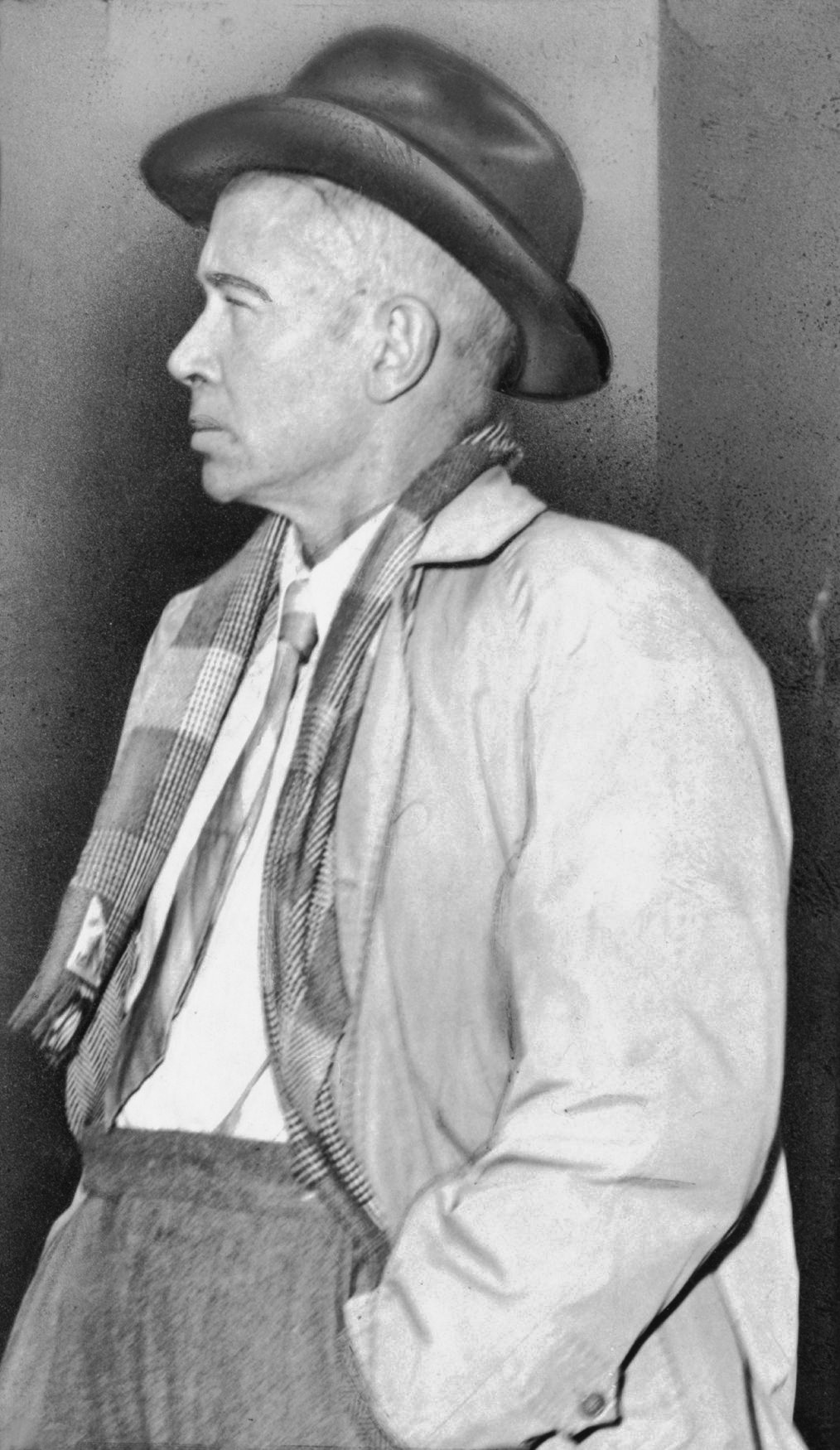 E. E. Cummings
"I believe that the unity of man as opposed to other living things derives from the fact that man is the conscious life of himself. Man is conscious of himself, of his future, which is death, of his smallness, of his impotence; he is aware of others as others; man is in nature, subject to its laws even if he transcends it with his thought."
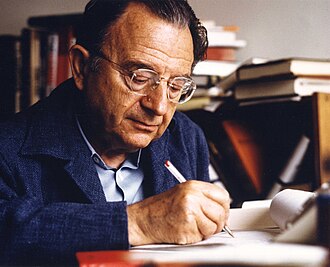 Erich Fromm
"“We need brains, is the bottom line,” Ivy said. “We’re not hunter-gatherers anymore. We’re all living like patients in the intensive care unit of a hospital. What keeps us alive isn’t bravery, or athleticism, or any of those other skills that were valuable in a caveman society. It’s our ability to master complex technological skills. It is our ability to be nerds. We need to breed nerds.”"
"I have been clinically depressed for most of my life. I once used drugs to fix it. Then I stopped. I stopped because I decided they were making me stupid, and Id rather be miserable than stupid. I am what I am."