Quote
"Die Kuerze des menschlichen Lebens verleitet zu manchen irrthuemlichen Behauptungen ueber die Eigenschaften des Menschen."
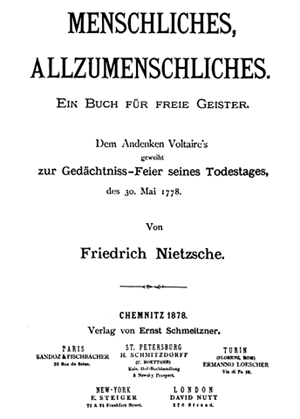 Human, All Too Human
"Die Leidenschaft will nicht warten"
Human, All Too Human: A Book for Free Spirits is a book by 19th-century philosopher Friedrich Nietzsche, originally published in 1878. A second part, Assorted Opinions and Maxims, was published in 1879, and a third part, The Wanderer and his Shadow, followed in 1880.
"Die Kuerze des menschlichen Lebens verleitet zu manchen irrthuemlichen Behauptungen ueber die Eigenschaften des Menschen."
Human, All Too Human"Where there is happiness, there is found pleasure in nonsense."
Human, All Too Human"The advantage of a bad memory is that one can enjoy the same good things for the first time several times."
Human, All Too Human"Aus der Erfahrung. — Die Unvernunft einer Sache ist kein Grund gegen ihr Dasein, vielmehr eine Bedingung desselben."
Human, All Too Human"... das Leben ist nun einmal nicht von der Moral ausgedacht."
Human, All Too Human"Die mutter der Ausschweifung ist nicht die Freude, sondern die Freudlosigkeit."
Human, All Too Human"Of the old, violent anarchist groups it was said that they always contained one pathological killer, one selfless idealist and one police spy. It was difficult, at first glance, to tell which was which, but the idealist was always the most dangerous. A "war against terrorism" is an impracticable conception if it means fighting terrorism with terrorism. The feelings on both sides are not that they are taking part in some evil and criminal act but risking their lives heroically for what they consider to be a just cause. You could understandably reduce terrorism by improving security and increasing the number of police spies, but it can only finally be reduced by removing the number of just causes. ANC terrorism was pointless after the end of apartheid. Terrorism in Israel will stop only when a just solution has been agreed to and the occupied territories handed back. Terrorism has existed in Ireland since Elizabeth I sent the Earl of Essex out in an unsatisfactory attempt to quell the rebels. However, since former terrorists have become government ministers in Northern Ireland, some progress has been made and sometimes the signs are hopeful."
"According to “Star Trek,” everything were worried about right now will be OK. There will be other things that go wrong — a species intent on taking over the universe, arguments between factions of aliens — but these concerns are foreign enough that theyre intriguing rather than scary. The show depicts its fair share of pain and suffering, but usually its the aliens who suffer in any permanent way; when humans do, its an aberration from the new normal thats been created. By the time the Enterprise is exploring new worlds, weve eliminated climate change, war, disease, xenophobia and sexism. On Earth, everything is as it should be. In the rest of the universe, though, these things still exist, and nearly every conflict on the series involves starship crews becoming entangled with random and calculated unfairness, cruelty and moral complication. We get Klingon in-fighting, alien merchants selling slaves, a civilization about to be decimated by its dying star. “Star Trek: The Next Generation” is especially prone to depicting easily-recognizable versions of real quandaries. The characters encounter everything from sex trafficking to territorial disputes on distant planets, and theyre forced to confront moral codes that exaggerate the ironies and falsehoods of our own beliefs. Familiar dramas play out: Apartheid is displaced onto a matriarchal society in “Angel One,” and the Israel-Palestine conflict plays out with a group of alien separatists in “The High Ground.” Here lies the ethical problem with “Star Trek,” and also the thing that is so deliciously attractive about it: Every earthly dilemma has been outsourced to an alien species, and we get to be the arbiters of goodness, the agents of scientific reason. Who wouldnt want to buy into this vision of the future?"
"Apartheid cannot be reformed. It has to be eliminated."
"It seems to be for the greater glory of Heidegger that all thinkers of the past twenty-five hundred years are found to have been so tragically off the track."
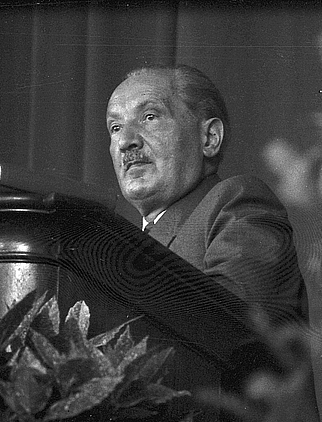 Martin Heidegger
"Ich habe keine besondere Begabung, sondern bin nur leidenschaftlich neugierig."
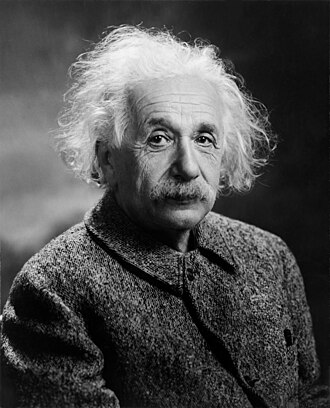 Albert Einstein
"Does apartheid actually have a smell? Because Ill be honest, until now, I was pretty sure it had only produced the one kind of Musk."
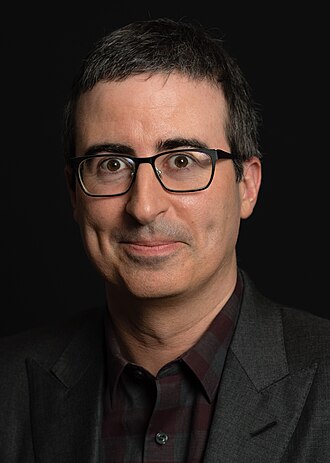 John Oliver