Quote
"I have been many years training in the Way of strategy, called Ni Ten Ichi Ryu, and now I think I will explain it in writing for the first time."
M
Miyamoto Musashi"Do not let yourself be guided by the feeling of lust or love."
Miyamoto Musashi was a Japanese swordsman, strategist, artist, and writer who became renowned through stories of his unique double-bladed swordsmanship and undefeated record in his 62 duels Musashi is considered a kensei of Japan He was the founder of the Niten Ichi-ryu style of swordsmanship In his final years, Musashi authored The Book of Five Rings and Dokkōdō
"I have been many years training in the Way of strategy, called Ni Ten Ichi Ryu, and now I think I will explain it in writing for the first time."
"The Way is shown in five books concerning different aspects. These are Ground, Water, Fire, Wind, and Void. The body of the Way of strategy from the viewpoint of my Ichi school is explained in the Ground book. It is difficult to realise the true Way just through sword-fencing. Know the smallest things and the biggest things, the shallowest things and the deepest things. As if it were a straight road mapped out on the ground, the first book is called the Ground book."
"Second is the Water book. With water as the basis, the spirit becomes like water. Water adopts the shape of its receptacle, it is sometimes a trickle and sometimes a wild sea. … If you master the principles of sword-fencing, when you freely beat one man, you beat any man in the world. The spirit of defeating a man is the same for ten million men. … The principle of strategy is having one thing, to know ten thousand things."
"Fourthly the Wind book. This book is not concerned with my Ichi school but with other schools of strategy. By Wind I mean old traditions, present-day traditions, and family traditions of strategy. Thus I clearly explain the strategies of the world. This is tradition. It is difficult to know yourself if you do not know others. To all Ways there are side-tracks. If you study a Way daily, and your spirit diverges, you may think you are obeying a good way, but objectively it is not the true Way. If you are following the true Way and diverge a little, this will later become a large divergence. You must realise this. Other strategies have come to be thought of as mere sword-fencing, and it is not unreasonable that this should be so. The benefit of my strategy, although it includes sword-fencing, lies in a separate principle. I have explained what is commonly meant by strategy in other schools in the Wind book."
"There is a time and a place for use of weapons. The best use of the companion sword is in a confined space, or when you are engaged closely with an opponent. The long sword can be used effectively in all situations. The halberd is inferior to the spear on the battlefield. With the spear you can take the initiative; the halberd is defensive. In the hands of one of two men of equal ability, the spear gives a little extra strength. Spear and halberd both have their uses, but neither is very beneficial in confined spaces."
"Everything can collapse. Houses, bodies, and enemies collapse when their rhythm becomes deranged. In large-scale strategy, when the enemy starts to collapse you must pursue him without letting the chance go. If you fail to take advantage of your enemies collapse, they may recover."
"The wound is the place where the Light enters you."
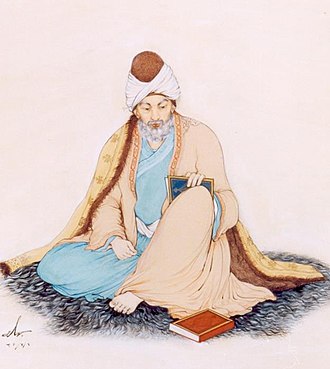 Rumi
Rumi"yes is a pleasant country... love is a deeper season than reason"
 E. E. Cummings
"true lovers in each happening of their hearts live longer than all which and every who"
E. E. Cummings"What concerns me fundamentaly is a meteoric burlesk melodrama, born of the immemorial adage love will find a way."
E. E. Cummings"Who made you glorious as the gates of heaven Beneath the keen full moon? Who bade the sun Clothe you with rainbows? Who, with living flower Of loveliest blue, spread garlands at your feet? God! let the torrents, like a shout of nations, Answer! and let the ice-plains echo, God! God! sing, ye meadow-streams, with gladsome voice! Ye pine-groves, with your soft and soul-like sounds! And they too have a voice, yon piles of snow, And in their perilous fall shall thunder, God!"
 Samuel Taylor Coleridge
"Unchanged within, to see all changed without, Is a blank lot and hard to bear, no doubt. Yet why at others Wanings shouldst thou fret? Then only mightst thou feel a just regret, Hadst thou withheld thy love or hid thy light In selfish forethought of neglect and slight."
Samuel Taylor Coleridge