Quote
"A little knowledge is a dangerous thing. So is a lot."
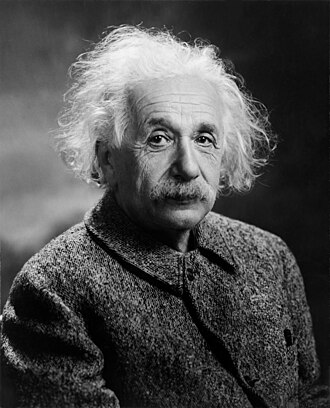 Albert Einstein
"Electromagnetic fields are not of the mind... Creation may be spiritual in origin, but that doesnt mean that everything created is spiritual. How can I explain such things to you? Let us accept the world is a mystery. Nature is neither solely material nor entirely spiritual. Man, too, is more than flesh and blood; otherwise, no religions would have been possible. Behind each cause is still another cause; the end or the beginning of all causes has yet to be found. Behind each cause is still another cause; the end or the beginning of all causes has yet to be found. Yet, only one thing must be remembered: there is no effect without a cause, and there is no lawlessness in creation"."
Albert Einstein was a German-born theoretical physicist best known for developing the theory of relativity. Einstein also made important contributions to quantum theory. His mass–energy equivalence formula E = mc2, which arises from special relativity, has been called "the world's most famous equation". He received the 1921 Nobel Prize in Physics for "his services to theoretical physics, and espec
"A little knowledge is a dangerous thing. So is a lot."
Albert Einstein"Ich glaube an Spinozas Gott, der sich in der gesetzlichen Harmonie des Seienden offenbart, nicht an einen Gott, der sich mit Schicksalen und Handlungen der Menschen abgibt."
Albert Einstein"Sometimes one pays most for the things one gets for nothing."
Albert Einstein"My political ideal is Democratic ... Force always attracts men of low morality."
Albert Einstein"I never failed in mathematics. Before I was fifteen I had mastered differential and integral calculus."
Albert Einstein"Even on the most solemn occasions I got away without wearing socks and hid that lack of civilisation in high boots."
Albert Einstein"[explaining to Ernie how April apologized to him] She just showed up at the factory, took off her coat, and begged me to take her. We made love in a way that Ive only ever seen in nature films."
 MouseHunt (film)
"All men suppose what is called Wisdom to deal with the first causes and the principles of things; so that, as has been said before, the man of experience is thought to be wiser than the possessors of any sense-perception whatever, the artist wiser than the men of experience, the masterworker than the mechanic, and the theoretical kinds of knowledge to be more of the nature of Wisdom than the productive."
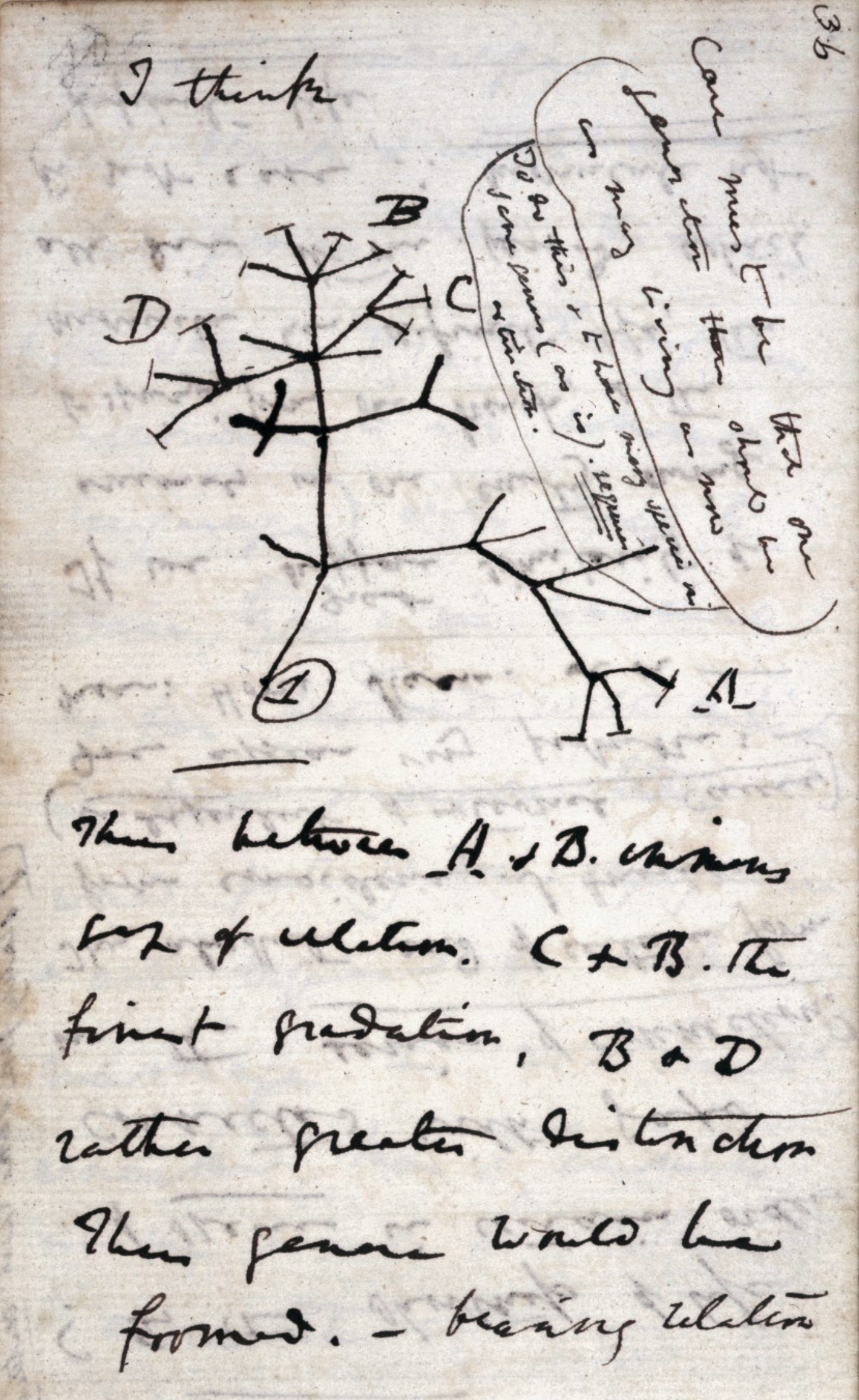 Theory
"The yarns of seamen have a direct simplicity, the whole meaning of which lies within the shell of a cracked nut. But Marlow was not typical (if his propensity to spin yarns be excepted), and to him the meaning of an episode was not inside like a kernel but outside, enveloping the tale which brought it out only as a glow brings out a haze, in the likeness of one of these misty halos that sometimes are made visible by the spectral illumination of moonshine."
"Going up that river was like traveling back to the earliest beginnings of the world, when vegetation rioted on the earth and the big trees were kings. An empty stream, a great silence, an impenetrable forest. The air was warm, thick, heavy, sluggish. There was no joy in the brilliance of sunshine. The long stretches of the waterway ran on, deserted, into the gloom of overshadowed distances."
"The intimate rapport with nature is one of the most precious things in life. Nature is indeed very close to us; sometimes closer than hands and feet, of which in truth she is but the extension. The emotional appeal of nature is tremendous, sometimes almost more than one can bear."
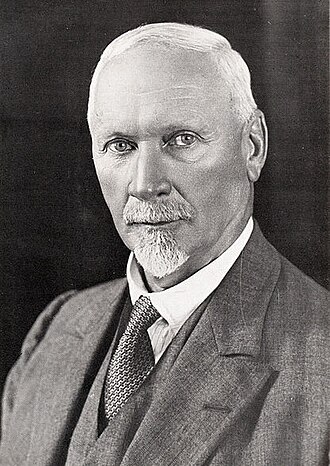 Jan Smuts
"Are people naturally destructive, immoral, predatory and self-seeking, only to be kept in order by harsh laws and fiercely deterrent mandatory sentences? Or are men and women naturally orderly, merciful, humane and bred with a need for justice and mutual aid? Of course these qualities, or defects, are not evenly distributed, and undoubtedly there is much of each in all of us, but when it comes to the law some sort of distinction can be drawn. Are you a Shylock or a Bassanio? Shylock pinned his faith on the words in the contract, the nature of his bond and the duty of the state to uphold the letter of the law regardless of human suffering. Bassanio put another point of view. More important than the sanctity of the law was the plight of the individual parties in the particular case."