Quote
"On the first day of a revolution, he is a perfect treasure; on the second, he ought to be shot."
M
Mikhail Bakunin"Equality, proclaimed in 1793, has been one of the greatest conquests of the French Revolution. Despite all the reactions which have arrived since, that great principle has triumphed in the political economy of Europe. In the most advanced countries, it is called the equality of politic rights; in the other countries, civil equality — equality before the law. No country in Europe would dare to openly proclaim today the principle of political inequality. But the history of the revolution itself and that of the seventy-five years that have passed since, we prove that political equality without economic equality is a lie. You would proclaim in vain the equality of political rights, as long as society remains split by its economic organization into socially different layers — that equality will be nothing but a fiction."
Mikhail Alexandrovich Bakunin was a Russian revolutionary anarchist and political philosopher. He is among the most influential figures of anarchism and a major figure in the revolutionary socialist, social anarchist, and collectivist anarchist tendencies. Bakunin's prestige as a revolutionary also made him one of the most famous ideologues in Europe, gaining substantial influence among radicals t
"On the first day of a revolution, he is a perfect treasure; on the second, he ought to be shot."
"Bakunins social theory began, and almost ended, with liberty. Against the claims of liberty nothing else in his view was worth consideration at all. He attacked, remorselessly and without qualification, every institution that seemed to him to be inconsistent with liberty."
"FREEDOM, the realization of freedom: who can deny that this is what today heads the agenda of history? … Revolutionary propaganda is in its deepest sense the negation of the existing conditions of the State, for, with respect to its innermost nature, it has no other program than the destruction of whatever order prevails at the time.... We must not only act politically, but in our politics act religiously, religiously in the sense of freedom, of which the one true expression is justice and love. Indeed, for us alone, who are called the enemies of the Christian religion, for us alone it is reserved, and even made the highest duty … really to exercise love, this highest commandment of Christ and this only way to true Christianity."
"We exhort the compromisers to open their hearts to truth, to free themselves of their wretched and blind circumspection, of their intellectual arrogance, and of the servile fear which dries up their souls and paralyzes their movements. Let us therefore trust the eternal Spirit which destroys and annihilates only because it is the unfathomable and eternal source of all life. The passion for destruction is a creative passion, too!"
"I eagerly await tomorrows mail to have news of Russia and Poland. For now, I have to content myself with a few vague rumors which float around. I have heard about new, bloody skirmishes in Poland between the people and troops; I was told that, even in Russia, there was a conspiracy against the czar and the whole royal family. I am equally passionate about the struggle between the North and the Southern American states. Of course, my heart goes out to the North. But alas! It is the South who acted with the most force, wisdom, and solidarity, which makes them worthy of the triumph they have received in every encounter so far. It is true that the South has been preparing for war for three years now, while the North has been forced to improvise. The surprising success of the ventures of the American people, for the most part happy; the banality of the material well being, where the heart is absent; and the national vanity, altogether infantile and sustained with very little cost; all seem to have helped deprave these people, and perhaps this stubborn struggle will be beneficial to them in so much as it helps the nation regain its lost soul. This is my first impression; but it could very well be that I will change my mind upon seeing things up close. The only thing is, I will not have enough time to examine really closely."
"Everything about him was colossal, and he was full of exuberance and strength."
"At one point a heated discussion arose over the possible interpretation of Lolita as a grandiose metaphor of the classic Europeans hopeless love for young, seductive, barbaric America. In his afterword to the novel Nabokov himself mentions this as the naive theory of one of the publishers who turned the book down. And although there cant be the slightest doubt that Nabokov did not mean to limit Lolita to that interpretation, there is no reason to exclude it as one of the novels many dimensions. The point, I felt, became obvious when one drew the line between Lolita as a delightfully frivolous story on the verge of pornography and Lolita as a literary masterpiece, the only convincing love story of our century."
 Lolita
"I did not go to join Kurtz there and then. I did not. I remained to dream the nightmare out to the end, and to show my loyalty to Kurtz once more. Destiny. My destiny! Droll thing life is — that mysterious arrangement of merciless logic for a futile purpose. The most you can hope from it is some knowledge of yourself — that comes too late — a crop of unextinguishable regrets. I have wrestled with death. It is the most unexciting contest you can imagine. It takes place in an impalpable grayness, with nothing underfoot, with nothing around, without spectators, without clamor, without glory, without the great desire of victory, without the great fear of defeat, in a sickly atmosphere of tepid skepticism, without much belief in your own right, and still less in that of your adversary. If such is the form of ultimate wisdom, then life is a greater riddle than some of us think it to be. I was within a hairs-breadth of the last opportunity for pronouncement, and I found with humiliation that probably I would have nothing to say. This is the reason why I affirm that Kurtz was a remarkable man. He had something to say. He said it. Since I had peeped over the edge myself, I understand better the meaning of his stare, that could not see the flame of the candle, but was wide enough to embrace the whole universe, piercing enough to penetrate all the hearts that beat in the darkness. He had summed up — he had judged. The horror! He was a remarkable man. After all, this was the expression of some sort of belief; it had candor, it had conviction, it had a vibrating note of revolt in its whisper, it had the appalling face of a glimpsed truth — the strange commingling of desire and hate."
"The Spanish Republic did not find itself free of obligations. For the most part the leaders were Freemasons. Before their duty to their country came their obligations to the Grand Orient. In my opinion, Freemasonry, with all its international influence, is the organization principally responsible for the political ruin of Spain, as well as the murder of Calvo Sotelo, who was executed in accordance with orders from the Grand Secretary of Freemasonry in Geneva."
 Francisco Franco
"There can be no Good Will. Will is always Evil; it is persecution to others or selfishness."
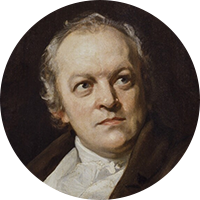 William Blake
"He was obeyed, yet he inspired neither love nor fear, nor even respect. He inspired uneasiness. That was it! Uneasiness. Not a definite mistrust — just uneasiness — nothing more. You have no idea how effective such a... a... faculty can be. He had no genius for organizing, for initiative, or for order even. That was evident in such things as the deplorable state of the station. He had no learning, and no intelligence. His position had come to him — why? Perhaps because he was never ill . . . He had served three terms of three years out there . . . Because triumphant health in the general rout of constitutions is a kind of power in itself."
"Well buy a lot of clothes, but we dont really need em Things we buy to cover up whats inside Cause they made us hate ourself and love their wealth."