Quote
"Why asks he what avails him not in fight, And would but cumber and retard his flight, In which his only excellence is placed? You give him death that interrupt his haste."
J
John Dryden"First, with assiduous care from winter keep, Well fother’d in the stalls, thy tender sheep; Then spread with straw the bedding of thy fold, With fern beneath, to fend the bitter cold."
John Dryden was an English poet, literary critic, translator, and playwright who in 1668 was appointed England's first Poet Laureate. He is seen as dominating the literary life of Restoration England to such a point that the period came to be known in literary circles as the Age of Dryden. Romantic writer Sir Walter Scott called him "Glorious John".
"Why asks he what avails him not in fight, And would but cumber and retard his flight, In which his only excellence is placed? You give him death that interrupt his haste."
"A man so various, that he seem’d to be Not one, but all mankind’s epitome; Stiff in opinions, always in the wrong, Was everything by starts, and nothing long; But in the course of one revolving moon Was chemist, fiddler, statesman, and buffoon."
"And that one hunting, which the Devil designd For one fair female, lost him half the kind."
"Bid the laborious hind, Whose harden’d hands did long in tillage toil, Neglect the promised harvest of the soil."
"Sound the trumpets; beat the drums... Now give the hautboys breath; he comes, he comes."
"I have a soul that like an ample shield Can take in all, and verge enough for more."
"I appeal to all pupils, students and young people, asking you to focus on the horizons that are opening up for you, and which you could only dream of a year ago. Our future will depend on your desire for education and moral values as well as on your entrepreneurial spirit."
"We have created a wealthy society with tens of millions of talented, resourceful individuals who play virtually no role whatsoever as citizens. Bringing these people in — with their networks of influence, their knowledge, and their resources — is the key to creating the capacity for shared intelligence that we need to solve our problems."
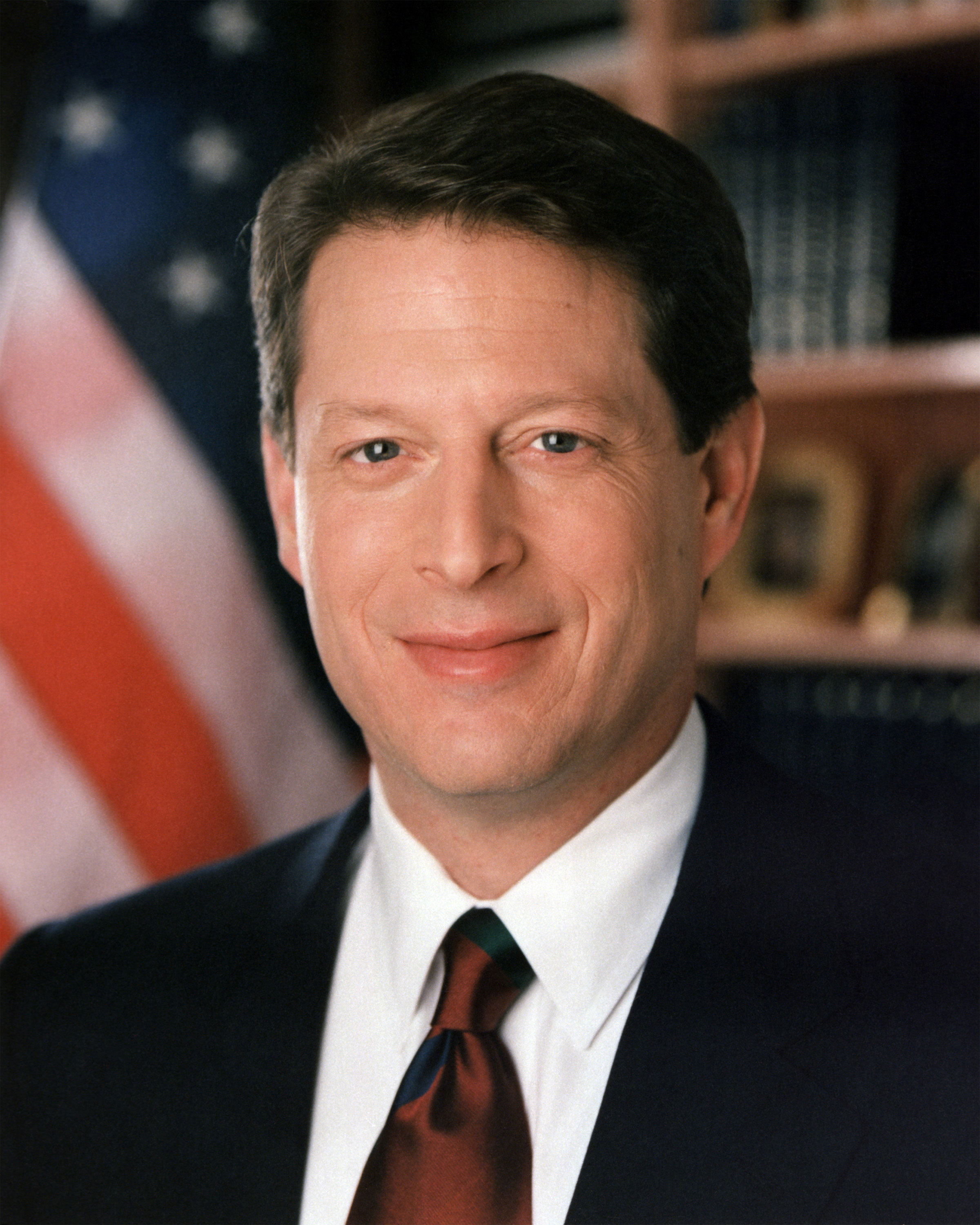 Al Gore
"We are shocked when we see educators, timid before criticism and confused about first principles, betray their trust. And we wonder what can be that philosophy of education which believes that young people can be trained to the duties of citizenship by wrapping their minds in cotton wool."
"I cant read ten pages of Steinbeck without throwing up. I couldnt read the proletarian crap that came out in the 30s; again you had sentimentalism — the poor oppressed workers."
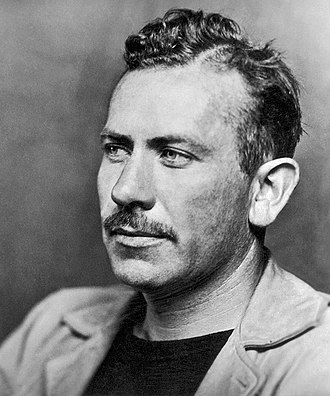 John Steinbeck
"An [hypertext] encyclopaedia will be an overall attempt by the knowledgeable, the learned societies or anyone else, to represent the state-of-the-art in their field. An encyclopaedia will be a living document, as up to date as it can be, instantly accessible at any time. It will contain carefully authored explanations and summaries of the subject, as well as computer-generated indexes of literature. A reference to a paper from the encyclopaedia conveys authority and acceptance by academic society. A measure of a paper’s standing may be conveyed by the number of links it is away from an encyclopaedia."
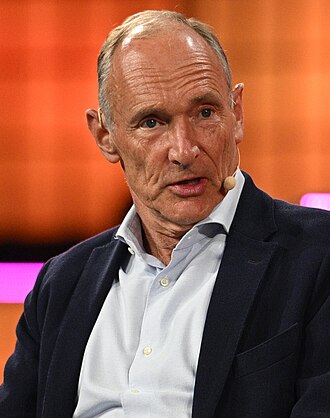 Tim Berners-Lee
"One of the first major steps in the direction of modern skepticism came through the victory of Occam over Aquinas in a controversy about language. The statement that modi essendi were replaced by modi significandi et intelligendi, or that ontological referents were abandoned in favor of pragmatic significations, describes broadly the change in philosophy which continues to our time. From Occam to Bacon, from Bacon to Hobbes, and from Hobbes to contemporary semanticists, the progression is clear: ideas become psychological figments, words become useful signs. ... To one completely committed to this realm of becoming, as are the empiricists, the claim to apprehend verities is a sign of . Probably we have here but a highly sophisticated expression of the doctrine that ideals are hallucination and that the only normal, sane person is the healthy extrovert, making instant, instinctive adjustments to the stimuli of the material world."