SHAWORDS

God, when he created the human species, wished their happiness; and ma — William Paley

"God, when he created the human species, wished their happiness; and made for them the provision which he has made, with that view, and for that purpose."
William Paley
William Paley
William Paley
author11 quotes

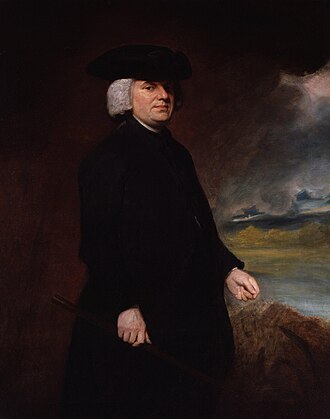
William Paley was an English Anglican clergyman, philosopher, and utilitarian. He was at times referred to as a Christian apologist by his critics. He is best known for his natural theology exposition of the teleological argument for the existence of God in his 1802 work Natural Theology or Evidences of the Existence and Attributes of the Deity, which made use of the watchmaker analogy.

More by William Paley

View all →
Quote
"The great revolution which has taken place in the Western World may probably conduce (and who knows but that it was designed?) to accelerate the fall of this abominable tyranny; and now that this contest, and the passions which attend it are no more, there may succeed perhaps a season for reflecting whether a legislature which had so long lent its assistance to the support of an institution replete with human misery, was fit to be trusted with an empire the most extensive that ever obtained in any age or quarter of the world."
William PaleyWilliam Paley
Quote
"One question may possibly have dwelt in the readers mind during the perusal of these observations, namely, Why should not the Deity have given to the animal the faculty of vision at once? ... Why resort to contrivance, where power is omnipotent? Contrivance, by its very definition and nature, is the refuge of imperfection. To have recourse to expedients, implies difficulty, impediment, restraint, defect of power. ... amongst other answers which may be given to it; beside reasons of which probably we are ignorant, one answer is this: It is only by the display of contrivance, that the existence, the agency, the wisdom of the Deity, could be testified to his rational creatures."
William PaleyWilliam Paley
Quote
"This is atheism: for every indication of contrivance, every manifestation of design which existed in the watch, exists in the works of nature, with the difference of the side of nature of being greater and more, and that in a degree which exceeds all computation. I mean that the contrivances of nature surpass the contrivances of art, in the complexity, subtlety, and curiosity of the mechanism; and still more, if possible, do they go beyond them in number and variety; yet in a multitude of cases, are not less evidently mechanical, not less evidently contrivances, not less evidently accommodated to their end, or suited to their office than are the most perfect production of human ingenuity."
William PaleyWilliam Paley