SHAWORDS
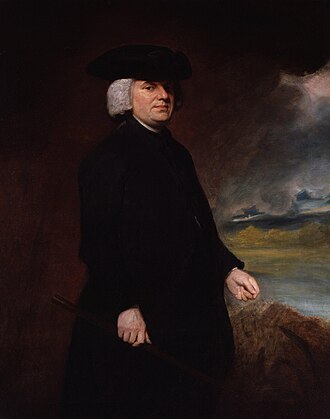
William Paley

William Paley

William Paley

William Paley

author
11Quotes

William Paley was an English Anglican clergyman, philosopher, and utilitarian. He was at times referred to as a Christian apologist by his critics. He is best known for his natural theology exposition of the teleological argument for the existence of God in his 1802 work Natural Theology or Evidences of the Existence and Attributes of the Deity, which made use of the watchmaker analogy.

Popular Shayari

11 total
Quote
"The great revolution which has taken place in the Western World may probably conduce (and who knows but that it was designed?) to accelerate the fall of this abominable tyranny; and now that this contest, and the passions which attend it are no more, there may succeed perhaps a season for reflecting whether a legislature which had so long lent its assistance to the support of an institution replete with human misery, was fit to be trusted with an empire the most extensive that ever obtained in any age or quarter of the world."
William PaleyWilliam Paley
Quote
"One question may possibly have dwelt in the readers mind during the perusal of these observations, namely, Why should not the Deity have given to the animal the faculty of vision at once? ... Why resort to contrivance, where power is omnipotent? Contrivance, by its very definition and nature, is the refuge of imperfection. To have recourse to expedients, implies difficulty, impediment, restraint, defect of power. ... amongst other answers which may be given to it; beside reasons of which probably we are ignorant, one answer is this: It is only by the display of contrivance, that the existence, the agency, the wisdom of the Deity, could be testified to his rational creatures."
William PaleyWilliam Paley
Quote
"This is atheism: for every indication of contrivance, every manifestation of design which existed in the watch, exists in the works of nature, with the difference of the side of nature of being greater and more, and that in a degree which exceeds all computation. I mean that the contrivances of nature surpass the contrivances of art, in the complexity, subtlety, and curiosity of the mechanism; and still more, if possible, do they go beyond them in number and variety; yet in a multitude of cases, are not less evidently mechanical, not less evidently contrivances, not less evidently accommodated to their end, or suited to their office than are the most perfect production of human ingenuity."
William PaleyWilliam Paley
Quote
"It is one of the advantages of the revelations which we acknowledge, that whilst they reject idolatry with its many pernicious accompaniments, they introduce the Deity to human apprehension, under an idea more personal, more determinate, more within its compass, than the theology of nature can do. And this they do by representing him exclusively under the relation in which he stands to ourselves; and, for the most part, under some precise character, resulting from that relation, or from the history of his providences. Which method suits the span of our intellects much better than the universality which enters into the idea of God, as deduced from the views of nature."
William PaleyWilliam Paley
Quote
"It is at any rate evident, that a large and ample province remains for the exercise of Providence, without its being naturally perceptible by us; because obscurity, when applied to the interruption of laws, bears a necessary proportion to the imperfection of our knowledge when applied to the laws themselves, or rather to the effects which these laws, under their various and incalculable combinations, would of their own accord produce. And if it be said, that the doctrine of Divine Providence, by reason of the ambiguity under which its exertions present themselves, can be attended with no practical influenceupon our conduct; that, although we believe ever so firmly that there is a Providence, we must prepare, and provide, and act, as if there were none; I answer, that this is admitted: and that we further allege, that so to prepare, and so to provide, is consistent with the most perfect assurance of the reality of a Providence; and not only so, but that it is probably one advantage of the present state of our information, that our provisions and preparations are not disturbed by it. Or if it be still asked, Of what use at all then is the doctrine, if it neither alter our measures nor regulate our conduct? I answer again, that it is of the greatest use, but that it is a doctrine of sentiment and piety, not (immediately at least) of action or conduct; that it applies to the consolation of mens minds, to their devotions, to the excitement of gratitude, the support of patience, the keeping alive and the strengthening of every motive for endeavouring to please our Maker; and that these are great uses."
William PaleyWilliam Paley
Quote
"In all cases, wherein the mind feels itself in danger of being confounded by variety, it is sure to rest upon a few strong points, or perhaps upon a single instance. Amongst a multitude of proofs, it is one that does the business. If we observe in any argument, that hardly two minds fix upon the same instance, the diversity of choice shows the strength of the argument, because it shows the number and competition of the examples. There is no subject in which the tendency to dwell upon select or single topics is so usual, because there is no subject, of which, in its full extent, the latitude is so great, as that of natural history applied to the proof of an intelligent Creator."
William PaleyWilliam Paley
Quote
"It is a step to have it proved, that there must be something in the world more than what we see. It is a further step to know, that, amongst the invisible things of nature, there must be an intelligent mind, concerned in its production, order, and support. These points being assured to us by Natural Theology, we may well leave to Revelation the disclosure of many particulars, which our researches cannot reach, respecting either the nature of this Being as the original cause of all things, or his character and designs as a moral governor ; and not only so, but the more full confirmation of other particulars, of which, though they do not lie altogether beyond our reasonings and our probabilities, the certainty is by no means equal to the importance. The true theist will be the first to listen to any credible communication of Divine knowledge. Nothing which he has learned from Natural Theology, will diminish his desire of further instruction, or his disposition to receive it with humility and thankfulness. He wishes for light: he rejoices in light. His inward veneration of this great Being, will incline him to attend with the utmost seriousness, not only to all that can be discovered concerning him by researches into nature, but to all that is taught by a revelation, which gives reasonable proof of having proceeded from him."
William PaleyWilliam Paley

Similar Authors & Thinkers