Quote
"The Constitution admittedly has a few defects and blemishes, but it still seems a hell of a lot better than the system we have now."
 Robert Anton Wilson
"Guerrilla ontology The basic technique of all my books. Ontology is the study of being; the guerrilla approach is to so mix the elements of each book that the reader must decide on each page How much of this is real and how much is a put-on?"
Robert Anton Wilson was an American writer, futurist, psychologist, and self-described agnostic mystic. Recognized within Discordianism as an Episkopos, pope and saint, Wilson helped publicize Discordianism through his writings and interviews. In 1999 he described his work as an "attempt to break down conditioned associations, to look at the world in a new way, with many models recognized as model
"The Constitution admittedly has a few defects and blemishes, but it still seems a hell of a lot better than the system we have now."
Robert Anton Wilson"Im using myself as a typical 20th century model as Im trying to make sense out of the world around me … typical in the sense of being one of the damn good models around these days. I am typical in the sense that ...a lot of people are on the same wave length as me. I get fan mail from people that are absolutely stunned that theres somebody else besides themselves who thinks this way. So, were a minority, but there are a lot of us. On a planet this overcrowded, a minority can have a few million numbers. … More scientific than religious. More open than dogmatic. More optimistic than pessimistic. More future oriented than past oriented. And more humorous than serious. I really dread serious people. Especially serious, dogmatic people. I regard them as sort of what Reich called the emotional plague. I regard them as very dangerous."
Robert Anton Wilson"He {Wilhelm Reich} had a great capacity to arouse irrational hatred obviously, and thats because his ideas were radical in the most extreme sense of the word "radical." His ideas have something to offend everybody, and he ended up becoming the only heretic in American history whose books were literally burned by the government. Timothy Leary spent five years in prison for unorthodox scientific ideas. Ezra Pound spent 13 years in a nuthouse for unorthodox political and economic ideas. Their books were not burned. Reich was not only thrown in prison, but they chopped up all the scientific equipment in his laboratory with axes and burned all of his books in an incinerator. Now that interests me as a civil liberties issue. When I started studying Reichs works, I went through a period of enthusiasm, followed by a period of skepticism, followed by a period of just continued interest, but I think a lot of his ideas probably were sound. A lot probably were unsound. And, Im not a Reichian in the sense of somebody who thinks he was the greatest scientist who ever lived and discovered the basic secrets of psychology, physics and everything else, all in one lifetime. But I think he has enough sound ideas that his unpopular ideas deserve further investigation."
Robert Anton Wilson"The Western World has been brainwashed by Aristotle for the last 2,500 years. The unconscious, not quite articulate, belief of most Occidentals is that there is one map which adequately represents reality. By sheer good luck, every Occidental thinks he or she has the map that fits. Guerrilla ontology, to me, involves shaking up that certainty. I use what in modern physics is called the "multi-model" approach, which is the idea that there is more than one model to cover a given set of facts. As Ive said, novel writing involves learning to think like other people. My novels are written so as to force the reader to see things through different reality grids rather than through a single grid. Its important to abolish the unconscious dogmatism that makes people think their way of looking at reality is the only sane way of viewing the world. My goal is to try to get people into a state of generalized agnosticism, not agnosticism about God alone, but agnosticism about everything. If one can only see things according to ones own belief system, one is destined to become virtually deaf, dumb, and blind. Its only possible to see people when one is able to see the world as others see it. Thats what guerrilla ontology is — breaking down this one-model view and giving people a multi-model perspective."
Robert Anton Wilson"My early work is politically anarchist fiction, in that I was an anarchist for a long period of time. Im not an anarchist any longer, because Ive concluded that anarchism is an impractical ideal. Nowadays, I regard myself as a libertarian. I suppose an anarchist would say, paraphrasing what Marx said about agnostics being "frightened atheists," that libertarians are simply frightened anarchists. Having just stated the case for the opposition, I will go along and agree with them: yes, I am frightened. Im a libertarian because I dont trust the people as much as anarchists do. I want to see government limited as much as possible; I would like to see it reduced back to where it was in Jeffersons time, or even smaller. But I would not like to see it abolished. I think the average American, if left totally free, would act exactly like Idi Amin. I dont trust the people any more than I trust the government."
Robert Anton Wilson"We live in an age of artificial scarcity, maintained by ignorance and fear. The government has been paying farmers not to grow food for fifty years--while millions starve. Labor unions, business and government conspire to hold back the Microprocessor Revolution--because none of them know how to deal with the massive unemployment it will cause. (Fullers books could tell them.) The utilities advertise continually that "solar power is at least forty years in the future" when my friend Karl Hess, and hundreds of others, already live in largely solar-powered houses. These propaganda advertisements are just a delaying action, because the utilities still havent figured out how to put a meter between us and the sun."
Robert Anton Wilson"I appeal to all pupils, students and young people, asking you to focus on the horizons that are opening up for you, and which you could only dream of a year ago. Our future will depend on your desire for education and moral values as well as on your entrepreneurial spirit."
"We have created a wealthy society with tens of millions of talented, resourceful individuals who play virtually no role whatsoever as citizens. Bringing these people in — with their networks of influence, their knowledge, and their resources — is the key to creating the capacity for shared intelligence that we need to solve our problems."
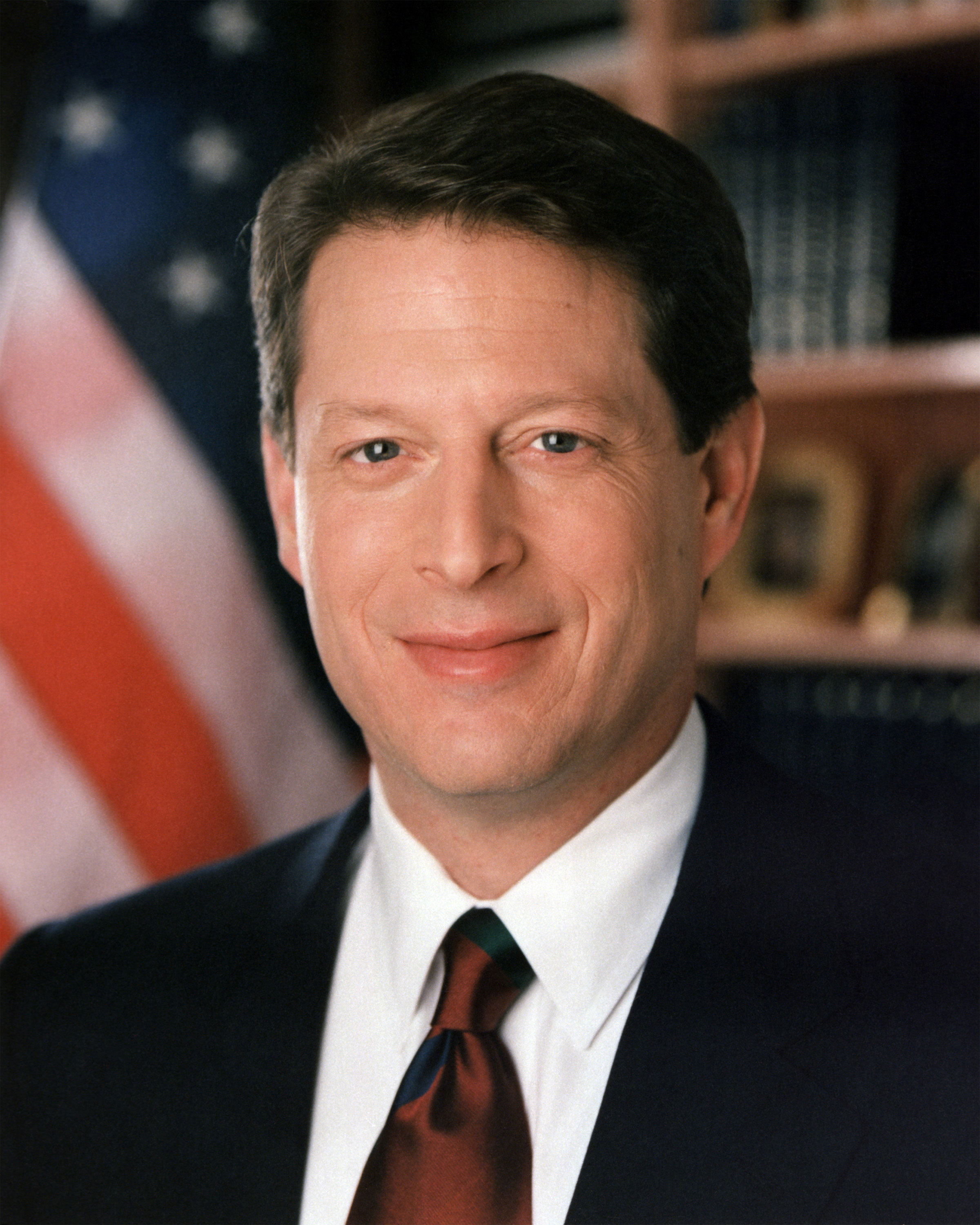 Al Gore
"We are shocked when we see educators, timid before criticism and confused about first principles, betray their trust. And we wonder what can be that philosophy of education which believes that young people can be trained to the duties of citizenship by wrapping their minds in cotton wool."
"An [hypertext] encyclopaedia will be an overall attempt by the knowledgeable, the learned societies or anyone else, to represent the state-of-the-art in their field. An encyclopaedia will be a living document, as up to date as it can be, instantly accessible at any time. It will contain carefully authored explanations and summaries of the subject, as well as computer-generated indexes of literature. A reference to a paper from the encyclopaedia conveys authority and acceptance by academic society. A measure of a paper’s standing may be conveyed by the number of links it is away from an encyclopaedia."
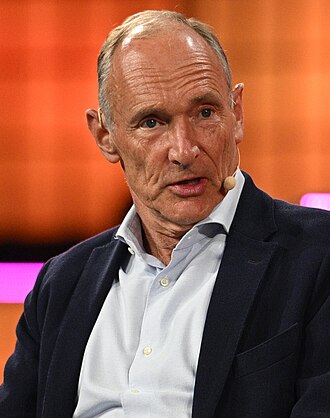 Tim Berners-Lee
"A sample of the modern debate, which neatly summarizes the anti-reductionist position is provided by Grene (1974). She points out that in principle a one-level ontology—the belief, for example, that with increasing knowledge all science will become an account of the world in the language of, say, atomic events—contradicts itself. This is so because such a belief, to be meaningful, requires an ontology which admits both atomic events and cognition. Here at once a second level is smuggled in! It is logically possible... that there might be no levels in between those of atomic events and cognition (that in essence is Descartess position) but the sciences of chemistry and biology consist of some well-tested conjectures that there are such intermediate levels as are represented by molecules, cells, organelles, organs, and organisms."
"All competent thinkers agree with Bacon that there can be no real knowledge except that which rests upon observed facts. This fundamental maxim is evidently indisputable if it is applied, as it ought to be, to the mature state of our intelligence. But, if we consider the origin of our knowledge, it is no less certain that the primitive human mind could not, and indeed ought not to, have thought in that way. For if, on the one hand, every Positive theory must necessarily be founded upon observations, it is, on the other hand, no less true that, in order to observe, our mind has need of some theory or other. If in contemplating phenomena we did not immediately connect them with principles, not only would it be impossible for us to combine these isolated observations, and therefore to derive profit from them, but we should even be entirely incapable of remembering facts, which would for the most remain unnoted by us. Thus there were two difficulties be overcome: the human mind had to observe in order to form real theories, and yet had to form theories of some sort before it could apply itself to a connected series of observations. The primitive human mind, therefore, found itself involved in a vicious circle, from which it would never have had any means of escaping, if a natural way of the difficulty had not fortunately found by the spontaneous development of Theological conceptions. ...chimerical hopes ..exaggerated ideas of mans importance in the universe to which the Theological Philosophy ...at the commencement, ...afforded an indispensable stimulus without the aid which we cannot, indeed, conceive how the primitive human mind would have been induced to undertake any arduous labours."
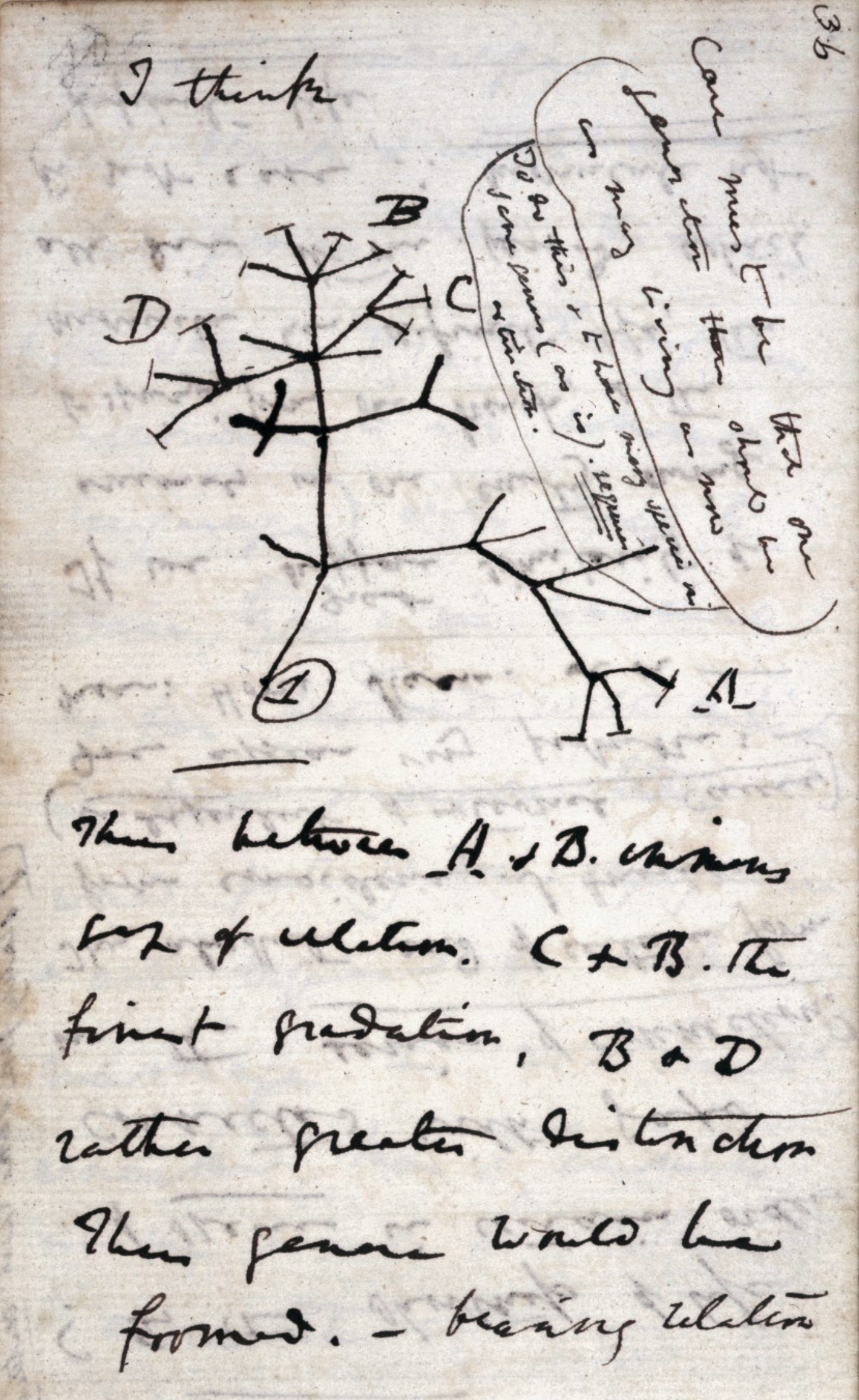 Theory