Quote
"At least, I got robbed by one of the best in the business. It’s like if you were a trainman in the old days and Jesse James held you up. You know you’ve been robbed by the best highwayman in the business."
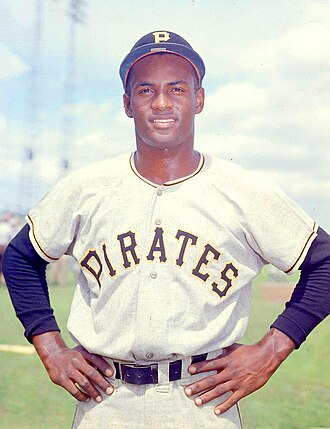 Roberto Clemente
"Here you see him swinging against Jon Matlack on September 30, 1972. The swing resulted in his 3,000th hit, a double to [left] center and the last hit of his career. This is kind of unfortunate, since looking at it now, it’s obvious that it’s not going to be a good swing. I think he’s been fooled by the ball. I think he was probably looking inside and the ball turned out to be away. Consequently, he’s not well balanced and is squatting down a bit. I think he may have [tried to] check this swing but was unable to stop it. Nevertheless, it’s a tribute to his great body control that he still hit it the way he did. It’s the kind of control you often find with great athletes, men who combine strength with flexibility to create a smooth, graceful motion. I think you find that players of Clemente’s caliber also tend to use good mechanics almost naturally, without really having to think much about them. Clemente, for example, stood off the plate, yet he still coped effectively with the ball outside. He had excellent arm extension and, in fact, was one of the first players I noticed taking his top hand off the bat. Nor did Clemente try to pull the ball. In fact, I think he made a conscious effort to hit the ball the other way. He counted a double to right center the same as a double down the right field line, and I think he was proud of the fact that he could do both. All good hitters use the whole field."
Roberto Enrique Clemente Walker was a Puerto Rican professional baseball player who played 18 seasons in Major League Baseball (MLB) for the Pittsburgh Pirates, primarily as a right fielder. On December 31, 1972, Clemente was killed when his Douglas DC-7 airplane, which he had chartered for a flight to take and deliver emergency relief goods for the survivors of a massive earthquake in Nicaragua,
"At least, I got robbed by one of the best in the business. It’s like if you were a trainman in the old days and Jesse James held you up. You know you’ve been robbed by the best highwayman in the business."
Roberto Clemente"Before I threw the ball I prayed a little bit to God: "Please let this pitch be in a good spot for him not to hit it too hard." I think I was lucky enough to throw the ball in a good spot. It was a ground ball out. I remember one time in Pittsburgh – I struck him out three times. I think that was the greatest day in my life."
Roberto Clemente"When he was throwing to third, his throw was low enough to hit the cutoff and still get to third in the air. Coming home sometimes, he’d miss the cutoff man and try to get it all the way to the plate. Didn’t hurt him because he got it there quicker than most people. Roberto was one of the very few right fielders who could field the ball with the runner rounding first and throw behind that runner, without him taking second. He threw out quite a few guys that way."
Roberto Clemente"What I did was mild compared to what Durocher did to Conlan. I dont see how what I did can be called more serious than the Durocher incident. I had good reason to lose my head. That was the second time they call me out on a play I thought I had beat. Thats enough to make anybody mad."
Roberto Clemente"I am having a plaque put on the front of my house. It will say, "To God, Mother, Father and Baseball."
Roberto Clemente"Clemente and Ted Williams are the only two batters I ever saw who get good wood on the ball almost every time up. Every ball he hits seems shot out of a cannon."
Roberto Clemente"One of the first major steps in the direction of modern skepticism came through the victory of Occam over Aquinas in a controversy about language. The statement that modi essendi were replaced by modi significandi et intelligendi, or that ontological referents were abandoned in favor of pragmatic significations, describes broadly the change in philosophy which continues to our time. From Occam to Bacon, from Bacon to Hobbes, and from Hobbes to contemporary semanticists, the progression is clear: ideas become psychological figments, words become useful signs. ... To one completely committed to this realm of becoming, as are the empiricists, the claim to apprehend verities is a sign of . Probably we have here but a highly sophisticated expression of the doctrine that ideals are hallucination and that the only normal, sane person is the healthy extrovert, making instant, instinctive adjustments to the stimuli of the material world."
"To have success in science, you need some luck. But to succeed in science, you need a lot more than luck. And its not enough to be smart — lots of people are very bright and get nowhere in life. In my view, you have to combine intelligence with a willingness not to follow conventions when they block your path forward."
"I, too, believed it was impossible to change the existing society into one that would be for the benefit of all; neither could I espouse any given ideal for society. But [...] I felt that even if one did not have an ideal vision of society, one could have one’s work to do. Whether it was successful or not was not our concern; it was enough that we believed it to be a valid work. The accomplishment of that work, I believed, was what our real life was about. Yes. I want to carry out a work of my own; for I feel that by so doing our lives are rooted in the here and now, not in some far-off ideal goal."
"We have already mentioned what may, perhaps, appear paradoxical to some of our readers, — that the division of labour can be applied with equal success to mental as to mechanical operations, and that it ensures in both the same economy of time."
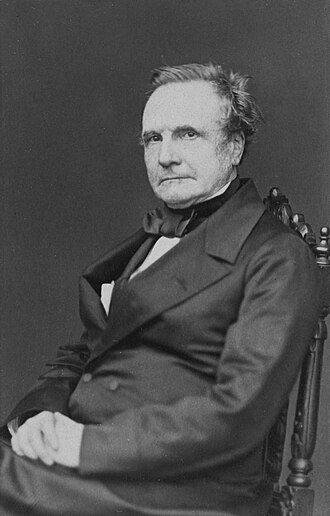 Charles Babbage
"The war was finished. It had lasted ten equivalent years and taken ten million lives. Thus it was neither of long duration nor of serious attrition. It hadnt any great significance; it was not intended to have. It did not prove a point, since all points had long ago been proven. What it did, perhaps, was to emphasize an aspect, sharpen a concept, underline a trend. On the whole it was a successful operation. Economically and ecologically it was of healthy effect, and who should grumble? And after wars, men go home. No, no, men start for home. Its not the same."
"The final test of a leader is that he leaves behind him in other men the conviction and the will to carry on. ... The genius of a good leader is to leave behind him a situation which common sense, without the grace of genius, can deal with successfully."
 Leadership