Quote
"Government is a trust, and the officers of the government are trustees; and both the trust and the trustees are created for the benefit of the people."
H
Henry Clay"How often are we forced to charge fortune with partiality towards the unjust!"
Henry Clay was an American lawyer, statesman, and diplomat who represented Kentucky in both the U.S. Senate and House of Representatives. He was the seventh House speaker as well as the ninth secretary of state. Clay unsuccessfully ran for president in the 1824, 1832, and 1844 elections. He helped found both the National Republican Party and the Whig Party. For his role in defusing sectional crise
"Government is a trust, and the officers of the government are trustees; and both the trust and the trustees are created for the benefit of the people."
"What is the nature of this government? It is emphatically federal, vested with an aggregate of special powers for general purposes, conceded by existing sovereignties, who have themselves retained what is not so conceded. It is said that there are cases in which it must act on implied powers. This is not controverted, but the implication must be necessary, and obviously flow from enumerated power with which it is allied."
"I am not, sir, in favor of cherishing the passion of conquest. I am permitted … to indulge the hope of seeing, ere long, the new United States, (if you will allow me the expression,) embracing not only the old …."
"In all cases where incidental powers are acted upon, the principal and incidental ought to be congenial with each other, and partake of a common nature. The incidental power ought to be strictly subordinate and limited to the end proposed to be obtained by the specified power. In other words, under the name of accomplishing one object which is specified, the power implied ought not to be made to embrace other objects, which are not specified in the constitution."
"Sir, if you wish to avoid foreign commerce; give up all your prosperity. It is the thing protected, not the instrument of protection, that involves you in war. Commerce engenders collision, collision war, and war, the argument supposes, leads to despotism. Would the councils of that statesman be deemed who would recommend that the nation should be unarmed—that in the art of war, the material spirit, and martial exercises, should be prohibited—…—and that the great body of the people should be taught that the national happiness was to be found in perpetual peace alone? No, sir."
"The great advantage of our system of government over all others, is, that we have a written constitution, defining its limits, and prescribing its authorities; and that, however, for a time, faction may convulse the nation, and passion and party prejudice sway its functionaries, the season of reflection will recur, when calmly retracing their deeds, all aberrations from fundamental principle will be corrected."
"Gentlemen, no fighting please. This is, after all, a council of war. (p. 26)"
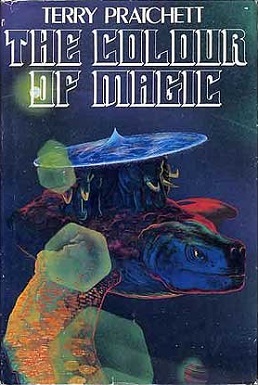 Discworld
"I should say that when people talk about capitalism its a bit of a joke. Theres no such thing. No country, no business class, has ever been willing to subject itself to the free market, free market discipline. Free markets are for others. Like, the Third World is the Third World because they had free markets rammed down their throat. Meanwhile, the enlightened states, England, the United States, others, resorted to massive state intervention to protect private power, and still do. Thats right up to the present. I mean, the Reagan administration for example was the most protectionist in post-war American history. Virtually the entire dynamic economy in the United States is based crucially on state initiative and intervention: computers, the internet, telecommunication, automation, pharmaceutical, you just name it. Run through it, and you find massive ripoffs of the public, meaning, a system in which under one guise or another the public pays the costs and takes the risks, and profit is privatized. Thats very remote from a free market. Free market is like what India had to suffer for a couple hundred years, and most of the rest of the Third World."
"The Dwarf sees farther than the Giant, when he has the Giants shoulders to mount on."
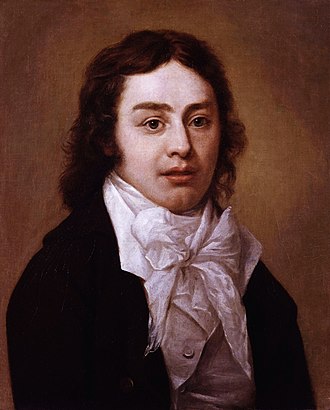 Samuel Taylor Coleridge
"If civilization has an opposite, it is war."
"A word of the faith that never balks, Here or henceforward it is all the same to me, I accept Time absolutely. It alone is without flaw, it alone rounds and completes all, That mystic baffling wonder alone completes all. (23)"
"I am dominated by one thing, an irresistible, burning attraction towards the abstract. The expression of human feelings and the passions of man certainly interest me deeply, but I am less concerned with expressing the motions of the soul and mind than to render visible, so to speak, the inner flashes of intuition which have something divine in their apparent insignificance and reveal magic, even divine horizons, when they are transposed into the marvellous effects of pure plastic art."
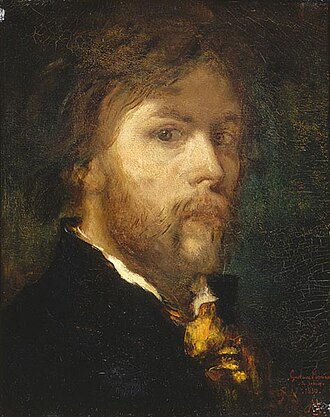 Gustave Moreau