SHAWORDS

However, it is my judgment in these things that when you see something — Robert Oppenheimer

"However, it is my judgment in these things that when you see something that is technically sweet, you go ahead and do it and you argue about what to do about it only after you have had your technical success. That is the way it was with the atomic bomb. I do not think anybody opposed making it; there were some debates about what to do with it after it was made. I cannot very well imagine if we had known in late 1949 what we got to know by early 1951 that the tone of our report would have been the same."
R
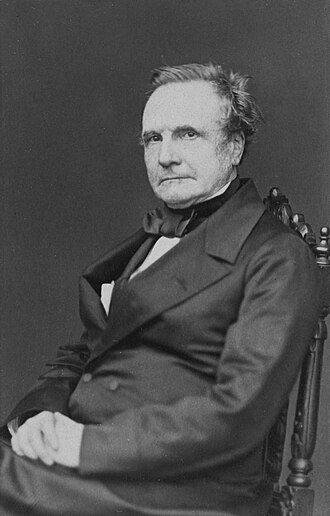
Robert Oppenheimer
Robert Oppenheimer
author34 quotes

J. Robert Oppenheimer was an American theoretical physicist who served as the director of the Manhattan Project's Los Alamos Laboratory during World War II. He is often called the "father of the atomic bomb" for his role in overseeing the development of the first nuclear weapons.

More by Robert Oppenheimer

View all →
Quote
"Everyone wants rather to be pleasing to women and that desire is not altogether, though it is very largely, a manifestation of vanity. But one cannot aim to be pleasing to women any more than one can aim to have taste, or beauty of expression, or happiness; for these things are not specific aims which one may learn to attain; they are descriptions of the adequacy of ones living. To try to be happy is to try to build a machine with no other specification than that it shall run noiselessly."
R
Robert Oppenheimer
Quote
"There must be no barriers to freedom of inquiry … There is no place for dogma in science. The scientist is free, and must be free to ask any question, to doubt any assertion, to seek for any evidence, to correct any errors. Our political life is also predicated on openness. We know that the only way to avoid error is to detect it and that the only way to detect it is to be free to inquire. And we know that as long as men are free to ask what they must, free to say what they think, free to think what they will, freedom can never be lost, and science can never regress."
R
Robert Oppenheimer
Quote
"I found him excellent. We got along very well. We were friends until his last day. I enjoyed things about him that some people disliked. Its true you carried on a charade with him. He lived a charade, and you went along with it. It was fine — matching wits and so on — and I took him for what he was. I understood his problem. [What was his problem?] Identity. He reminded me of a boyhood friend about whom someone said that he couldnt make up his mind whether to be president of the Bnai Brith or the Knights of Columbus. Perhaps he wanted to be both simultaneously. Oppenheimer wanted every experience. In that sense he never focused. My own feeling is that if he had studied the Talmud and Hebrew, rather than Sanskrit, he would have been a much greater physicist."
R
Robert Oppenheimer

More on Success

View all →
Quote
"One of the first major steps in the direction of modern skepticism came through the victory of Occam over Aquinas in a controversy about language. The statement that modi essendi were replaced by modi significandi et intelligendi, or that ontological referents were abandoned in favor of pragmatic significations, describes broadly the change in philosophy which continues to our time. From Occam to Bacon, from Bacon to Hobbes, and from Hobbes to contemporary semanticists, the progression is clear: ideas become psychological figments, words become useful signs. ... To one completely committed to this realm of becoming, as are the empiricists, the claim to apprehend verities is a sign of . Probably we have here but a highly sophisticated expression of the doctrine that ideals are hallucination and that the only normal, sane person is the healthy extrovert, making instant, instinctive adjustments to the stimuli of the material world."
O
Ontology
Quote
"I, too, believed it was impossible to change the existing society into one that would be for the benefit of all; neither could I espouse any given ideal for society. But [...] I felt that even if one did not have an ideal vision of society, one could have one’s work to do. Whether it was successful or not was not our concern; it was enough that we believed it to be a valid work. The accomplishment of that work, I believed, was what our real life was about. Yes. I want to carry out a work of my own; for I feel that by so doing our lives are rooted in the here and now, not in some far-off ideal goal."
P
Purpose
Quote
"The war was finished. It had lasted ten equivalent years and taken ten million lives. Thus it was neither of long duration nor of serious attrition. It hadnt any great significance; it was not intended to have. It did not prove a point, since all points had long ago been proven. What it did, perhaps, was to emphasize an aspect, sharpen a concept, underline a trend. On the whole it was a successful operation. Economically and ecologically it was of healthy effect, and who should grumble? And after wars, men go home. No, no, men start for home. Its not the same."
R
R. A. Lafferty