Quote
"Beautiful women, whose beauty meant more than it said... was their brilliancy always fed by something coarse and concealed? Was that their secret?"
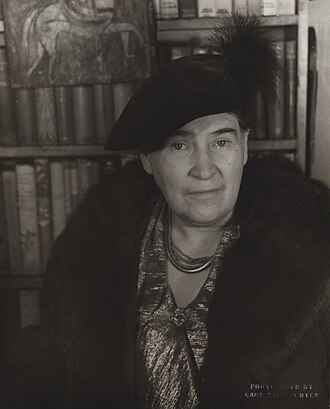 Willa Cather
"I aint got time to learn. I can work like mans now."
Willa Sibert Cather was an American writer known for her novels of life on the Great Plains, including O Pioneers!, The Song of the Lark, and My Ántonia. In 1923, she was awarded the Pulitzer Prize for One of Ours, a novel set during World War I.
"Beautiful women, whose beauty meant more than it said... was their brilliancy always fed by something coarse and concealed? Was that their secret?"
Willa Cather"He had seen the end of an era, the sunset of the pioneer. He had come upon it when already its glory was nearly spent. So in the buffalo times a traveller used to come upon the embers of a hunters fire on the prairies, after the hunter was up and gone; the coals would be trampled out, but the ground was warm, and the flattened grass where he had slept and where his pony had grazed, told the story. This was the very end of the road-making West; the men who had put plains and mountains under the iron harness were old; some were poor, and even the successful ones were hunting for rest and a brief reprieve from death. It was already gone, that age; nothing could ever bring it back. The taste and smell and song of it, the visions those men had seen in the air and followed, — these he had caught in a kind of afterglow in their own faces, — and this would always be his."
Willa Cather"My familiar spirit is like an old wild turkey that forsakes a feeding ground as soon as it sees tracks of people-especially if the people are readers, book-buyers. Its a crafty bird and it wants to go where there aint no readers Thats the truth: they go and paw a place all up and spoil it for me. It isnt my secret anymore."
Willa Cather"We come and go, but the land is always here. And the people who love it and understand it are the people who own it — for a little while."
Willa Cather"I tell you there is no such thing as creative hate!"
Willa Cather"The great fact in life, the always possible escape from dullness, was the lake. The sun rose out of it, the day began there; it was like an open door that nobody could shut. The land and all its dreariness could never close in on you. You had only to look at the lake, and you knew you would soon be free."
Willa Cather