Quote
"I aint got time to learn. I can work like mans now."
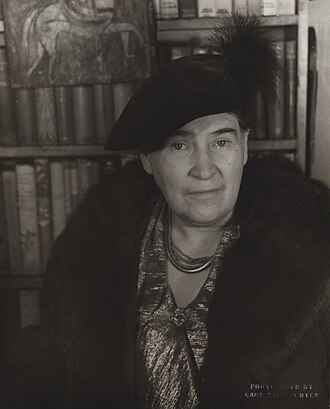 Willa Cather
Willa Cather
Willa Cather
Willa Sibert Cather was an American writer known for her novels of life on the Great Plains, including O Pioneers!, The Song of the Lark, and My Ántonia. In 1923, she was awarded the Pulitzer Prize for One of Ours, a novel set during World War I.
"I aint got time to learn. I can work like mans now."
Willa Cather"He had never learned to live without delight. And he would have to learn to, just as, in a Prohibition country, he supposed he would have to learn to live without sherry. Theoretically he knew that life is possible, maybe even pleasant, without joy, without passionate griefs. But it had never occurred to him that he might have to live like that."
Willa Cather"He had seen the end of an era, the sunset of the pioneer. He had come upon it when already its glory was nearly spent. So in the buffalo times a traveller used to come upon the embers of a hunters fire on the prairies, after the hunter was up and gone; the coals would be trampled out, but the ground was warm, and the flattened grass where he had slept and where his pony had grazed, told the story. This was the very end of the road-making West; the men who had put plains and mountains under the iron harness were old; some were poor, and even the successful ones were hunting for rest and a brief reprieve from death. It was already gone, that age; nothing could ever bring it back. The taste and smell and song of it, the visions those men had seen in the air and followed, — these he had caught in a kind of afterglow in their own faces, — and this would always be his."
Willa Cather"We come and go, but the land is always here. And the people who love it and understand it are the people who own it — for a little while."
Willa Cather"I tell you there is no such thing as creative hate!"
Willa Cather"Sometimes a neighbor whom we have disliked a lifetime for his arrogance and conceit lets fall a single commonplace remark that shows us another side, another man, really; a man uncertain, and puzzled, and in the dark like ourselves."
Willa Cather"The history of every country begins in the heart of a man or a woman."
Willa Cather"Theres nothing so dangerous as sitting still. Youve only got one life, one youth, and you can let it slip through your fingers if you want to; nothing easier. Most people do that."
Willa Cather"Freedom so often means that one isnt needed anywhere. Here you are an individual, you have a background of your own, you would be missed. But off there in the cities there are thousands of rolling stones like me. We are all alike; we have no ties, we know nobody, we own nothing. When one of us dies, they scarcely know where to bury him... We have no house, no place, no people of our own. We live in the streets, in the parks, in the theatres. We sit in restaurants and concert halls and look about at the hundreds of our own kind and shudder."
Willa Cather"Alexandra drew her shawl closer about her and stood leaning against the frame of the mill, looking at the stars which glittered so keenly through the frosty autumn air. She always loved to watch them, to think of their vastness and distance, and of their ordered march. It fortified her to reflect upon the great operations of nature, and when she thought of the law that lay behind them, she felt a sense of personal security."
Willa Cather"She had never known before how much the country meant to her. The chirping of the insects in the long grass had been like the sweetest music. She had felt as if her heart were hiding down there, somewhere, with the quail and the plover and all the little wild things that crooned or buzzed in the sun. Under the long shaggy ridges, she felt the future stirring."
Willa Cather"My familiar spirit is like an old wild turkey that forsakes a feeding ground as soon as it sees tracks of people-especially if the people are readers, book-buyers. Its a crafty bird and it wants to go where there aint no readers Thats the truth: they go and paw a place all up and spoil it for me. It isnt my secret anymore."
Willa Cather