Quote
"My passionate interest in social justice and social responsibility has always stood in curious contrast to a marked lack of desire for direct association with men and women."
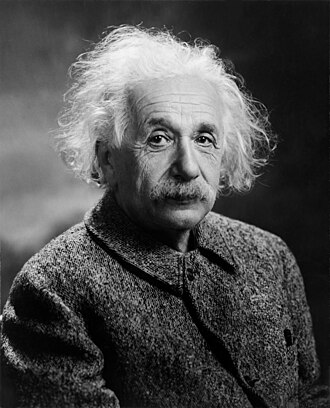 Albert Einstein
"I believe, indeed, that overemphasis on the purely intellectual attitude, often directed solely to the practical and factual, in our education, has led directly to the impairment of ethical values. I am not thinking so much of the dangers with which technical progress has directly confronted mankind, as of the stifling of mutual human considerations by a "matter-of-fact" habit of thought which has come to lie like a killing frost upon human relations. ... The frightful dilemma of the political world situation has much to do with this sin of omission on the part of our civilization. Without "ethical culture," there is no salvation for humanity."
Albert Einstein was a German-born theoretical physicist best known for developing the theory of relativity. Einstein also made important contributions to quantum theory. His mass–energy equivalence formula E = mc2, which arises from special relativity, has been called "the world's most famous equation". He received the 1921 Nobel Prize in Physics for "his services to theoretical physics, and espec
"My passionate interest in social justice and social responsibility has always stood in curious contrast to a marked lack of desire for direct association with men and women."
Albert Einstein"When I examine myself and my methods of thought I come to the conclusion that the gift of fantasy has meant more to me than my talent for absorbing positive knowledge."
Albert Einstein"The physicists say that I am a mathematician, and the mathematicians say that I am a physicist. I am a completely isolated man and though everybody knows me, there are very few people who really know me."
Albert Einstein"The individual has become more conscious than ever of his dependence upon society. But he does not experience this dependence as a positive asset, as an organic tie, as a protective force, but rather as a threat to his natural rights, or even to his economic existence. Moreover, his position in society is such that the egotistical drives of his make-up are constantly being accentuated, while his social drives, which are by nature weaker, progressively deteriorate."
Albert Einstein"There are few enough people with sufficient independence to see the weaknesses and follies of their contemporaries and remain themselves untouched by them. And these isolated few usually soon lose their zeal for putting things to rights when they have come face to face with human obduracy. Only to a tiny minority is it given to fascinate their generation by subtle humour and grace and to hold the mirror up to it by the impersonal agency of art. To-day I salute with sincere emotion the supreme master of this method, who has delighted — and educated — us all."
Albert Einstein"A new type of thinking is essential if mankind is to survive and move toward higher levels."
Albert Einstein"O dread and silent mount! I gazed upon thee, Till thou, still present to the bodily sense, Didst vanish from my thought: entranced in prayer, I worshipped the Invisible alone."
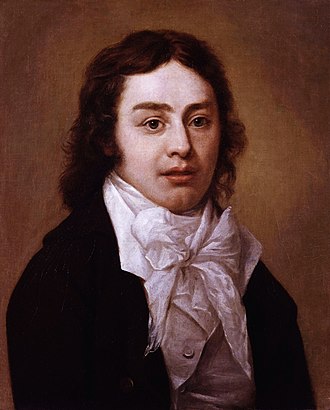 Samuel Taylor Coleridge
"Mister Toombs was willing to dissolve the Union to save slavery, Mister Phillips, to save liberty; while Mister Seward, denounced and derided by both, declared that the deepest instinct of the American people was for union. Reserved rights. State rights, limited powers, the advantages of union and disunion, were the cucumbers from which we were busily engaged in distilling light, overlooking the fact of nationality in discussing the conditions of union. We were speculating upon costume. We gravely proved that the clothes were the clothes of a woman, or of a child, without seeing that whatever the clothes might be there was a full-grown man inside of them. "The Constitution is a contract between sovereign States", shouted Mister Toombs, "let Georgia tear it and separate". "The Constitution is a league with hell", calmly replied Mister Phillips, "let New York cut off New Orleans to rot alone". "Oh, dear! it"s a dreadful dilemma", whimpered President Buchanan. "States have no right to secede, and the United States have no right to coerce. Oh, dear me! it"s perfectly awful! I"m the most patriotic of men, but what shall I do? what shall I do?" Separate! Cut off! Secede! It was of a living body they spoke, which, pierced anywhere, quivered everywhere."
 Wendell Phillips
"Its never a matter of ethics versus pragmatism; its a question of which informs the other. Humans have shown themselves capable of almost unlimited imagination and innovation—qualities that could be said to define human beings. People have used this capacity to do both great good and great harm. The point is that when humans set their minds to doing something, its frequently possible. It makes sense to first ask what people want to do and why, from an ethical standpoint, and then get to the pragmatic how-to questions. The very process of asking whats right is how people fill out ethics in praxis, to meet new demands and dilemmas, new social conditions and contexts. Anarchism, then, brings an egalitarian ethics out into the world, making it transparent, public, and shared. It maintains an ethical orientation, while continually trying to put such notions into practice, as flawed as the effort might be. When other people come into contact with this ethical compass, they will hopefully "get it" and incorporate the same values into their lives, because it works. It offers directionality to political involvement and buttresses peoples efforts to remake society. It turns surviving into thriving. Thats the crucial difference between a pragmatic versus ethical impulse: people, in cooperative concert, qualitatively transform one anothers lives."
"Thats... the big discovery of this principle of computational equivalence of mine. ...This is something which is kind of a follow-on to Gödels theorem, to Turings work on the ... that there is this fundamental limitation built into science, this idea of computational irreducibility that says that even though you may know the rules by which something operates, that does not mean that you can readily... be smarter that it and jump ahead and figure out what its going to do."
"The art of leading, in operations large or small, is the art of dealing with humanity, of working diligently on behalf of men, of being sympathetic with them, but equally, of insisting that they make a square facing toward their own problems."
 Leadership
"The establishment of "The Times" newspaper is an example, on a large scale, of a manufactory in which the division of labour, both mental and bodily, is admirably illustrated, and in which also the effect of domestic economy is well exemplified. It is scarcely imagined, by the thousands who read that paper in various quarters of the globe, what a scene of organized activity the factory presents during the whole night, or what a quantity of talent and mechanical skill is put in action for their amusement and information."
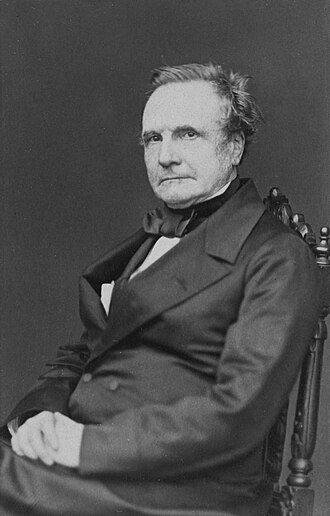 Charles Babbage