Quote
"Scott Glenn - Lieutenant Richard M. Colby"
A
Apocalypse Now"I remember when I was with Special Forces. Seems a thousand centuries ago. We went into a camp to inoculate the children. We left the camp after we had inoculated the children for polio, and this old man came running after us and he was crying. He couldnt see. We went back there and they had come and hacked off every inoculated arm. There they were in a pile, a pile of little arms. And I remember I...I...I cried. I wept like some grandmother. I wanted to tear my teeth out. I didnt know what I wanted to do. And I want to remember it. I never want to forget it. I never want to forget. And then I realized, like I was shot — like I was shot with a diamond...a diamond bullet right through my forehead. And I thought, my God, the genius of that. The genius! The will to do that: perfect, genuine, complete, crystalline, pure. And then I realized they were stronger than we, because they could stand it. These were not monsters. These were men, trained cadres — these men who fought with their hearts, who had families, who have children, who are filled with love — but they had the strength — the strength! — to do that. If I had ten divisions of those men, our troubles here would be over very quickly. You have to have men who are moral and at the same time who are able to utilize their primordial instincts to kill without feeling, without passion, without judgment. Without judgment! Because its judgment that defeats us."
Apocalypse Now is a 1979 American psychological epic war film produced and directed by Francis Ford Coppola. The screenplay, written by Coppola and John Milius, with narration by Michael Herr, is loosely inspired by the 1899 novella Heart of Darkness by Joseph Conrad, with the setting changed from late 19th-century Congo to the Vietnam War. The film follows a river journey from South Vietnam into
"Scott Glenn - Lieutenant Richard M. Colby"
"Albert Hall - Quartermaster George "Chief" Phillips"
"Have you ever considered any real freedoms? Freedoms from the opinion of others... even the opinions of yourself?"
"I watched a snail crawl along the edge of a straight razor. Thats my dream. Thats my nightmare: crawling, slithering, along the edge of a straight razor and surviving."
"As long as cold beer, hot food, rock n roll, and all the other amenities remain expected norm, our conduct of the war will only gain impotence."
"The Horror. . . The Horror. . ."
"At one point a heated discussion arose over the possible interpretation of Lolita as a grandiose metaphor of the classic Europeans hopeless love for young, seductive, barbaric America. In his afterword to the novel Nabokov himself mentions this as the naive theory of one of the publishers who turned the book down. And although there cant be the slightest doubt that Nabokov did not mean to limit Lolita to that interpretation, there is no reason to exclude it as one of the novels many dimensions. The point, I felt, became obvious when one drew the line between Lolita as a delightfully frivolous story on the verge of pornography and Lolita as a literary masterpiece, the only convincing love story of our century."
 Lolita
"Lovely food, for rabbits, that is."
"One makes mistakes; that is life. But it is never a mistake to have loved."
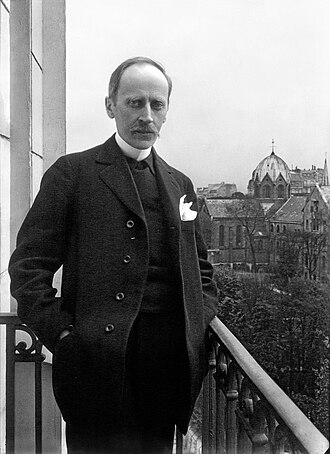 Romain Rolland
"[explaining to Ernie how April apologized to him] She just showed up at the factory, took off her coat, and begged me to take her. We made love in a way that Ive only ever seen in nature films."
 MouseHunt (film)
"Love is always love, come whence it may. A heart that beats at your approach, an eye that weeps when you go away are things so rare, so sweet, so precious that they must never be despised."
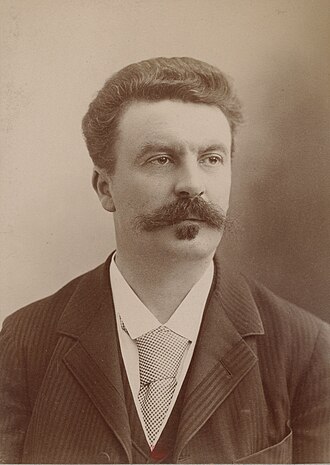 Guy de Maupassant
"He was obeyed, yet he inspired neither love nor fear, nor even respect. He inspired uneasiness. That was it! Uneasiness. Not a definite mistrust — just uneasiness — nothing more. You have no idea how effective such a... a... faculty can be. He had no genius for organizing, for initiative, or for order even. That was evident in such things as the deplorable state of the station. He had no learning, and no intelligence. His position had come to him — why? Perhaps because he was never ill . . . He had served three terms of three years out there . . . Because triumphant health in the general rout of constitutions is a kind of power in itself."