Quote
"The function of the artist is to provide what life does not."
T
Tom Robbins"Ill say this much: virtually every advancement made by our species since civilization first peeked out of its nest of stone has been initiated by lone individuals, mavericks who more often than not were ignored, mocked, or viciously persecuted by society and its institutions. Society in general maintains such a vested interest in its cozy habits and solidified belief systems that it had rather die – or kill – than entertain change. Consider how threatened religious fundamentalists of all faiths remain to this day by science in general and Darwin in particular. Cultural institutions by and large share one primary objective: herd control. Even when ostensibly benign, their propensity for manipulation, compartmentalization, standardization and suppression of potentially disruptive behavior or ideas, has served to freeze the evolution of consciousness practically in its tracks. In technological development, in production of material goods and creature comforts, weve challenged the very gods, but psychologically, emotionally, were scarcely more than chimpanzees with bulldozers, baboons with big bombs."
Thomas Eugene Robbins was an American novelist. His most notable works are "seriocomedies". His 1976 novel Even Cowgirls Get the Blues was adapted into the 1993 film version by Gus Van Sant. His last work, published in 2014, was Tibetan Peach Pie, a self-declared "un-memoir". From 1970, Robbins lived in La Conner, Washington, where he wrote nine of his books.
"The function of the artist is to provide what life does not."
"Whether a man is a criminal or a public servant is purely a matter of perspective."
"There are many things worth living for, there are a few things worth dying for, but there is nothing worth killing for."
"Theyd be no threat to me. I have a black belt in Haiku. And a black vest in the cleaners."
"Love is the ultimate outlaw. It just won’t adhere to any rules. The most any of us can do is to sign on as its accomplice. Instead of vowing to honor and obey, maybe we should swear to aid and abet. That would mean that security is out of the question. The words “make” and “stay” become inappropriate. My love for you has no strings attached. I love you for free."
"Of course Ive contradicted myself. I always do. Only cretins and logicians dont contradict themselves. And in their consistency, they contradict life."
"We have created a wealthy society with tens of millions of talented, resourceful individuals who play virtually no role whatsoever as citizens. Bringing these people in — with their networks of influence, their knowledge, and their resources — is the key to creating the capacity for shared intelligence that we need to solve our problems."
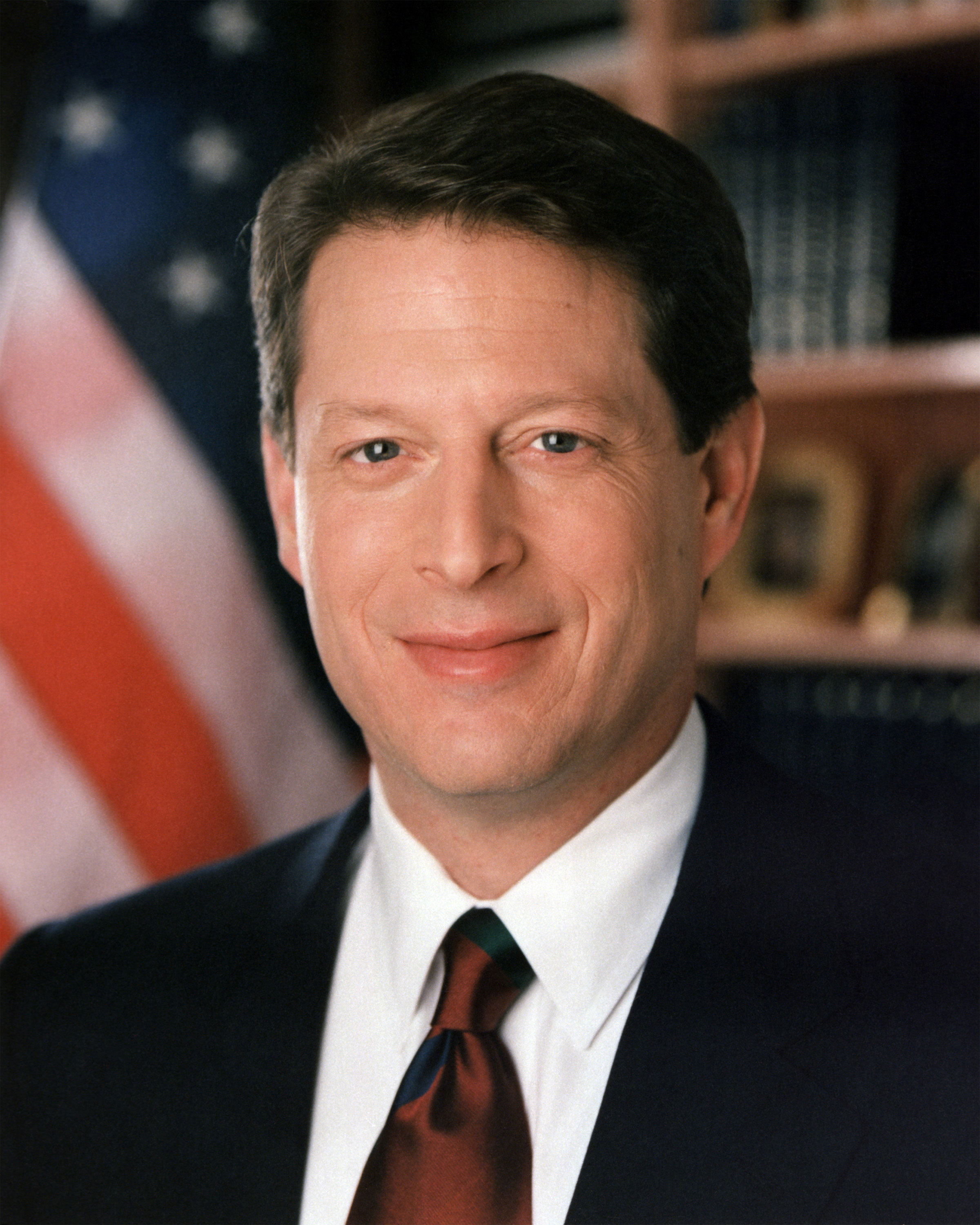 Al Gore
"As in respect of the first wonder we are all on the same level, how comes it that the philosophic mind should, in all ages, be the privilege of a few? The most obvious reason is this: The wonder takes place before the period of reflection, and (with the great mass of mankind) long before the individual is capable of directing his attention freely and consciously to the feeling, or even to its exciting causes. Surprise (the form and dress which the wonder of ignorance usually puts on) is worn away, if not precluded, by custom and familiarity."
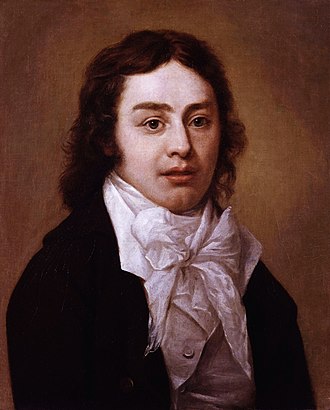 Samuel Taylor Coleridge
"The dualistic philosophy reigned supreme in Europe, dominating the development of Western science. But with the advent of atomic physics, findings based on demonstrable experiment were seen to negate the dualistic theory, and the trend of thought since then has been back to the monistic conception of the ancient Taoists."
"Under the rule of a repressive whole, liberty can be made into a powerful instrument of domination. The range of choice open to the individual is not the decisive factor in determining the degree of human freedom, but what can be chosen and what is chosen by the individual."
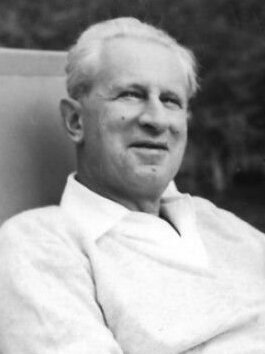 Herbert Marcuse
"All economic activity is carried out through time. Every individual economic process occupies a certain time, and all linkages between economic processes necessarily involve longer or shorter periods of time."
"I believe that the main lesson which our generation has learnt is that we must find a new limit for the activities of government, a limit which leaves ample scope for sensible experimentation but which secures the freedom of the individual as the mainspring of all social and political activity. The whole purpose of these lectures has been to suggest that we can find such a limit if we are willing to revive and develop the ancient ideal of the Rule of Law."