Quote
"Most of the children were shoeless and you were confronted with the dilemma that, no matter how much money you had and no matter where you could escape to overseas, you could not save yourself from your own country."
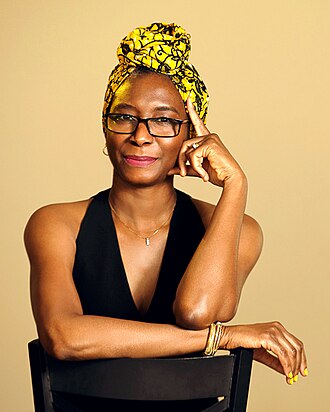 Sefi Atta
"I’m never afraid when I write. I’m sometimes nervous after my books are published, by which time it’s too late to censor myself. When you write boldly, you get mixed reactions and I assume it will be the same with this novel. Not just because of its content, but because of the way I’ve written it. Much of what we’ve talked about may be overlooked by readers who want more to happen in an African novel, but I don’t write to accommodate their needs. Also, whenever you write about privileged Africans, someone somewhere will be upset with you."
Sefi Atta is a Nigerian-American novelist, short-story writer, playwright and screenwriter. Her books have been translated into many languages, her radio plays have been broadcast by the BBC, and her stage plays have been performed internationally.
"Most of the children were shoeless and you were confronted with the dilemma that, no matter how much money you had and no matter where you could escape to overseas, you could not save yourself from your own country."
Sefi Atta"We call that development, but at every traffic light along the way are beggars, most of whom are children and disabled adults. Some are amputees and presumably they are often victims of sharia law punishments. We look away only to see billboards advertising business conferences at mega churches."
Sefi Atta"No. I’ve never even read a Le Carré novel, but I slept with a few in a bookcase behind my headboard. My mother was a Le Carré fan. I studied Graham Greene’s The Power and the Glory when I was at school in England, which turned me into a fan of his prose. I realise my novel ventures into white male territory by playing with the idea of espionage and satirising high society. When you do that as an African woman writer, someone is bound to ask, “Why are you here? Have you lost your way? Do you know where you are going?” But I was raised by a woman whose experiences were not limited by her gender or nationality."
Sefi Atta"It doesn’t matter whether Frances Cooke – the bead collector – was spying or not. It was enough to show there were allegations in those days, which may have been partly due to xenophobia. Ikoyi, however, was where business and political leaders lived, and the United States did have an interest in spreading neo-liberal ideas to developing countries like Nigeria."
Sefi Atta"Cooking was a skill, I thought; an art form. In our country, we appreciated the end result, but not the craft, perhaps because we didn’t have fancy names. Paring was “cut it.” Julienne was “cut it well.” Chopping was “cut it well well,” and so on till you had puree, which would probably be “mash it.” And, if anyone was measuring any ingredient in a kitchen, it meant that they really didn’t know what they were doing."
Sefi Atta"If anyone says they fit in nicely with the Nigerian upper class, I would have to come to the conclusion that they are thoughtless. No one is responsible for their upbringing and no one deserves to be defined by any social class. My late father was the son and great-grandson of traditional rulers and he attended Oxford University. I often joke that the women in my mother’s family carry themselves as if they are royalty. They are proud of their parents, who worked hard to educate them."
Sefi Atta