Quote
"To remember that once we were near the salvation of Christ, so near that our right hand might have touched and taken it, and after all that hand was withheld; this is a memory which will enhance remorse forever."
C
Conviction"In immediate feeling, one human being never understands the other. As soon as something happens to him personally, he understands everything differently. When he himself is suffering, he does not understand another’s suffering, and when he himself is happy he still does not understand it. Immediate feeling selfishly understands everything in relation to itself and therefore is in the disunion of double-mindedness with all others, because there can be unity only in the soundly understood equality of sincerity, and in selfish shortsightedness his conviction is continually being changed, or it is chance that it is not changed, since the reason for this is that by chance his life is not touched by any change. But such firmness of conviction is a delusion on the part of the pampered, because a conviction is not firm when everything forces it upon one, as it were, and makes it firm, but its firmness manifests itself in the ups and downs of everything. Rarely, indeed, does a person’s life avoid all changes, and in the changes the conviction of immediate feeling is a delusion, the momentary impression blown up into a view of life as a whole."
In law, a conviction is the determination by a court of law that a defendant is guilty of a crime. A conviction may follow a guilty plea that is accepted by the court, a jury trial in which a verdict of guilty is delivered, or a trial by judge in which the defendant is found guilty.
"To remember that once we were near the salvation of Christ, so near that our right hand might have touched and taken it, and after all that hand was withheld; this is a memory which will enhance remorse forever."
"The best lack all conviction, while the worst Are full of passionate intensity."
"Conviction, it turns out, is a luxury of those standing on the sidelines."
"It is no certain evidence, that because the conscience feels the weight of sin, the heart is humbled on account of it; that because the conscience approves of the rectitude of the Divine justice, the heart bows to the Divine sovereignty. The most powerful conviction of sin, therefore, is not conclusive evidence of Christian character."
"Whether anybody comes to convince me or not a part of my life does always ache arresting my chest."
"We do not desire that the unanimity of a jury should be the result of anything but the unanimity of conviction. It is true that a single juryman, or two or three constituting a small minority, may, if their own convictions are not strong and deeply rooted, think themselves justified in giving way to the majority. If is very true, if jurymen have only doubts or weak convictions, they may yield to the stronger and more determined view of their fellows; but I hold it to be of the essence of a jurymans duty, if he has a firm and deeply rooted conviction, either in the affirmative or the negative of the issue he has to try, not to give up that conviction, although the majority may be against him, from any desire to purchase his freedom from confinement or constraint, or the various other inconveniences to which jurors are subject."
"Be the change that you wish to see in the world."
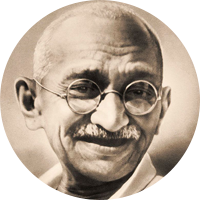 Mahatma Gandhi
"we are engaged in a grim experiment never before attempted. We are subjecting whole populations to exposure to chemicals which animal experiments have proved to be extremely poisonous and in many cases cumulative in their effect. These exposures now begin at or before birth and-unless we change our methods-will continue through the lifetime of those now living. No one knows what the result will be, because we have no previous experience to guide us."
"pity this busy monster, manunkind, not. Progress is a comfortable disease: your victim (death and life safely beyond) plays with the bigness of his littleness"
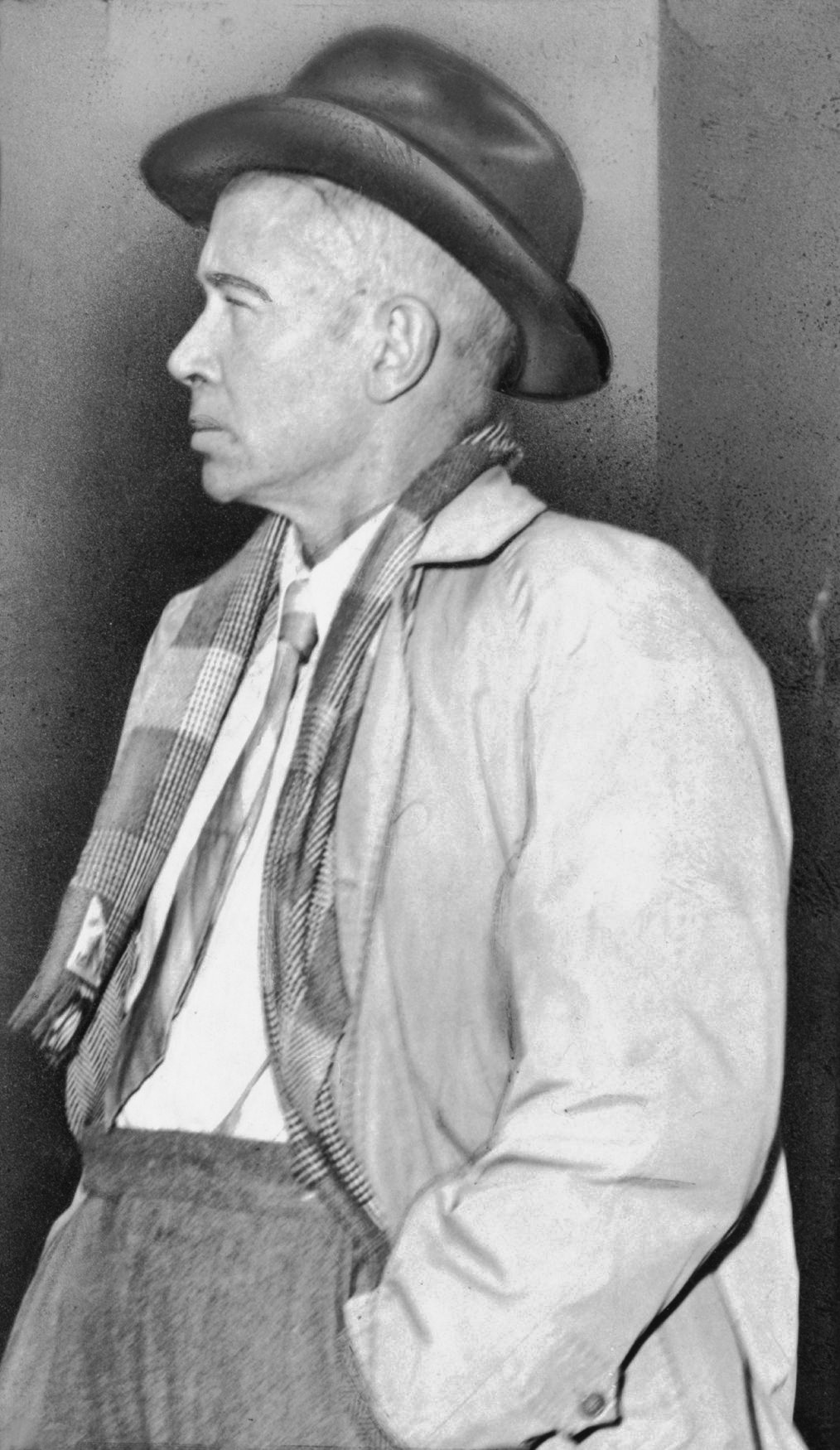 E. E. Cummings
"I believe that the unity of man as opposed to other living things derives from the fact that man is the conscious life of himself. Man is conscious of himself, of his future, which is death, of his smallness, of his impotence; he is aware of others as others; man is in nature, subject to its laws even if he transcends it with his thought."
 Erich Fromm
"“We need brains, is the bottom line,” Ivy said. “We’re not hunter-gatherers anymore. We’re all living like patients in the intensive care unit of a hospital. What keeps us alive isn’t bravery, or athleticism, or any of those other skills that were valuable in a caveman society. It’s our ability to master complex technological skills. It is our ability to be nerds. We need to breed nerds.”"
"I have been clinically depressed for most of my life. I once used drugs to fix it. Then I stopped. I stopped because I decided they were making me stupid, and Id rather be miserable than stupid. I am what I am."