Quote
"Stories of imagination tend to upset those without one."
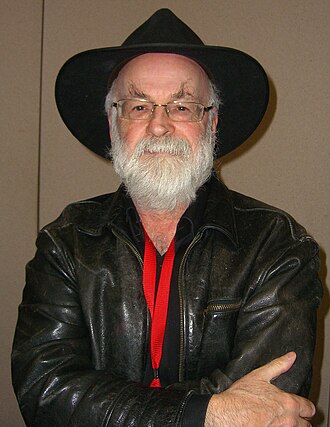 Terry Pratchett
"In Reading [England] there is this thing called the IDR, short for "Inner Distribution Road", which is bureaucratese for "Big thing that cost a lot of money and relieves traffic problems, provided all your traffic wants to orbit the town centre permanently". Its a 2-3 lane dual carriageway that goes round the town centre. It has lots of roundabouts, an overhead section, a couple of spare motorway-like exits (thats British motorways -- yknow, the roundabout with the main road going under it), and a thing called the Watlington Street Gyratory, where you have to get in lane for your intended destination about three years and two corners before you get there with no signposting. I used to cycle along it every day to get to school, before I fell off at 35 mph. [Kids! Dont try this at home!] I know it well. I believe it is impossible to leave Reading heading west."
Sir Terence David John Pratchett was an English author, humorist, and satirist, best known for the Discworld series of 41 comic fantasy novels published between 1983 and 2015, and for the apocalyptic comedy novel Good Omens (1990), which he co-wrote with Neil Gaiman.
"Stories of imagination tend to upset those without one."
Terry Pratchett"My programming language was solder."
Terry Pratchett"As they say in Discworld, we are trying to unravel the Mighty Infinite using a language which was designed to tell one another where the fresh fruit was."
Terry Pratchett"Wikipedia, eh? Must be accurate then!"
Terry Pratchett"Life doesnt happen in chapters — at least, not regular ones. Nor do movies. Homer didnt write in chapters. I can see what their purpose is in childrens books ("Ill read to the end of the chapter, and then you must go to sleep") but Im blessed if I know what function they serve in books for adults."
Terry Pratchett"Only in our dreams are we free. The rest of the time we need wages."
Terry Pratchett"We have created a wealthy society with tens of millions of talented, resourceful individuals who play virtually no role whatsoever as citizens. Bringing these people in — with their networks of influence, their knowledge, and their resources — is the key to creating the capacity for shared intelligence that we need to solve our problems."
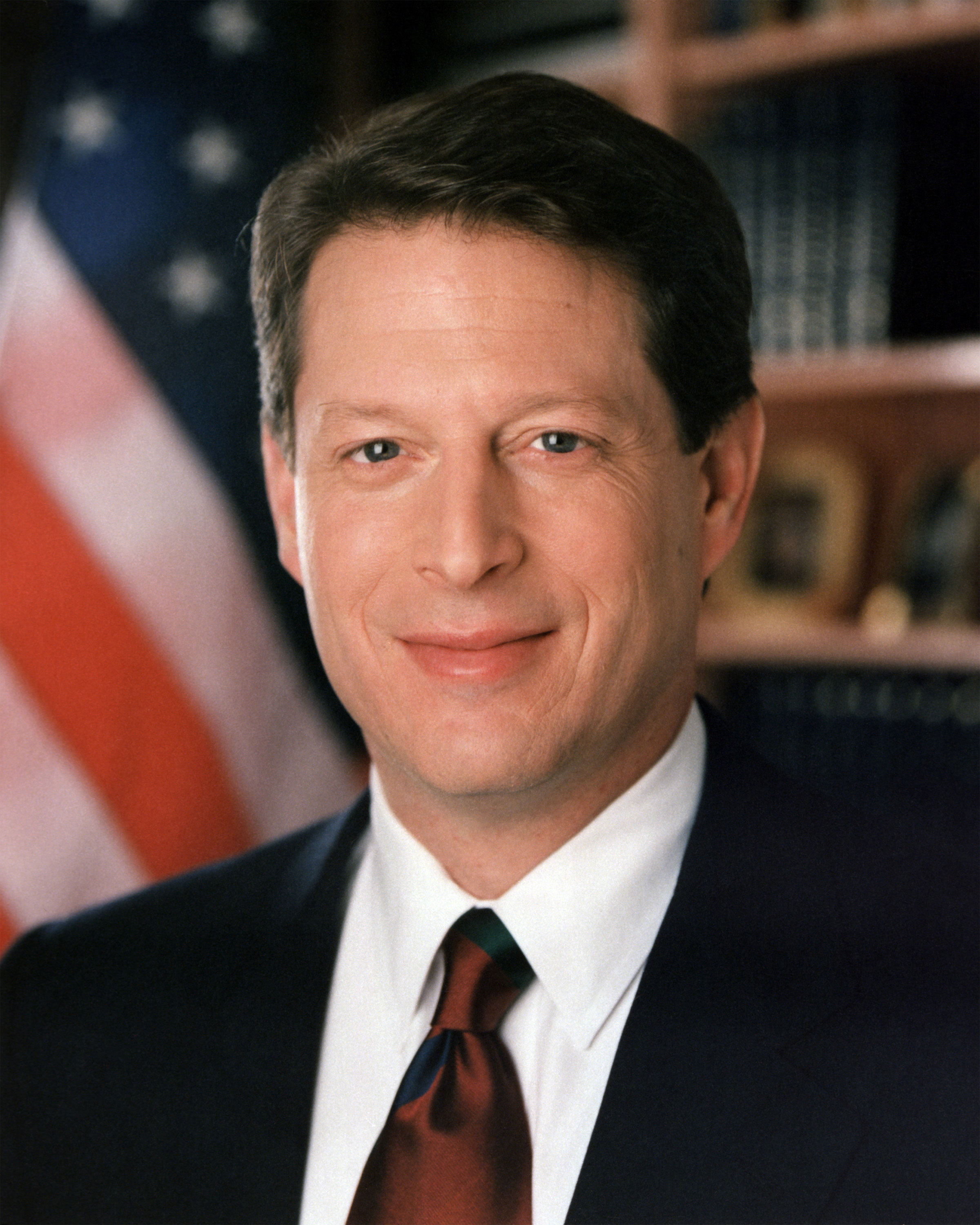 Al Gore
"As in respect of the first wonder we are all on the same level, how comes it that the philosophic mind should, in all ages, be the privilege of a few? The most obvious reason is this: The wonder takes place before the period of reflection, and (with the great mass of mankind) long before the individual is capable of directing his attention freely and consciously to the feeling, or even to its exciting causes. Surprise (the form and dress which the wonder of ignorance usually puts on) is worn away, if not precluded, by custom and familiarity."
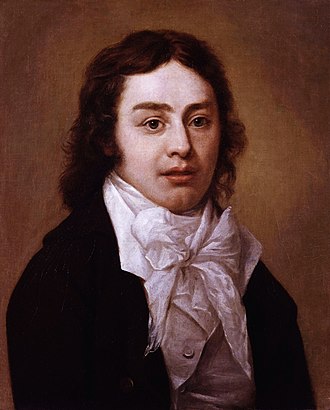 Samuel Taylor Coleridge
"The dualistic philosophy reigned supreme in Europe, dominating the development of Western science. But with the advent of atomic physics, findings based on demonstrable experiment were seen to negate the dualistic theory, and the trend of thought since then has been back to the monistic conception of the ancient Taoists."
"Under the rule of a repressive whole, liberty can be made into a powerful instrument of domination. The range of choice open to the individual is not the decisive factor in determining the degree of human freedom, but what can be chosen and what is chosen by the individual."
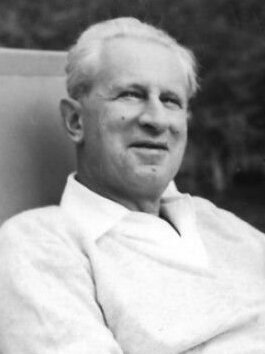 Herbert Marcuse
"All economic activity is carried out through time. Every individual economic process occupies a certain time, and all linkages between economic processes necessarily involve longer or shorter periods of time."
"I believe that the main lesson which our generation has learnt is that we must find a new limit for the activities of government, a limit which leaves ample scope for sensible experimentation but which secures the freedom of the individual as the mainspring of all social and political activity. The whole purpose of these lectures has been to suggest that we can find such a limit if we are willing to revive and develop the ancient ideal of the Rule of Law."