SHAWORDS

In schools, for example, there are courses in the criticism of literat — Jane Roberts

HomeJane RobertsQuote
"In schools, for example, there are courses in the criticism of literature, art criticism, and so forth. The arts are supposed to be not real. It is quite safe, therefore, to criticize them in that regard -- to see how a story or a painting is constructed, or more importantly, to critically analyze the structure of ideas, themes, or beliefs that appear, say, in the poem or work of fiction. When children are taught science, there is no criticism allowed. They are told, This is how things are. Sciences reasons are given as the only true statements about reality, with which no student is expected to quarrel. Any strong intellectual explorations or counter versions of reality have appeared in science fiction, for example. Here scientists, many being science-fiction buffs, can channel their own intellectual questioning into a safe form. This is, after all, merely imaginative and not to be taken seriously."
Jane Roberts
Jane Roberts
Jane Roberts
author277 quotes

Dorothy Jane Roberts was an American author and poet, who claimed to be psychic and a spirit medium channeling a personality who called himself "Seth." Her publication of the Seth texts, known as the Seth Material, established her as one of the preeminent figures in the world of paranormal phenomena.

More by Jane Roberts

View all →
Quote
"Again, your being is never annihilated, but continues to develop its own existence in other ways. A portion of you has lived many lives upon this planet, but the "you" that you know is freshly here, and will never again encounter space and time in precisely the same way. The same applies to each life lived either before or after. Biologically you rest upon a heritage, however, and psychically the same applies. The soul, or this greater personage, does not simply send out an old self in new clothes time and time again, but each time a new, freshly-minted self that then develops and goes its own way. That self rides firmly, however, in the great flight of experience, and feels within itself all of those other fully unique versions that also fling their way into existence."
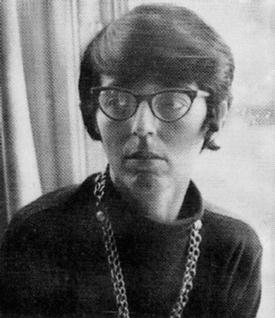
Jane RobertsJane Roberts
Quote
"She said that she was technically a virgin when she married Rob. That after she and Walt were married, when they first came to making love and she caught sight of his penis, shed cracked up because it was so big and she couldnt see how in hell theyd manage it. She never said in so many words, "I never had sexual interourse with Walt," e.g. But when I asked her, "So you were technically a virgin when you married Rob" (words to this effect), she said yes. She said that whenever she and Rob made love before a Seth session, or before a class session, that the results for the ensuing session were spectacular. And that sometimes she and Rob would make love for the sake of these results in a session."
Jane RobertsJane Roberts
Quote
"This (precognitive ability) steers the cell through mazes of probabilities, while allowing it to retain knowledge of its own greater fulfillment -- the ideas of itself, which is always alive in any given period of your time. On a different kind of scale, then, each individual has the same sort of idealized version of the self, and so does each species. Here I mean each species, and I am not simply referring to mankind. Obviously these are not apparent to the physical senses, yet they are strong energy centers that to some degree stimulate the physical senses toward activity. To that degree, then, there are indeed "tree gods," gods of the forest, and "gods of being" connected with each person."
Jane RobertsJane Roberts
Quote
"A plane is not necessarily a planet. A plane may be one planet, but a plane may also exist where no planet is. One planet may have several planes. Planes may also involve various aspects of apparent time. Planes can and do intermix without the knowledge of the inhabitants. A plane may be a time . . . or only one iota of vitality that exists all by itself. A plane may cease to be. A plane is formed for entities as patterns for fulfillment along various lines. It is a climate conducive to the development of unique and particular capabilities and achievements . . . an isolation of elements."
Jane RobertsJane Roberts
Quote
"In daily practical experience, try to concentrate for a while upon seemingly subordinate abilities, ones that you think of as latent. If you do so consistently, using your imagination and will, then those abilities will become prominent in your present. The current beliefs will reprogram and alter past experience. It is not simply that past, forgotten, unconsciously perceived events will be put together in a new way and organized under a new heading, but in that past (now not perceivable), the entire bodily response to seemingly past events will change."
Jane RobertsJane Roberts

More on Education

View all →
Quote
"An [hypertext] encyclopaedia will be an overall attempt by the knowledgeable, the learned societies or anyone else, to represent the state-of-the-art in their field. An encyclopaedia will be a living document, as up to date as it can be, instantly accessible at any time. It will contain carefully authored explanations and summaries of the subject, as well as computer-generated indexes of literature. A reference to a paper from the encyclopaedia conveys authority and acceptance by academic society. A measure of a paper’s standing may be conveyed by the number of links it is away from an encyclopaedia."
Tim Berners-LeeTim Berners-Lee
Quote
"A sample of the modern debate, which neatly summarizes the anti-reductionist position is provided by Grene (1974). She points out that in principle a one-level ontology—the belief, for example, that with increasing knowledge all science will become an account of the world in the language of, say, atomic events—contradicts itself. This is so because such a belief, to be meaningful, requires an ontology which admits both atomic events and cognition. Here at once a second level is smuggled in! It is logically possible... that there might be no levels in between those of atomic events and cognition (that in essence is Descartess position) but the sciences of chemistry and biology consist of some well-tested conjectures that there are such intermediate levels as are represented by molecules, cells, organelles, organs, and organisms."
O
Ontology
Quote
"All competent thinkers agree with Bacon that there can be no real knowledge except that which rests upon observed facts. This fundamental maxim is evidently indisputable if it is applied, as it ought to be, to the mature state of our intelligence. But, if we consider the origin of our knowledge, it is no less certain that the primitive human mind could not, and indeed ought not to, have thought in that way. For if, on the one hand, every Positive theory must necessarily be founded upon observations, it is, on the other hand, no less true that, in order to observe, our mind has need of some theory or other. If in contemplating phenomena we did not immediately connect them with principles, not only would it be impossible for us to combine these isolated observations, and therefore to derive profit from them, but we should even be entirely incapable of remembering facts, which would for the most remain unnoted by us. Thus there were two difficulties be overcome: the human mind had to observe in order to form real theories, and yet had to form theories of some sort before it could apply itself to a connected series of observations. The primitive human mind, therefore, found itself involved in a vicious circle, from which it would never have had any means of escaping, if a natural way of the difficulty had not fortunately found by the spontaneous development of Theological conceptions. ...chimerical hopes ..exaggerated ideas of mans importance in the universe to which the Theological Philosophy ...at the commencement, ...afforded an indispensable stimulus without the aid which we cannot, indeed, conceive how the primitive human mind would have been induced to undertake any arduous labours."
TheoryTheory