Quote
"An ink bottle, which now seems impossibly quaint, was still thinkable as a symbol in 1970."
J
Jonathan Franzen"In the years when hed worked full-time, hed never complained about frozen or takeout or preprepared dinners. To Caroline it probably seemed that he was changing the rules on her. But to Gary it seemed that the nature of family life itself was changing - that togetherness and filiality and fraternity werent valued the way they were when he was young."
Jonathan Earl Franzen is an American novelist and essayist. His 2001 novel The Corrections drew widespread critical acclaim, earned Franzen a National Book Award, was a Pulitzer Prize for Fiction finalist, earned a James Tait Black Memorial Prize, and was shortlisted for the International Dublin Literary Award. His novel Freedom (2010) garnered similar praise and led to an appearance on the cover
"An ink bottle, which now seems impossibly quaint, was still thinkable as a symbol in 1970."
"... idea of what books and literature are for ... serious fiction ... It is for people who may be a little isolated ... may be isolated by the very fact that they like to read books. And that my job really is to participate in that community and make that human connection. So, I went from trying to impress people or change them ... to just trying to make that connection."
"... The struggle to rein in s and keep the planet from melting down has the feel of Kafka’s fiction. The goal has been clear for thirty years, and despite earnest efforts we’ve made essentially no progress toward reaching it. Today, the scientific evidence verges on irrefutable. If you’re younger than sixty, you have a good chance of witnessing the radical destabilization of life on earth—massive crop failures, apocalyptic fires, imploding economies, epic flooding, hundreds of millions of refugees fleeing regions made uninhabitable by extreme heat or permanent drought. If you’re under thirty, you’re all but guaranteed to witness it. If you care about the planet, and about the people and animals who live on it, there are two ways to think about this. You can keep on hoping that catastrophe is preventable, and feel ever more frustrated or enraged by the world’s inaction. Or you can accept that disaster is coming, and begin to rethink what it means to have hope."
"A lack of desire to spend money becomes a symptom of disease that requires expensive medication. Which medication then destroys the libido, in other words destroys the appetite for the one pleasure in life thats free, which means the person has to spend even more money on compensatory pleasures. The very definition of mental health is the ability to participate in the consumer economy. When you buy into therapy, youre buying into buying."
"Someone worked really hard to make the language just right, just the way they wanted it. They were so sure of it that they printed it in ink, on paper. A screen always feels like we could delete that, change that, move it around. So for a literature-crazed person like me, its just not permanent enough. ...its going to be very hard to make the world work if theres no permanence like that. That kind of radical contingency is not compatible with a system of justice or responsible self-government."
"Depression presents itself as a realism regarding the rottenness of the world in general and the rottenness of your life in particular."
"Be the change that you wish to see in the world."
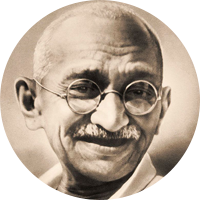 Mahatma Gandhi
"we are engaged in a grim experiment never before attempted. We are subjecting whole populations to exposure to chemicals which animal experiments have proved to be extremely poisonous and in many cases cumulative in their effect. These exposures now begin at or before birth and-unless we change our methods-will continue through the lifetime of those now living. No one knows what the result will be, because we have no previous experience to guide us."
"pity this busy monster, manunkind, not. Progress is a comfortable disease: your victim (death and life safely beyond) plays with the bigness of his littleness"
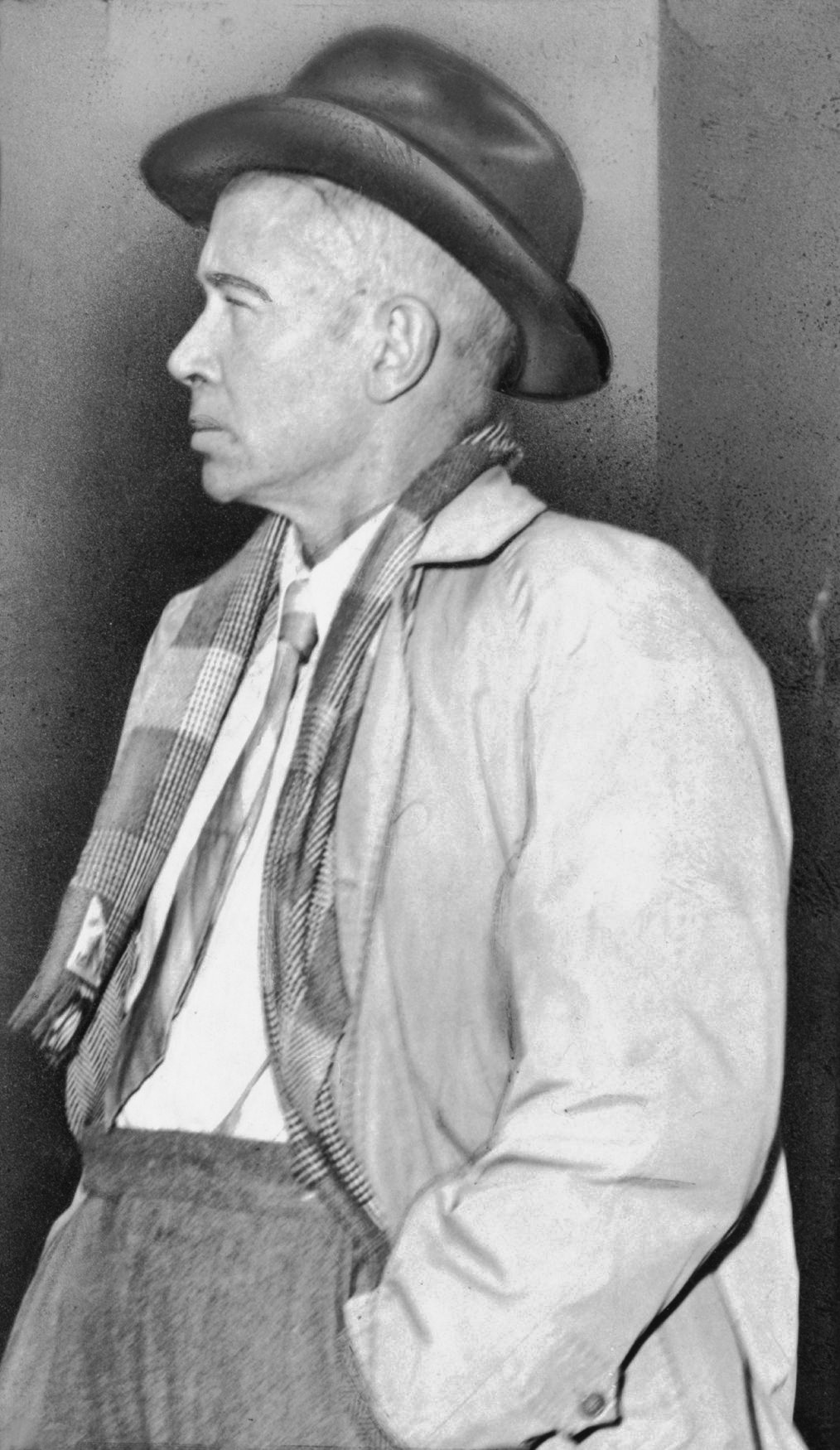 E. E. Cummings
"I believe that the unity of man as opposed to other living things derives from the fact that man is the conscious life of himself. Man is conscious of himself, of his future, which is death, of his smallness, of his impotence; he is aware of others as others; man is in nature, subject to its laws even if he transcends it with his thought."
 Erich Fromm
"“We need brains, is the bottom line,” Ivy said. “We’re not hunter-gatherers anymore. We’re all living like patients in the intensive care unit of a hospital. What keeps us alive isn’t bravery, or athleticism, or any of those other skills that were valuable in a caveman society. It’s our ability to master complex technological skills. It is our ability to be nerds. We need to breed nerds.”"
"I have been clinically depressed for most of my life. I once used drugs to fix it. Then I stopped. I stopped because I decided they were making me stupid, and Id rather be miserable than stupid. I am what I am."