Quote
"Wisdom is dead. Long live information."
I
Information"Information is a name for the content of what is exchanged with the outer world as we adjust to it, and make our adjustment felt upon it. The process of receiving and of using information is the process of our adjusting to the contingencies of the outer environment, and of our living effectively within that environment. The needs and the complexity of modern life make greater demands on this process of information than ever before, and our press, our museums, our scientific laboratories, our universities, our libraries and textbooks, are obliged to meet the needs of this process or fail in their purpose. To live effectively is to live with adequate information. Thus, communication and control belong to the essence of mans inner life, even as they belong to his life in society."
Information is an abstract concept that refers to something which has the power to inform. At the most fundamental level, it pertains to the interpretation of that which may be sensed, or their abstractions. Any natural process that is not completely random and any observable pattern in any medium can be said to convey some amount of information. Whereas digital signals and other data use discrete
"Wisdom is dead. Long live information."
"Do not seek for information of which you cannot make use."
"As I understand the theory of period information doubling, this states that if we take one period of human information as being the time between the invention of the first hand axe, say around 50,000 BC and 1 AD, then this is one period of human information and we can measure it by how many human inventions we came up during that time. Then we see how long it takes for us to have twice as many inventions. This means that human information has doubled. As it turns out, after the first 50,000-year period, the second period is about 1500 years, say around the time of the Renaissance. By then we have twice as much information. To double again, human information took a couple of hundred years. The period speeds up—between 1960 and 1970, human information doubled. As I understand it, at the last count human information was doubling around every 18 months. Further to this, there is a point sometime around 2015 where human information is doubling every thousandth of a second. This means that in each thousandth of a second we will have accumulated more information than we have in the entire previous history of the world. At this point I believe that all bets are off. I cannot imagine the kind of culture that might exist after such a flashpoint of knowledge. I believe that our culture would probably move into a completely different state, would move past the boiling point, from a fluid culture to a culture of steam."
"Information can tell us everything. It has all the answers. But they are answers to questions we have not asked, and which doubtless don’t even arise."
"In 2007, for the first time ever, more information was generated in one year than had been produced in the entire previous five thousand years - the period since the invention of writing."
"What information consumes is rather obvious: it consumes the attention of its recipients. Hence a wealth of information creates a poverty of attention, and a need to allocate that attention efficiently among the overabundance of information sources that might consume it."
"Be the change that you wish to see in the world."
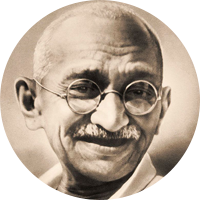 Mahatma Gandhi
"we are engaged in a grim experiment never before attempted. We are subjecting whole populations to exposure to chemicals which animal experiments have proved to be extremely poisonous and in many cases cumulative in their effect. These exposures now begin at or before birth and-unless we change our methods-will continue through the lifetime of those now living. No one knows what the result will be, because we have no previous experience to guide us."
"pity this busy monster, manunkind, not. Progress is a comfortable disease: your victim (death and life safely beyond) plays with the bigness of his littleness"
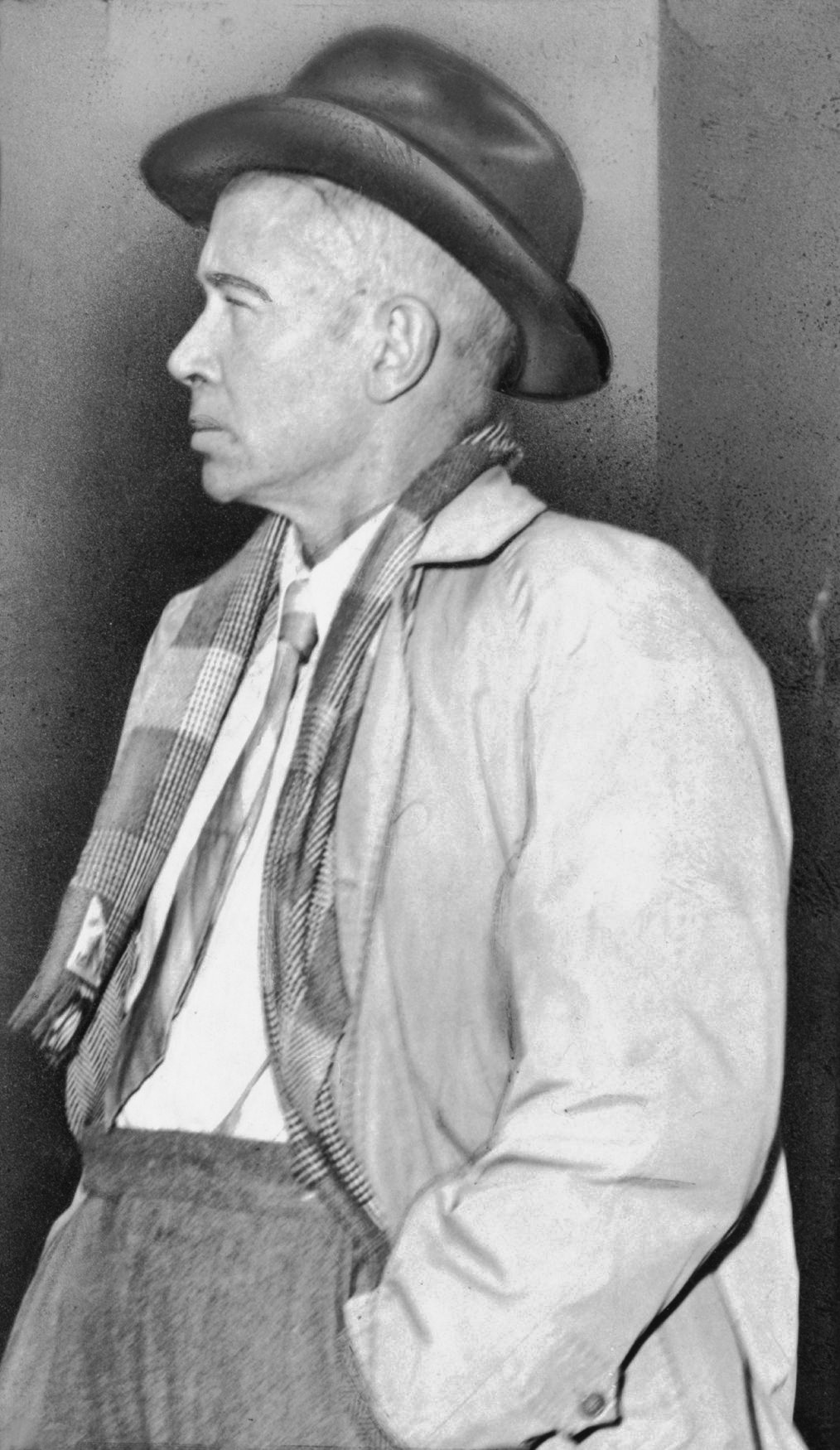 E. E. Cummings
"I believe that the unity of man as opposed to other living things derives from the fact that man is the conscious life of himself. Man is conscious of himself, of his future, which is death, of his smallness, of his impotence; he is aware of others as others; man is in nature, subject to its laws even if he transcends it with his thought."
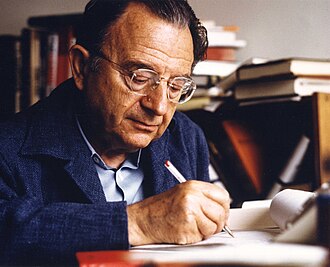 Erich Fromm
"“We need brains, is the bottom line,” Ivy said. “We’re not hunter-gatherers anymore. We’re all living like patients in the intensive care unit of a hospital. What keeps us alive isn’t bravery, or athleticism, or any of those other skills that were valuable in a caveman society. It’s our ability to master complex technological skills. It is our ability to be nerds. We need to breed nerds.”"
"I have been clinically depressed for most of my life. I once used drugs to fix it. Then I stopped. I stopped because I decided they were making me stupid, and Id rather be miserable than stupid. I am what I am."