Quote
"What is a poet? An unhappy man who conceals profound anguish in his heart, but whose lips are so fashioned that when sighs and groans pass over them they sound like beautiful music."
E
Either/Or"It is curious that the word “duty” can prompt one to think of an external relation, since the very derivation of the word suggests an internal one: for that which is incumbent upon me, not as an individual with accidental characteristics bit in accordance with my true being, certainly has the most intimate relation with myself. That is, duty is not something laid upon one but something that lies upon. When duty is regarded in this way, it is a sign that the individual is oriented within himself. Then duty will not split up for him into a multiplicity of particular stipulations, for this always indicates that he has only an external relation to duty. He has put on duty; for him it is the expression of his innermost being. When he is thus oriented within himself, he has immersed himself in the ethical, and will not run around performing duties. Therefore, the truly ethical person has an inner serenity and sense of security, for he does not have duty outside himself but within himself. the more deeply a man has structured his life ethically, the less he will feel compelled to talk about duty every moment, to worry every moment whether he is performing it, every moment to seek the advice of others about what his duty is. When the ethical is viewed properly, it makes the individual infinitely secure within himself; when it is viewed improperly, it makes the individual utterly insecure, and I cannot imagine an unhappier or more tormented life then when a person has his duty outside himself and yet continually wants to carry it out."
"What is a poet? An unhappy man who conceals profound anguish in his heart, but whose lips are so fashioned that when sighs and groans pass over them they sound like beautiful music."
"There are, as is known, insects that die in the moment of fertilization. So it is with all joy: lifes highest, most splendid moment of enjoyment is accompanied by death."
"When I was young, I forgot how to laugh in the cave of Trophonius; when I was older, I opened my eyes and beheld reality, at which I began to laugh, and since then, I have not stopped laughing. I saw that the meaning of life was to secure a livelihood, and that its goal was to attain a high position; that love’s rich dream was marriage with an heiress; that friendship’s blessing was help in financial difficulties; that wisdom was what the majority assumed it to be; that enthusiasm consisted in making a speech; that it was courage to risk the loss of ten dollars; that kindness consisted in saying, “You are welcome,” at the dinner table; that piety consisted in going to communion once a year. This I saw, and I laughed."
"In addition to my numerous other acquaintances I have still one more intimate friend — my melancholy. In the midst of pleasure, in the midst of work, he beckons to me, calls me aside, even though I remain present bodily. My melancholy is the most faithful sweetheart I have had — no wonder that I return the love!"
"Of all ridiculous things the most ridiculous seems to me, to be busy — to be a man who is brisk about his food and his work. Therefore, whenever I see a fly settling, in the decisive moment, on the nose of such a person of affairs; or if he is spattered with mud from a carriage which drives past him in still greater haste; or the drawbridge opens up before him; or a tile falls down and knocks him dead, then I laugh heartily."
"People flock about the poet and say to him: do sing again; Which means, would that new sufferings tormented your soul, and: would that your lips stayed fashioned as before, for your cries would only terrify us, but your music is delightful. And the critics join them, saying: well done, thus must it be according to the laws of aesthetics. Why, to be sure, a critic resembles a poet as one pea another, the only difference being that he has no anguish in his heart and no music on his lips. Behold, therefore would I rather be a swineherd on Amager, and be understood by the swine than a poet, and misunderstood by men."
"Be the change that you wish to see in the world."
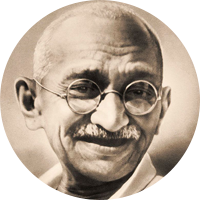 Mahatma Gandhi
"we are engaged in a grim experiment never before attempted. We are subjecting whole populations to exposure to chemicals which animal experiments have proved to be extremely poisonous and in many cases cumulative in their effect. These exposures now begin at or before birth and-unless we change our methods-will continue through the lifetime of those now living. No one knows what the result will be, because we have no previous experience to guide us."
"pity this busy monster, manunkind, not. Progress is a comfortable disease: your victim (death and life safely beyond) plays with the bigness of his littleness"
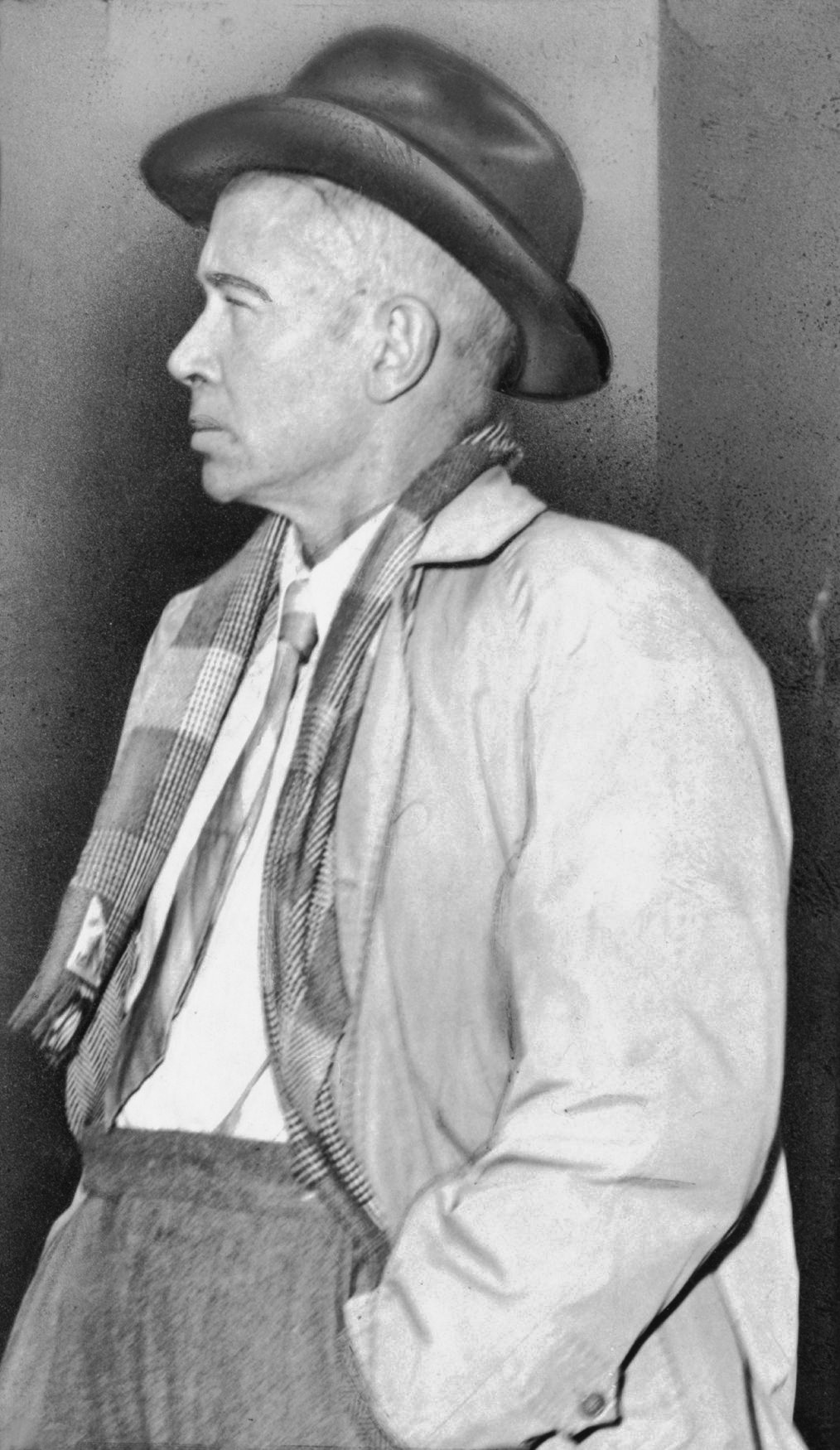 E. E. Cummings
"I believe that the unity of man as opposed to other living things derives from the fact that man is the conscious life of himself. Man is conscious of himself, of his future, which is death, of his smallness, of his impotence; he is aware of others as others; man is in nature, subject to its laws even if he transcends it with his thought."
 Erich Fromm
"“We need brains, is the bottom line,” Ivy said. “We’re not hunter-gatherers anymore. We’re all living like patients in the intensive care unit of a hospital. What keeps us alive isn’t bravery, or athleticism, or any of those other skills that were valuable in a caveman society. It’s our ability to master complex technological skills. It is our ability to be nerds. We need to breed nerds.”"
"I have been clinically depressed for most of my life. I once used drugs to fix it. Then I stopped. I stopped because I decided they were making me stupid, and Id rather be miserable than stupid. I am what I am."