Quote
"It is generally argued that our experience of free will presents a compelling mystery: On the one hand, we cant make sense of it in scientific terms; on the other, we feel that we are the authors of our own thoughts and actions."
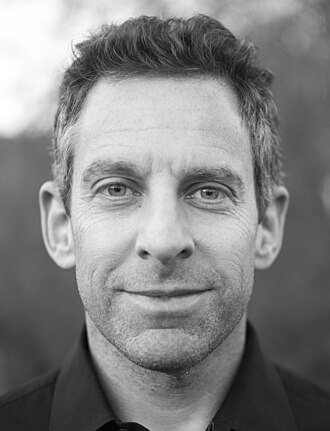 Sam Harris
"It is rather more noble to help people purely out of concern for their suffering than it is to help them because you think the Creator of the Universe wants you to do it, or will reward you for doing it, or will punish you for not doing it. The problem with this linkage between religion and morality is that it gives people bad reasons to help other human beings when good reasons are available."
Samuel Benjamin Harris is an American neuroscientist, philosopher, author, and podcast host. His work includes a range of topics, including rationality, religion, ethics, free will, determinism, neuroscience, meditation, psychedelics, philosophy of mind, politics, terrorism, and artificial intelligence. Harris came to prominence for his criticism of religion, and he is known as one of the "Four Ho
"It is generally argued that our experience of free will presents a compelling mystery: On the one hand, we cant make sense of it in scientific terms; on the other, we feel that we are the authors of our own thoughts and actions."
Sam Harris"Jesus Christ—who, as it turns out, was born of a virgin, cheated death, and rose bodily into the heavens—can now be eaten in the form of a cracker."
Sam Harris"Atheism is not a philosophy - it is not even a view of the world. It is simply an admission of the obvious. In fact, "atheism" is a term that should not even exist. No one ever needs to identify himself as a "non-astrologer" or a "non-alchemist." We do not have words for people who doubt that Elvis is still alive or that aliens have traversed the galaxy only to molest ranchers and their cattle. Atheism is nothing more than the noises reasonable people make in the presence of unjustified religious beliefs."
Sam Harris"Let’s just grant the possibility that there is a Creator God, who’s omniscient, who occasionally authors books. And he’s gonna give us a book – the most useful book. He’s a loving God, he’s a compassionate God, and he’s gonna give us a guide to life. He’s got a scribe, the scribe’s gonna write it down. What’s gonna be in that book? I mean just think of how good a book would be if it were authored by an omniscient deity. I mean, there is not a single line in the Bible or the Koran that could not have been authored by a first century person. There is not one reference to anything – there are pages and pages about how to sacrifice animals, and keep slaves, and who to kill and why. There’s nothing about electricity, there’s nothing about DNA, there’s nothing about infectious disease, the principles of infectious disease. There’s nothing particularly useful, and there’s a lot of iron age barbarism in there, and superstition. This is not a candidate book."
Sam Harris"Your life doesnt get any better than your mind is: You might have wonderful friends, perfect health, a great career, and everything else you want, and you can still be miserable. The converse is also true: There are people who basically have nothing—who live in circumstances that you and I would do more or less anything to avoid—who are happier than we tend to be because of the character of their minds. Unfortunately, one glimpse of this truth is never enough. We have to be continually reminded of it."
Sam Harris"One could surely argue that the Buddhist tradition, taken as a whole, represents the richest source of contemplative wisdom that any civilization has produced. In a world that has long been terrorized by fratricidal Sky-God religions, the ascendance of Buddhism would surely be a welcome development."
Sam Harris"The smart way to keep people passive and obedient is to strictly limit the spectrum of acceptable opinion, but allow very lively debate within that spectrum - even encourage the more critical and dissident views. That gives people the sense that theres free thinking going on, while all the time the presuppositions of the system are being reinforced by the limits put on the range of the debate."
"With much care and skill power has been broken into fragments in the American township, so that the maximum possible number of people have some concern with public affairs."
"The people reign over the American political world as God rules over the universe. It is the cause and the end of all things; everything rises out of it and is absorbed back into it."
"I should say that when people talk about capitalism its a bit of a joke. Theres no such thing. No country, no business class, has ever been willing to subject itself to the free market, free market discipline. Free markets are for others. Like, the Third World is the Third World because they had free markets rammed down their throat. Meanwhile, the enlightened states, England, the United States, others, resorted to massive state intervention to protect private power, and still do. Thats right up to the present. I mean, the Reagan administration for example was the most protectionist in post-war American history. Virtually the entire dynamic economy in the United States is based crucially on state initiative and intervention: computers, the internet, telecommunication, automation, pharmaceutical, you just name it. Run through it, and you find massive ripoffs of the public, meaning, a system in which under one guise or another the public pays the costs and takes the risks, and profit is privatized. Thats very remote from a free market. Free market is like what India had to suffer for a couple hundred years, and most of the rest of the Third World."
"I appeal to all pupils, students and young people, asking you to focus on the horizons that are opening up for you, and which you could only dream of a year ago. Our future will depend on your desire for education and moral values as well as on your entrepreneurial spirit."
"We have created a wealthy society with tens of millions of talented, resourceful individuals who play virtually no role whatsoever as citizens. Bringing these people in — with their networks of influence, their knowledge, and their resources — is the key to creating the capacity for shared intelligence that we need to solve our problems."
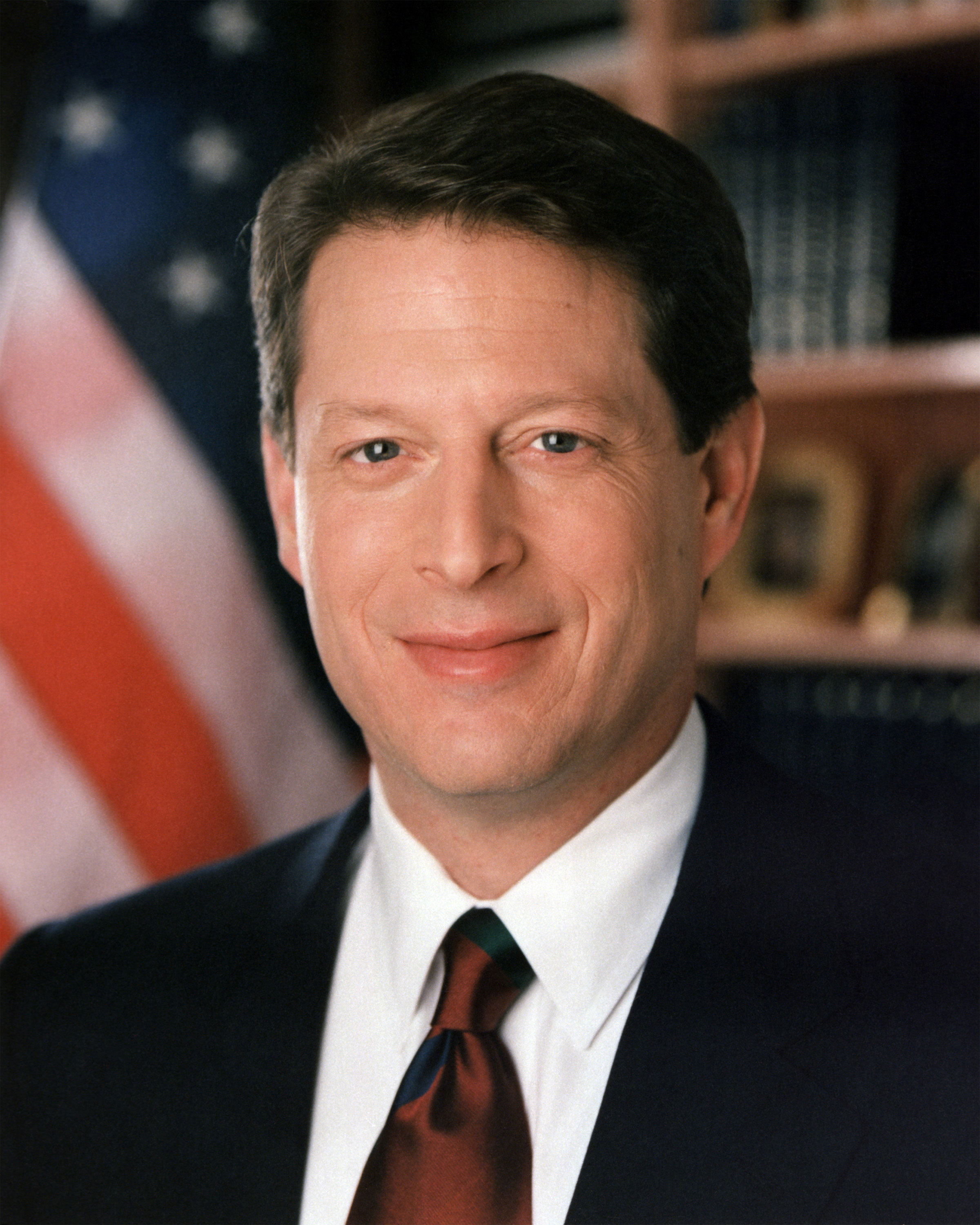 Al Gore