Quote
"The nicest veterans in Schenectady, I thought, the kindest and funniest ones, the ones who hated war the most, were the ones who’d really fought. (p. 11)"
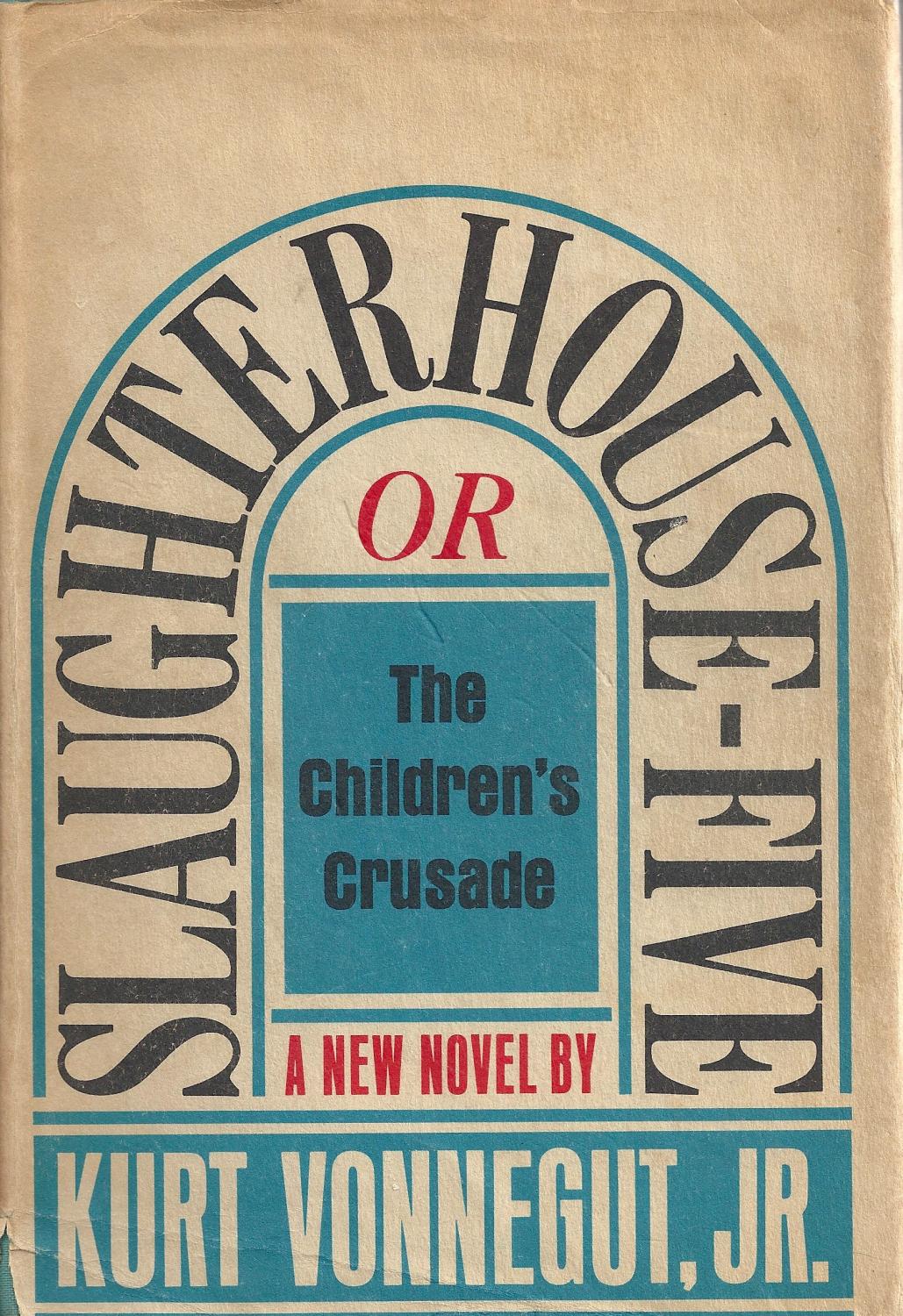 Slaughterhouse-Five
"It is so short and jumbled and jangled, Sam, because there is nothing intelligent to say about a massacre. Everybody is supposed to be dead, to never say anything or want anything ever again. Everything is supposed to be very quiet after a massacre, and it always is, except for the birds. And what do the birds say? All there is to say about a massacre, things like "Poo-tee-weet?"
Slaughterhouse-Five, or, The Children's Crusade: A Duty-Dance with Death is a 1969 semi-autobiographic science fiction–infused anti-war novel by Kurt Vonnegut. It follows the life experiences of Billy Pilgrim, from his early years, to his time as an American soldier and chaplain's assistant during World War II, to the post-war years. Throughout the novel, Billy frequently travels back and forth th
"The nicest veterans in Schenectady, I thought, the kindest and funniest ones, the ones who hated war the most, were the ones who’d really fought. (p. 11)"
Slaughterhouse-Five"I have told my sons that they are not under any circumstances to take part in massacres, and that the news of massacres of enemies is not to fill them with satisfaction or glee. I have also told them not to work for companies which make massacre machinery, and to express contempt for people who think we need machinery like that. (p. 19)"
Slaughterhouse-Five"I asked myself about the present: how wide it was, how deep it was, how much was mine to keep. (p. 18)"
Slaughterhouse-Five"This is a novel somewhat in the telegraphic schizophrenic manner of tales of the planet Tralfamadore, where the flying saucers come from. Peace."
Slaughterhouse-Five"The smell of mustard gas and roses."
Slaughterhouse-Five"You know — weve had to imagine the war here, and we have imagined that it was being fought by aging men like ourselves. We had forgotten that wars were fought by babies. When I saw those freshly shaved faces, it was a shock. "My God, my God — I said to myself, Its the Childrens Crusade." (p. 106)"
Slaughterhouse-Five