SHAWORDS

It went on for a month. Those who had taken it for a cosmic sign cring — Thomas Pynchon

"It went on for a month. Those who had taken it for a cosmic sign cringed beneath the sky each nightfall, imagining ever more extravagant disasters. Others, for whom orange did not seem an appropriately apocalyptic shade, sat outdoors on public benches, reading calmly, growing used to the curious pallor. As nights went on and nothing happened and the phenomenon slowly faded to the accustomed deeper violets again, most had difficulty remembering the earlier rise of heart, the sense of overture and possibility and went back once again to seeking only orgasm, hallucination, stupor, sleep, to fetch them through the night and prepare them against the day."
T
Thomas Pynchon
Thomas Pynchon
author80 quotes

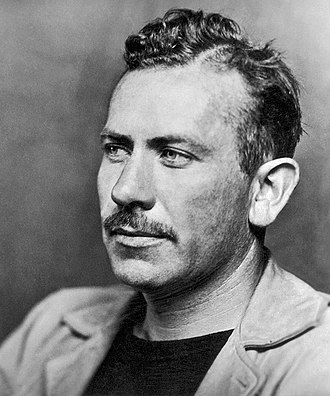
Thomas Ruggles Pynchon Jr. is an American novelist. He is known for his dense, complex works of postmodern fiction, which are distinguished by their paranoid tone, absurd humor, and references to history, art, science, and popular culture. He is widely regarded as one of the greatest American novelists. Pynchon is notoriously reclusive. Few photographs of him have been published, and rumors about

More by Thomas Pynchon

View all →
Quote
"You don’t understand,” getting mad. “You guys, you’re like Puritans are about the Bible. So hung up with words, words. You know where that play exists, not in that file cabinet, not in any paperback you’re looking for, but—” a hand emerged from the veil of shower-steam to indicate his suspended head—“in here. That’s what I’m for. To give the spirit flesh. The words, who cares? They’re rote noises to hold line bashes with, to get past the bone barrier around an actor’s memory, right? But the reality is in this head. Mine. I’m the projector at the planetarium, all the closed little universe visible in the circle of that stage is coming out of my mouth, eyes, sometimes other orifices also."
T
Thomas Pynchon
Quote
"Rachel was looking into the mirror at an angle of 45°, and so had a view of the face turned toward the room and the face on the other side, reflected in the mirror; here were time and reverse-time, co-existing, cancelling one another exactly out. Were there many such reference points, scattered throughout the world, perhaps only at nodes like this room which housed a transient population of the imperfect, the dissatisfied; did real time plus virtual or mirror-time equal zero and thus serve some half-understood moral purpose? Or was it only the mirror world that counted; only a promise of a kind that the inward bow of a nose-bridge or a promontory of extra cartilage at the chin meant a reversal of ill fortune such that the world of the altered would thenceforth run on mirror-time; work and love by mirror-light and be only, till death stopped the hearts ticking (metronomes music) quietly as light ceases to vibrate, an imps dance under the centurys own chandeliers...."
T
Thomas Pynchon
Quote
"Perhaps history this century, thought Eigenvalue, is rippled with gathers in its fabric such that if we are situated, as Stencil seemed to be, at the bottom of a fold, its impossible to determine warp, woof, or pattern anywhere else. By virtue, however, of existing in one gather it is assumed there are others, compartmented off into sinuous cycles each of which had come to assume greater importance than the weave itself and destroy any continuity. Thus it is that we are charmed by the funny-looking automobiles of the 30s, the curious fashions of the 20s, the particular moral habits of our grandparents. We produce and attend musical comedies about them and are conned into a false memory, a phony nostalgia about what they were. We are accordingly lost to any sense of continuous tradition. Perhaps if we lived on a crest, things would be different. We could at least see."
T
Thomas Pynchon

More on Education And Success

View all →
Quote
"An [hypertext] encyclopaedia will be an overall attempt by the knowledgeable, the learned societies or anyone else, to represent the state-of-the-art in their field. An encyclopaedia will be a living document, as up to date as it can be, instantly accessible at any time. It will contain carefully authored explanations and summaries of the subject, as well as computer-generated indexes of literature. A reference to a paper from the encyclopaedia conveys authority and acceptance by academic society. A measure of a paper’s standing may be conveyed by the number of links it is away from an encyclopaedia."
Tim Berners-LeeTim Berners-Lee
Quote
"One of the first major steps in the direction of modern skepticism came through the victory of Occam over Aquinas in a controversy about language. The statement that modi essendi were replaced by modi significandi et intelligendi, or that ontological referents were abandoned in favor of pragmatic significations, describes broadly the change in philosophy which continues to our time. From Occam to Bacon, from Bacon to Hobbes, and from Hobbes to contemporary semanticists, the progression is clear: ideas become psychological figments, words become useful signs. ... To one completely committed to this realm of becoming, as are the empiricists, the claim to apprehend verities is a sign of . Probably we have here but a highly sophisticated expression of the doctrine that ideals are hallucination and that the only normal, sane person is the healthy extrovert, making instant, instinctive adjustments to the stimuli of the material world."
O
Ontology