Quote
"Against that positivism which stops before phenomena, saying "there are only facts," I should say: no, it is precisely facts that do not exist, only interpretations."
F
Friedrich Nietzsche"It would certainly not be difficult to unearth in Nietzsche’s voluminous works a few pages which, outside their context, might serve to illustrate any preconceived thesis, particularly within the framework of a global exegesis which, parenthetically, would be quite useful to the works of Nietzsche, which are more obscure than profound. This is what the anarchists of Western Europe did, who hastened to consider Nietzsche one of them and who received a cruel rebuff: the philosopher of the master’s morality rejected them with all the rudeness he was capable of. It is clear to the reader, we hope, that we find sterile such a literary and textual attitude towards the writings rich in paradoxes of the recently deceased German thinker, whose aphorisms are often contradictory and in general allow for dozens of interpretations. The natural road towards a correct clarification of Nietzschean philosophy is the analysis of the social base that gave birth to this complex product. The present article strove to carry out an analysis of this kind. The base revealed itself to be rotten, pernicious, and poisoned. From which this conclusion: let them invite us as much as they want to dive in all confidence into Nietzscheism, to breathe deeply in his works the fresh air of proud individualism. We will not answer these appeals and, without fearing facile reproaches of narrowness and exclusivism, will reply with skepticism the way Nathaniel did in the gospel: “Can anything good come out of Nazareth?”"
Friedrich Wilhelm Nietzsche was a German philosopher and writer who started his career as a classical philologist and turned to philosophy early in his academic career. In 1869, at age 24, he was appointed Professor of Classical Philology at the University of Basel. Plagued by health problems for most of his life, he resigned from the university in 1879. He afterward lived as an independent writer
"Against that positivism which stops before phenomena, saying "there are only facts," I should say: no, it is precisely facts that do not exist, only interpretations."
"I now myself live, in every detail, striving for wisdom, while I formerly merely worshipped and idolized the wise."
"Morality is: the mediocre are worth more than the exceptions ... I abhore Christianity with a deadly hatred."
"Socrates was the plebeian dissector of an aristocratic society; Nietzsche is the aristocratic dissector of a plebeian society."
"All I need is a sheet of paper and something to write with, and then I can turn the world upside down."
"Along with ignoring the French Revolution, one of the most telling features of the new books on atheism [cf. new atheism ] is their consistent refusal to engage Nietzsche, who, if read correctly, ought to make atheists squirm far more than he has ever caused discomfit to believers. ¶ First, he turned the critical methods of the Enlightenment against their inventors and showed that Enlightened faith in progress was just as illusory as belief in an afterlife. Second, he demanded that a critical philosophy stop pretending to be a substitute religion (he shrewdly called Hegelian idealism “insidious theology”). Third, he insisted on the indissoluble bond between Christian doctrine and Christian morality and poured contempt on novelists like George Eliot for supposing otherwise [...] ¶ Perhaps this why Nietzsche said in Ecce Homo, “the most serious Christians have always been well disposed toward me.” For they at least, unlike Dawkins, Harris, Daniel Dennett and Christopher Hitchens, can see that after Nietzsche a moral critique of the Christian God has become impossible, for it denies the very presupposition that makes its own critique possible. Like Abraham asking if the Lord God of justice could not himself do justice, protest atheism must accept the very norms that Nietzsche showed are essential to the meaning of belief. In Nietzsche alone one reads what the world really looks like si Deus non sit [if God does not exist]."
"Glen is not a homosexual. Glen is a transvestite, but he is not a homosexual. Transvestism is the term given by medical science to those persons who desperately wish to wear the clothing of the opposite sex, yet whose sex life in all instances remains quite normal. Would you be surprised to know that this rough, tough individual is wearing pink, satin undies under his rough exterior clothing? He is. Then there is your friend the milkman who...who knows how to find comfort at home."
"Ive been taking a closer look at these graduates. They are actually taller, stronger, smarter than we were, smart enough maybe to take our mistakes as their messages, to make our weaknesses their lessons, and to make our example — good and not so good — part of their education."
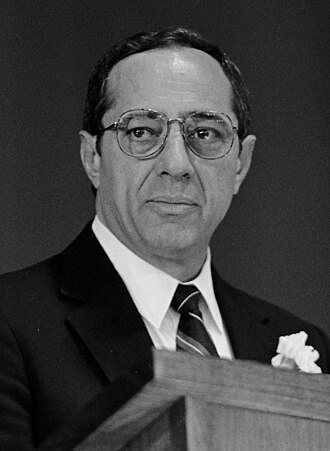 Mario Cuomo
"In a Thumbnail Sketch here is [the Multiple Drafts theory of consciousness] so far:There is no single, definitive "stream of consciousness," because there is no central Headquarters, no Cartesian Theatre where "it all comes together" for the perusal of a Central Meaner. Instead of such a single stream (however wide), there are multiple channels in which specialist circuits try, in parallel pandemoniums, to do their various things, creating Multiple Drafts as they go. Most of these fragmentary drafts of "narrative" play short-lived roles in the modulation of current activity but some get promoted to further functional roles, in swift succession, by the activity of a virtual machine in the brain. The seriality of this machine (its "von Neumannesque" character) is not a "hard-wired" design feature, but rather the upshot of a succession of coalitions of these specialists.The basic specialists are part of our animal heritage. They were not developed to perform peculiarly human actions, such as reading and writing, but ducking, predator-avoiding, face-recognizing, grasping, throwing, berry-picking, and other essential tasks. They are often opportunistically enlisted in new roles, for which their talents may more or less suit them. The result is not bedlam only because the trends that are imposed on all this activity are themselves part of the design. Some of this design is innate, and is shared with other animals. But it is augmented, and sometimes even overwhelmed in importance, by microhabits of thought that are developed in the individual, partly idiosyncratic results of self-exploration and partly the predesigned gifts of culture. Thousands of memes, mostly borne by language, but also by wordless "images" and other data structures, take up residence in an individual brain, shaping its tendencies and thereby turning it into a mind."
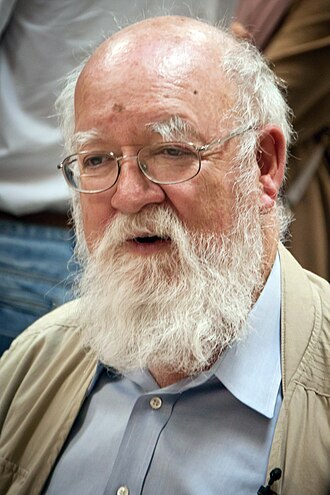 Daniel Dennett
"While our primary goal is to maintain the most powerful military force in the world at the lowest possible cost, we will never be unmindful of those communities and individuals who are temporarily affected by changes in the pattern of Defense spending. Men and women, who have devoted their lives and their resources to the needs of their country, are entitled to help and consideration in making the transition to other pursuits. We will continue to help local communities by mobilizing and coordinating all the resources of the Federal Governments to overcome temporary difficulties created by the curtailment of any Defense activity. We will phase out unnecessary Defense operations in such a way as to lessen the impact on any community, and we will work with local communities to develop energetic programs of self-help, calling on the resources of state and local governments--and of private industry--as well as those of the Federal Government. There is ample evidence that such measures can succeed. Former military bases are now in use throughout the country in communities which have not only adjusted to necessary change, but have created greater prosperity for themselves as a result. Their accomplishments are a tribute to the ingenuity of thousands of our citizens, and a testimony to the strength and resiliency of our economy and our system of government."
"Are people naturally destructive, immoral, predatory and self-seeking, only to be kept in order by harsh laws and fiercely deterrent mandatory sentences? Or are men and women naturally orderly, merciful, humane and bred with a need for justice and mutual aid? Of course these qualities, or defects, are not evenly distributed, and undoubtedly there is much of each in all of us, but when it comes to the law some sort of distinction can be drawn. Are you a Shylock or a Bassanio? Shylock pinned his faith on the words in the contract, the nature of his bond and the duty of the state to uphold the letter of the law regardless of human suffering. Bassanio put another point of view. More important than the sanctity of the law was the plight of the individual parties in the particular case."
"Viewed in the light of such facts, we may conclude slavery to have been the occasion of the increase of human feeling among the Negroes. The doctrine which we deduce from this condition of slavery among the Negroes, and which constitutes the only side of the question that has an interest for our inquiry, is that which we deduce from the Idea: viz., that the “Natural condition” itself is one of absolute and thorough injustice – contravention of the Right and Just. Every intermediate grade between this and the realization of a rational State retains – as might be expected – elements and aspects of injustice; therefore we find slavery even in the Greek and Roman States, as we do serfdom down to the latest times. But thus existing in a State, slavery is itself a phase of advance from the merely isolated sensual existence – a phase of education – a mode of becoming participant in a higher morality and the culture connected with it. Slavery is in and for itself injustice, for the essence of humanity is Freedom; but for this man must be matured. The gradual abolition of slavery is therefore wiser and more equitable than its sudden removal."