Quote
"Q: Do you find quite a difference between the audience at large and the critics as a group? A: Well, one is a group of human beings, one is not."
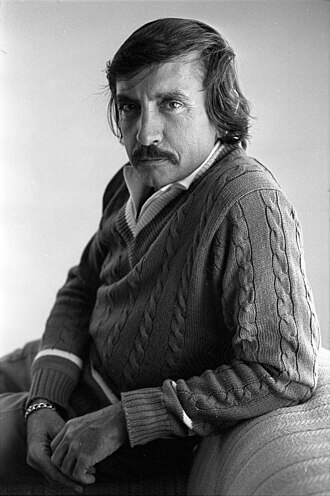 Edward Albee
"Ive noticed that there is not necessarily a great relationship between what the majority of critics have to say and what is actually true. Some of them are so busy trying to mold the public taste according to the limits of their perceptions, and others are so busy reflecting what they consider to be the public taste — that view limited again by their perception. You find very few critics who approach their job with a combination of information and enthusiasm and humility that makes for a good critic. But there is nothing wrong with critics as long as people dont pay any attention to them. I mean, nobody wants to put them out of a job and a good critic is not necessarily a dead critic. Its just that people take what a critic says as a fact rather than an opinion, and you have to know whether the opinion of the critic is informed or uninformed, intelligent or stupid — but most people dont take the trouble."
Edward Franklin Albee III was an American playwright known for works such as The Zoo Story (1958), The Sandbox (1959), Who's Afraid of Virginia Woolf? (1962), A Delicate Balance (1966), and Three Tall Women (1994). Some critics have argued that some of his work constitutes an American variant of what Martin Esslin identified as and named the Theater of the Absurd. Three of his plays won the Pulitz
"Q: Do you find quite a difference between the audience at large and the critics as a group? A: Well, one is a group of human beings, one is not."
Edward Albee"If Attila the Hun were alive today, hed be a drama critic."
Edward Albee"I survive almost any onslaught with a shrug, which must appear as arrogance, but really isnt because Im not an arrogant person. When you write a play, you make a set of assumptions — that you have something to say, that you know how to say it, that its worth saying, and that maybe someone will come along for the ride. Thats all. And then you go about your business, assuming youd be the first to know if your talent has collapsed. I dont think Ive been a commercial playwright ever. By some curious mischance, a couple of my plays managed to hit an area where commercial success was feasible. But its wrong to think Im a commercial playwright who has somehow ceased his proper function. I have always been the same thing — which is not a commercial playwright. Im not after the brass ring. I very seldom get it anyway, and then its accidental when I do. … So I write those things that interest me."
Edward Albee"Primarily the characters must seem interested in what they, themselves, are doing and saying. While the lines must not read metronome-exact, I feel that a certain set rhythm will come about, quite of itself. No one rushes in on the end of anyone elses speech; no one waits too long. I have indicated, quite precisely, within the speeches of the Long-Winded Lady, by means of commas, periods, semi-colons, colons, dashes and dots (as well as parenthetical stage directions) the speech rhythms. Please observe them carefully, for they were not thrown in, like herbs on a salad, to be mixed about. I have underlined words I want stressed. I have capitalized for loudness, and used exclamation points for emphasis. There are one or two seeming questions that I have left the question mark off of. This was done o purpose, as an out-loud reading will make self-evident."
Edward Albee"One must let the play happen to one; one must let the mind loose to respond as it will, to receive impressions, to sense rather than know, to gather rather than immediately understand."
Edward Albee"You need great precision in the way the words are delivered, and in the way the emotions are understood. If you start leaving out words or putting them in or coming in on the wrong bit it spoils it. But Albee understands that when you are playing a play its very important that its naturalistic on the surface. That it is like jazz. If the actors are playing well together, you have the structure, you have the beats, but you maybe play it a bit differently every night."
Edward Albee"The smart way to keep people passive and obedient is to strictly limit the spectrum of acceptable opinion, but allow very lively debate within that spectrum - even encourage the more critical and dissident views. That gives people the sense that theres free thinking going on, while all the time the presuppositions of the system are being reinforced by the limits put on the range of the debate."
"With much care and skill power has been broken into fragments in the American township, so that the maximum possible number of people have some concern with public affairs."
"The people reign over the American political world as God rules over the universe. It is the cause and the end of all things; everything rises out of it and is absorbed back into it."
"I should say that when people talk about capitalism its a bit of a joke. Theres no such thing. No country, no business class, has ever been willing to subject itself to the free market, free market discipline. Free markets are for others. Like, the Third World is the Third World because they had free markets rammed down their throat. Meanwhile, the enlightened states, England, the United States, others, resorted to massive state intervention to protect private power, and still do. Thats right up to the present. I mean, the Reagan administration for example was the most protectionist in post-war American history. Virtually the entire dynamic economy in the United States is based crucially on state initiative and intervention: computers, the internet, telecommunication, automation, pharmaceutical, you just name it. Run through it, and you find massive ripoffs of the public, meaning, a system in which under one guise or another the public pays the costs and takes the risks, and profit is privatized. Thats very remote from a free market. Free market is like what India had to suffer for a couple hundred years, and most of the rest of the Third World."
"I appeal to all pupils, students and young people, asking you to focus on the horizons that are opening up for you, and which you could only dream of a year ago. Our future will depend on your desire for education and moral values as well as on your entrepreneurial spirit."
"We have created a wealthy society with tens of millions of talented, resourceful individuals who play virtually no role whatsoever as citizens. Bringing these people in — with their networks of influence, their knowledge, and their resources — is the key to creating the capacity for shared intelligence that we need to solve our problems."
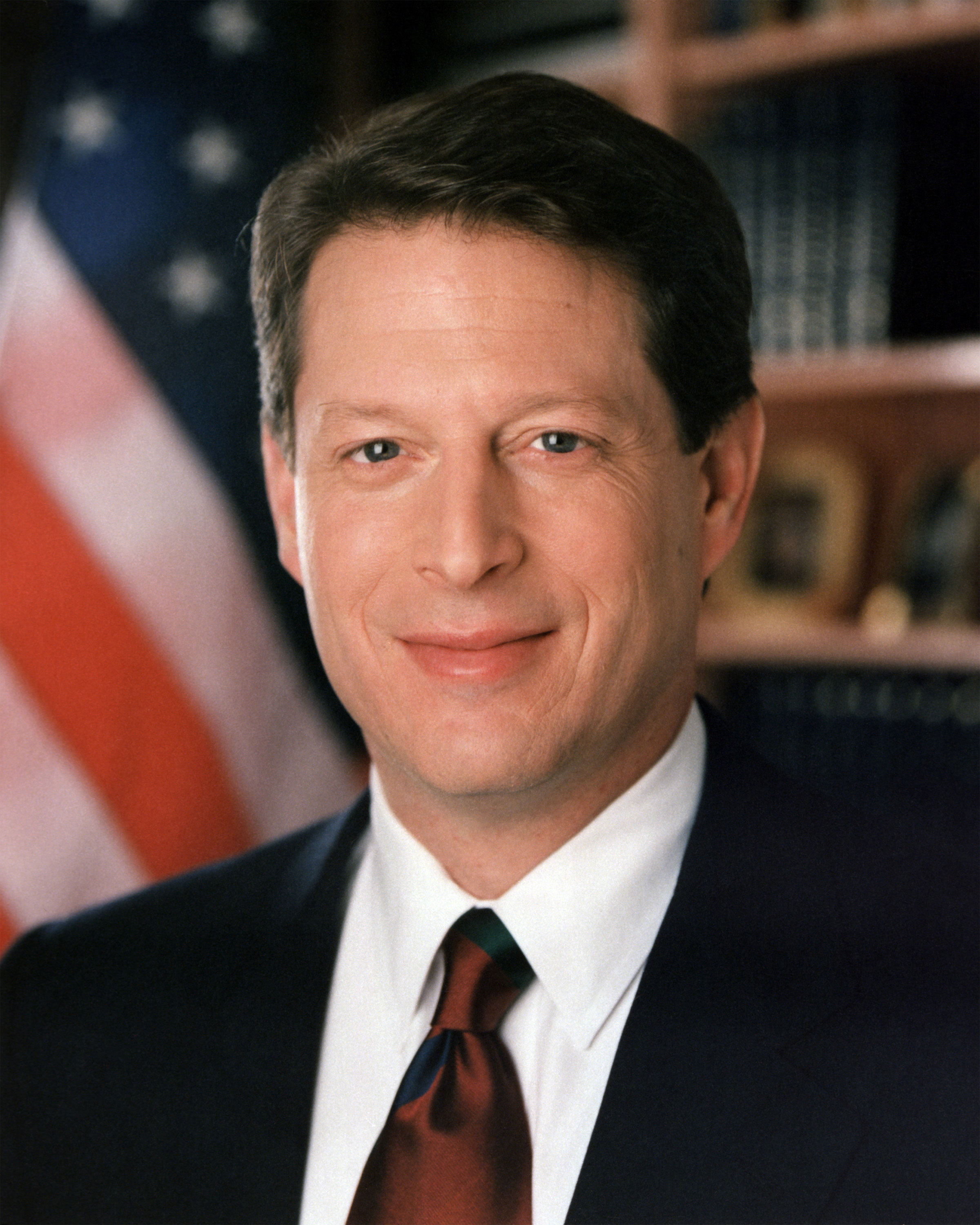 Al Gore