Quote
"An artisan busies himself with his work for three hours each day and spends nine hours in study."
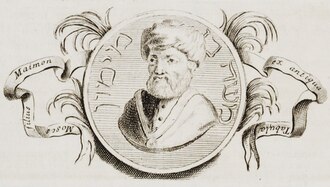 Maimonides
"Know that for the human mind there are certain objects of perception which are within the scope of its nature and capacity; on the other hand, there are, amongst things which actually exist, certain objects which the mind can in no way and by no means grasp: the gates of perception are closed against it. Further, there are things of which the mind understands one part, but remains ignorant of the other; and when man is able to comprehend certain things, it does not follow that he must be able to comprehend everything."
Moses ben Maimon, commonly known as Maimonides and also referred to by the Hebrew acronym Rambam, was a Sephardic Jewish rabbi who is widely acknowledged as one of the most prolific and influential Torah scholars of the Middle Ages. Originally from Córdoba, where he was born on Passover Eve of 1135 or 1138, his family was exiled from Muslim-ruled Spain when they refused to convert to Islam shortly
"An artisan busies himself with his work for three hours each day and spends nine hours in study."
Maimonides"The third class of evils comprise those which everyone causes to himself by his own action. This is the largest class, and is far more numerous than the second class. It is especially of these evils that all men complain,—only few men are found that do not sin against themselves by this kind of evil. ...This class of evil originates in mans vices, such as excessive desire for eating, drinking, and love; indulgence in these things in undue measure, or in improper manner, or partaking of bad food. This course brings diseases and afflictions upon the body and soul alike."
Maimonides"Aristotle was guided by that which appears to be the nature of things. The Ashariyah refused to ascribe to God ignorance about anything... they preferred to admit the above-mentioned absurdities. The Mutazilites refused to assume that God does what is wrong and unjust; on the other hand, they would not contradict common sense and say that it was not wrong to inflict pain on the guiltless, or that the mission of the Prophets and the giving of the Law had no intelligible reason. They likewise preferred to admit the above-named absurdities. But they even contradicted themselves, because they believe on the one hand that God knows everything, and on the other that man has free will. By a little consideration we discover the contradiction."
Maimonides"A person who lives in a place where the norms of behavior are evil and the inhabitants do not follow the straight path should move to a place where the people are righteous and follow the ways of the good.If all the places with which he is familiar and of which he hears reports follow improper paths, as in our times, ... he should remain alone in seclusion. ...If they are wicked and sinful and do not allow him to reside there unless he mingle with them and follow their evil behavior, he should go out to caves, thickets, and deserts."
Maimonides"Abraham ... was sunk in Ur of the Chaldees among foolish idolaters. His father and mother and all the people worshipped the stars. ... He knew that all were mistaken and that what caused them to err was worship of the images which drove the Truth out of their minds. ... It was proper to destroy and smash the idols so that the people should not err by them like those who think there is no god save images."
Maimonides"Teach your tongue to say "I do not know" and you will progress."
Maimonides"[explaining to Ernie how April apologized to him] She just showed up at the factory, took off her coat, and begged me to take her. We made love in a way that Ive only ever seen in nature films."
 MouseHunt (film)
"All men suppose what is called Wisdom to deal with the first causes and the principles of things; so that, as has been said before, the man of experience is thought to be wiser than the possessors of any sense-perception whatever, the artist wiser than the men of experience, the masterworker than the mechanic, and the theoretical kinds of knowledge to be more of the nature of Wisdom than the productive."
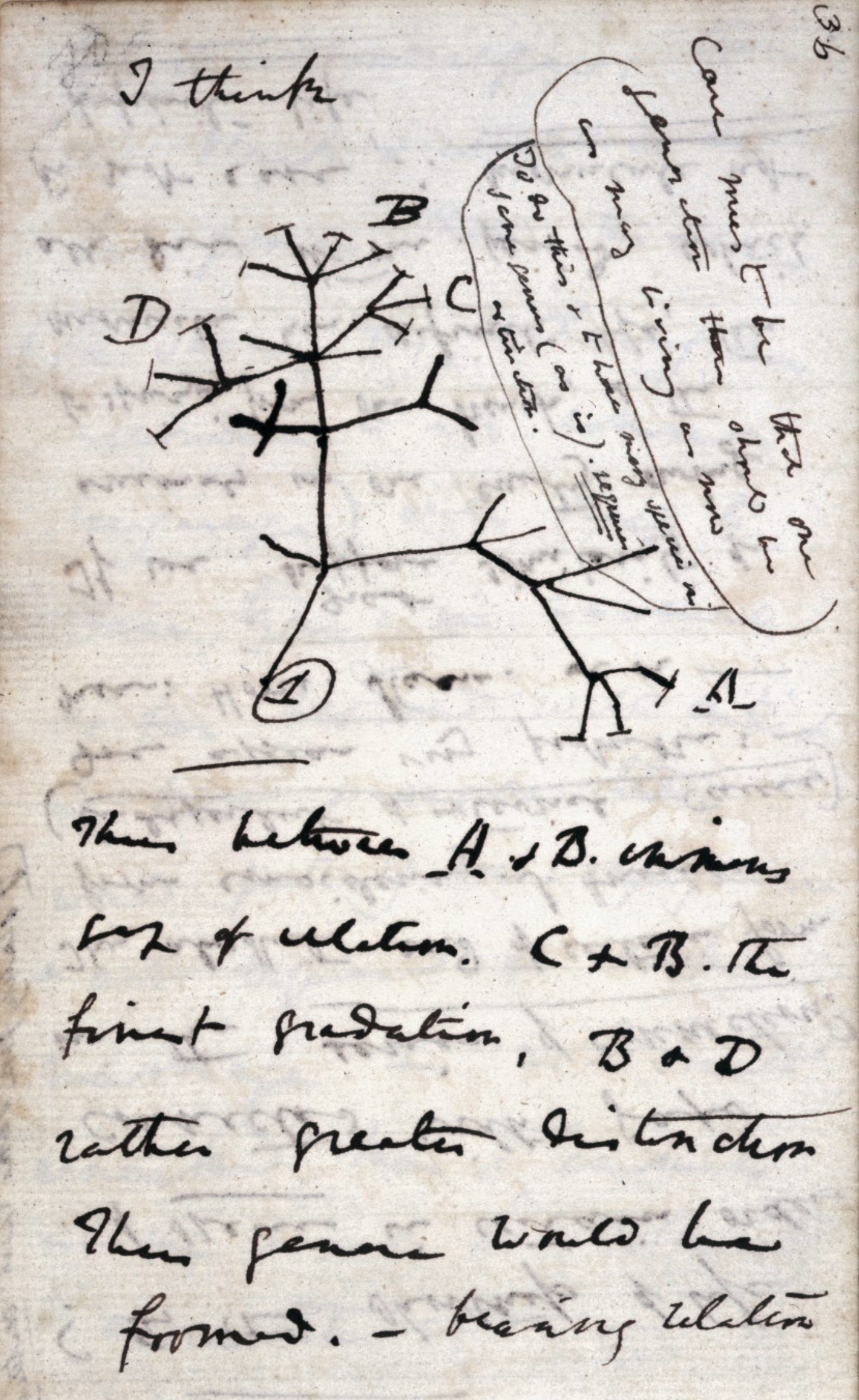 Theory
"The yarns of seamen have a direct simplicity, the whole meaning of which lies within the shell of a cracked nut. But Marlow was not typical (if his propensity to spin yarns be excepted), and to him the meaning of an episode was not inside like a kernel but outside, enveloping the tale which brought it out only as a glow brings out a haze, in the likeness of one of these misty halos that sometimes are made visible by the spectral illumination of moonshine."
"Going up that river was like traveling back to the earliest beginnings of the world, when vegetation rioted on the earth and the big trees were kings. An empty stream, a great silence, an impenetrable forest. The air was warm, thick, heavy, sluggish. There was no joy in the brilliance of sunshine. The long stretches of the waterway ran on, deserted, into the gloom of overshadowed distances."
"The intimate rapport with nature is one of the most precious things in life. Nature is indeed very close to us; sometimes closer than hands and feet, of which in truth she is but the extension. The emotional appeal of nature is tremendous, sometimes almost more than one can bear."
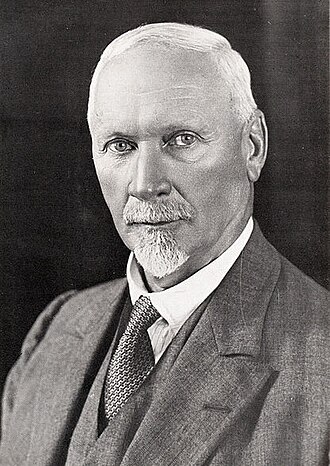 Jan Smuts
"Are people naturally destructive, immoral, predatory and self-seeking, only to be kept in order by harsh laws and fiercely deterrent mandatory sentences? Or are men and women naturally orderly, merciful, humane and bred with a need for justice and mutual aid? Of course these qualities, or defects, are not evenly distributed, and undoubtedly there is much of each in all of us, but when it comes to the law some sort of distinction can be drawn. Are you a Shylock or a Bassanio? Shylock pinned his faith on the words in the contract, the nature of his bond and the duty of the state to uphold the letter of the law regardless of human suffering. Bassanio put another point of view. More important than the sanctity of the law was the plight of the individual parties in the particular case."