SHAWORDS

Language can be compared to a sheet of paper: thought is its recto and — Ferdinand de Saussure

"Language can be compared to a sheet of paper: thought is its recto and sound its verso: one cannot cut the verso without simultaneously cutting the recto. Similarly, in the matter of language, one can separate neither sound from thought nor thought from sound; such separation could be achieved only by abstraction, which would lead either to pure psychology, or to pure phonology."
Ferdinand de Saussure
author17 quotes

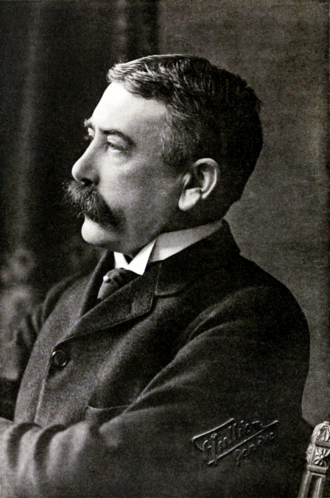
Ferdinand Mongin de Saussure was a Swiss linguist, semiotician and philosopher. His ideas laid a foundation for many significant developments in both linguistics and semiotics in the 20th century. He is widely considered one of the founders of 20th-century linguistics and one of two major founders of semiotics, or semiology, as Saussure called it.

More by Ferdinand de Saussure

View all →
Quote
"With de Saussure, the concept of meaning is inseparably connected with his concepts of sign and language... According to de Saussure, a linguistic sign is a psychic whole with two aspects: sound image and notion. Thus the sign is a specific combination of these two elements. Following from de Saussures analysis, that two-sided relationship between sound and notion is meaning. This is why de Saussure suggests that the term "sound image" should be replaced by the term "signifiant" (that which means), and the term "notion" by the term "signifié" (that which is the object of meaning). The sign fulfils its function only by virtue of that relationship of meaning, the members of which are connected inseparably. The breaking of that unity would result in the destruction of the sign."
Ferdinand de SaussureFerdinand de Saussure
Quote
"The subject matter of linguistics comprises all manifestations of human speech, whether that of savages or civilized nations, or of archaic, classical or decadent periods. In each period the linguist must consider not only correct speech and flowery language, but all other forms of expression as well. And that is not all: since he is often unable to observe speech directly, he must consider written texts, for only through them can he reach idioms that are remote in time or space."
Ferdinand de SaussureFerdinand de Saussure
Quote
"Saussure took the sign as the organizing concept for linguistic structure, using it to express the conventional nature of language in the phrase "larbitraire du signe". This has the effect of highlighting what is, in fact, the one point of arbitrariness in the system, namely the phonological shape of words, and hence allows the non-arbitrariness of the rest to emerge with greater clarity. An example of something that is distinctly non-arbitrary is the way different kinds of meaning in language are expressed by different kinds of grammatical structure, as appears when linguistic structure is interpreted in functional terms."
Ferdinand de SaussureFerdinand de Saussure
Quote
"As long as the activity of linguists was limited to comparing one language with another, this general utility cannot have been apparent to most of the general public, and indeed the study was so specialised that there was no real reason to suppose it of possible interest to a wider audience. It is only since linguistics has become more aware of its object of study, i.e. perceives the whole extent of it, that it is evident that this science can make a contribution to a range of studies that will be of interest to almost anyone. It is by no means useless, for instance, to those who have to deal with texts. It is useful to the historian, among others, to be able to see the commonest forms of different phenomena, whether phonetic, morphological or other, and how language lives, carries on and changes over time."
Ferdinand de SaussureFerdinand de Saussure