Quote
"Giambattista della Porta, who seems to have been the first to try combinations of lenses to form a microscope, based his optical work almost entirely on that of Roger Bacon, Witelo, and Pecham."
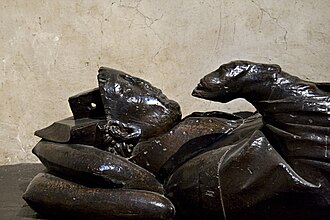 John Peckham
"Light from a concave luminous body is received most powerfully at the centre. The reason for this is that, for every point of a concave body, perpendicular rays, which are stronger than others, converge in the centre. Therefore the virtues of celestial bodies are incident most powerfully in and near the centre of the world."
John Peckham was a Franciscan friar and Archbishop of Canterbury in the years 1279–1292.
"Giambattista della Porta, who seems to have been the first to try combinations of lenses to form a microscope, based his optical work almost entirely on that of Roger Bacon, Witelo, and Pecham."
John Peckham"The Perspectiva is a clear and concise summary of the science of light at the time... a popular text on optics until the seventeenth century... used and cited by many medieval and Renaissance scholars, including Leonardo da Vinci and Johannes Kepler."
John Peckham"Pechams Perspectiva was published in as many as nine editions, one in Italian, between 1482 and 1627."
John Peckham"In the realm of psychology (in the medieval sense), Pechams writings are extensive. ...each soul is created singly and "daily" by God. The soul... is everywhere in its little world as God is everywhere in the the bigger world. The soul is united to the body as a form is to matter. ...The human will is free and cannot be coerced by anything else. ...The will is free to the extent that it can withhold consent to the dictates of practical reason."
John Peckham"Following Ibn-Haytham [ and his Book of Optics with regard to the Moon illusioin ] Pecham supports the intervening objects theory. However, the interposition of vapours is also thought to produce enlargement by refraction. This work probably predates Pechams Perspectiva communis (1275)."
John Peckham"Another Oxford writer who appreciated experimental science was John Pecham... In his Perspectiva Communis Pecham gave a very clear and concise summary of contemporary optics, based largely on Alhazen, Witelo, and pseudo-Euclids De Speculis. His book contained nothing original but it remained a popular text book until the seventeenth century."
John Peckham