SHAWORDS

[L]ike Coleridge, he might plead as a set-off that he had been to many — John Stuart Mill

"[L]ike Coleridge, he might plead as a set-off that he had been to many persons, through his conversation, a source not only of much instruction but of great elevation of character. On me his influence was most salutary. It was moral in the best sense. He took a sincere and kind interest in me, far beyond what could have been expected towards a mere youth from a man of his age, standing, and what seemed austerity of character. There was in his conversation and demeanour a tone of high-mindedness which did not show itself so much, if the quality existed as much, in any of the other persons with whom at that time I associated. My intercourse with him was the more beneficial, owing to his being of a different mental type from all other intellectual men whom I frequented..."
John Stuart Mill
John Stuart Mill
John Stuart Mill
author177 quotes

John Stuart Mill was an English philosopher, political economist, politician and civil servant. One of the most influential thinkers in the history of liberalism and social liberalism, he contributed widely to social theory, political theory, and political economy. Dubbed "the most influential English-speaking philosopher of the nineteenth century" by the Stanford Encyclopedia of Philosophy, he co

More by John Stuart Mill

View all →
Quote
"I soon perceived that she possessed in combination, the qualities which in all other persons whom I had known I had been only too happy to find singly. In her, complete emancipation from every kind of superstition (including that which attributes a pretended perfection to the order of nature and the universe), and an earnest protest against many things which are still part of the established constitution of society, resulted not from the hard intellect, but from strength of noble and elevated feeling, and co-existed with a highly reverential nature."
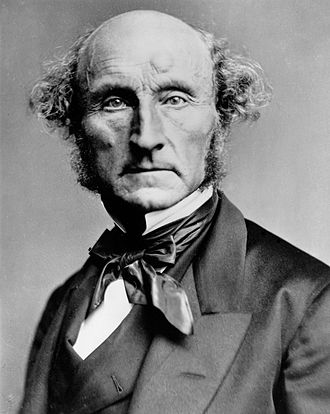
John Stuart MillJohn Stuart Mill
Quote
"As every reader of Representative Government soon discovers, it was Mill himself who undermined his own argument for universal inclusion by posing a counterargument based on consideration of competence. In the course of his discussion, he explicitly asserted that the criterion of competence must take priority over any principle, whether categorical or utilitarian, that makes inclusion in the demos a matter of general right among all adults subject to the laws... Mill brought into the open a problem that had been glossed over by some of his most illustrious predecessors. Yet in justifying an exclusionary demos Mill did no more than make implicit what had generally been implicit in all previous democratic theory and practice."
John Stuart MillJohn Stuart Mill
Quote
"We are far too apt to think of Mill as a technically philosophical writer, because we cannot help thinking of him as the author of the Logic, and to forget that he, no less than Bentham and the other utilitarians, is primarily dominated by the practical interest of the social reformer. He is really far more interested in the question of how, “once the general happiness is recognized as the ethical standard,” this ideal is to be practically realized, than in the question of the ethical criterion and its proof."
John Stuart MillJohn Stuart Mill

More on Time

View all →
Quote
"Most mathematicians prove what they can, von Neumann proves what he wants." Once in a discussion about the rapid growth of mathematics in modern times, von Neumann was heard to remark that whereas thirty years ago a mathematician could grasp all of mathematics, that is impossible today. Someone asked him: "What percentage of all mathematics might a person aspire to understand today?" Von Neumann went into one of his five-second thinking trances, and said: "About 28 percent."
John von NeumannJohn von Neumann