Quote
"Im not a millionaire but Im very comfortable doing what I do, and Im more productive now than I was in my mid-20s. Its all down to functionality eventually. If youre functional it doesnt matter if youre mad."
A
Alan Moore"Mind has come up with this brilliant way of looking at the world — science — but it can’t look at itself. Science has no place for the mind. The whole of our science is based upon empirical, repeatable experiments. Whereas thought is not in that category, you can’t take thought into a laboratory. The essential fact of our existence, perhaps the only fact of our existence – our own thought and perception is ruled off-side by the science it has invented. Science looks at the universe, doesn’t see itself there, doesn’t see mind there, so you have a world in which mind has no place. We are still no nearer to coming to terms with the actual dynamics of what consciousness is."
Alan Moore is an English author known primarily for his work in comics including Watchmen, V for Vendetta, The Ballad of Halo Jones, Swamp Thing, Batman: The Killing Joke, Superman: Whatever Happened to the Man of Tomorrow? and From Hell. He is widely recognised among his peers and critics as one of the best comic book writers in the English language. Moore has occasionally used such pseudonyms as
"Im not a millionaire but Im very comfortable doing what I do, and Im more productive now than I was in my mid-20s. Its all down to functionality eventually. If youre functional it doesnt matter if youre mad."
"I don’t really feel, with the recent films, that they have stood by what I assumed were their original principles. So I asked for DC Comics to send all of the money from any future TV series or films to Black Lives Matter."
"Anarchy – anarchon – no leaders. Which means, everybody is a leader. You can’t have an official set of rules for anarchy. I tend to think such connections casually, and break and form and break and form throughout our lives. If you look back ten years, you will remember a group of friends who you were productively involved with at that time, now some of them have drifted away, new people have come in. These are more naturalistic linkages, which exist while there is a need for them to exist. It’s more like the way ants work."
"Annie Besant’s book where she put forward the idea that theosophical mystical energies could be portrayed as colours or abstract shapes was practically the invention of abstract art. A lot of artists rushed out and read it and suddenly thought, ‘oh God you could, you could portray love as a colour, or depression as a colour” All of a sudden abstract art happens, a flowering out of occultism."
"What I would prefer to have is to have a kind of magic where we say, "OK, we’re going to do a magical performance on this night, at this time. You come along, if you don’t think it’s magical, that’s fine. We’ll show you. We’ll show you what we mean, and you judge for yourself." That’s only fair. So a lot of the magic we do tends to gravitate toward the practical end, toward something that is tangible. Where you’ve got a record at the end of it, a performance at the end of it, a painting at the end of it. You’ve conjured some energy, some idea, some information from somewhere and put it in a tangible form. You conjure something into existence in a literal sense. A rabbit out of a hat. Something out of nothing. That’s one level to it, but there’s a lot of background to that. That’s the stuff that people see, that’s the end result of the process. But we also do a lot of ritual work purely on our own."
"B. F. Skinner actually put forward – and this is a measure of scientific desperation over consciousness – the idea that consciousness was a weird vibrational by-product of the vocal cords. That we did not actually think. We thought we thought because of this weird vibration caused by the vocal cords. This shows the lengths that hard science will go to to banish the ghost from the machine."
"I appeal to all pupils, students and young people, asking you to focus on the horizons that are opening up for you, and which you could only dream of a year ago. Our future will depend on your desire for education and moral values as well as on your entrepreneurial spirit."
"We have created a wealthy society with tens of millions of talented, resourceful individuals who play virtually no role whatsoever as citizens. Bringing these people in — with their networks of influence, their knowledge, and their resources — is the key to creating the capacity for shared intelligence that we need to solve our problems."
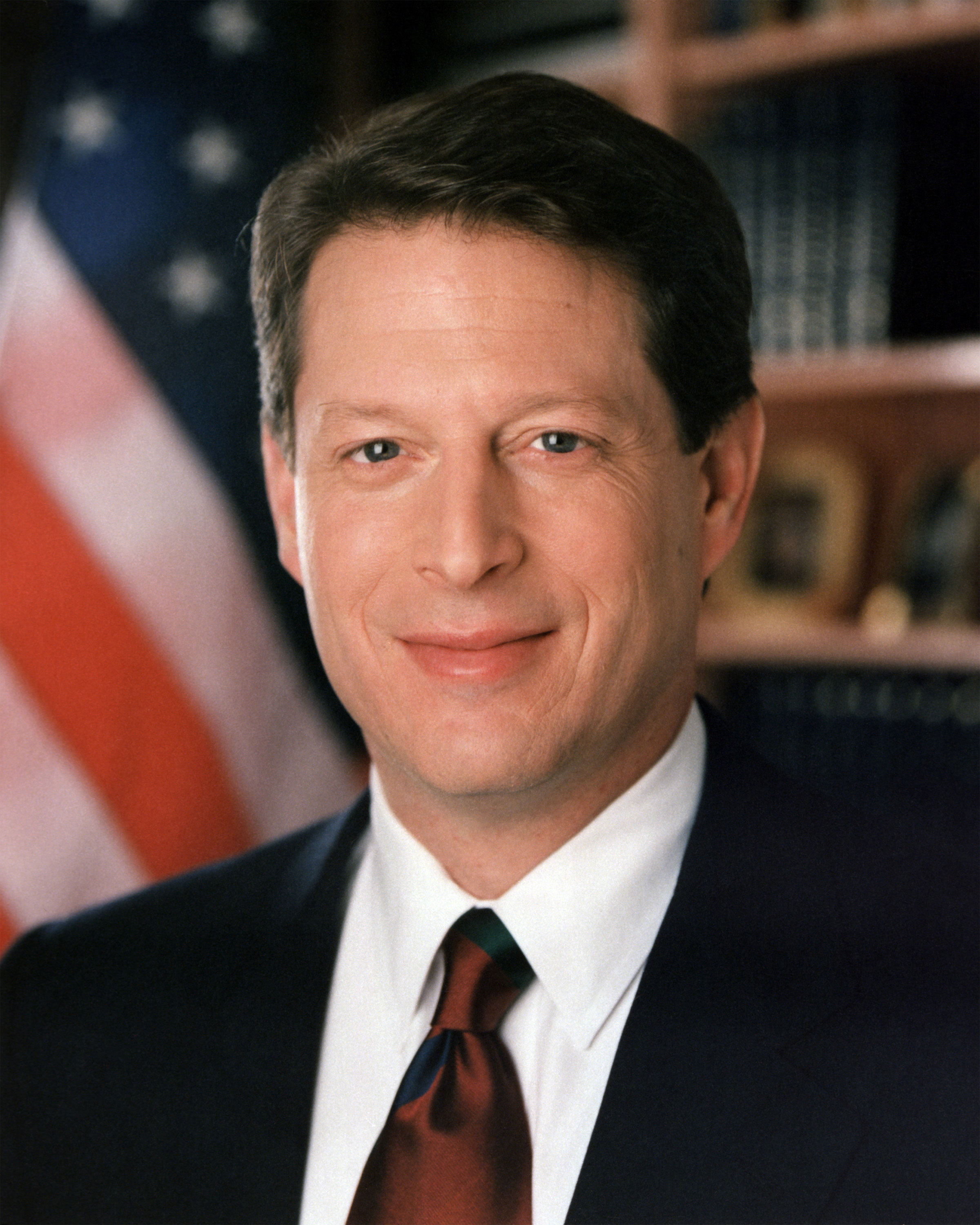 Al Gore
"We are shocked when we see educators, timid before criticism and confused about first principles, betray their trust. And we wonder what can be that philosophy of education which believes that young people can be trained to the duties of citizenship by wrapping their minds in cotton wool."
"An [hypertext] encyclopaedia will be an overall attempt by the knowledgeable, the learned societies or anyone else, to represent the state-of-the-art in their field. An encyclopaedia will be a living document, as up to date as it can be, instantly accessible at any time. It will contain carefully authored explanations and summaries of the subject, as well as computer-generated indexes of literature. A reference to a paper from the encyclopaedia conveys authority and acceptance by academic society. A measure of a paper’s standing may be conveyed by the number of links it is away from an encyclopaedia."
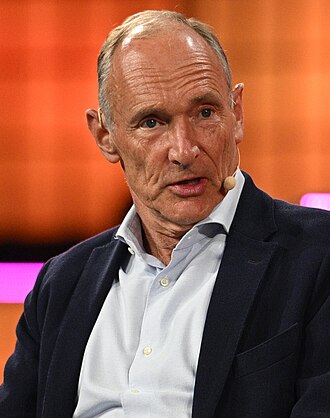 Tim Berners-Lee
"A sample of the modern debate, which neatly summarizes the anti-reductionist position is provided by Grene (1974). She points out that in principle a one-level ontology—the belief, for example, that with increasing knowledge all science will become an account of the world in the language of, say, atomic events—contradicts itself. This is so because such a belief, to be meaningful, requires an ontology which admits both atomic events and cognition. Here at once a second level is smuggled in! It is logically possible... that there might be no levels in between those of atomic events and cognition (that in essence is Descartess position) but the sciences of chemistry and biology consist of some well-tested conjectures that there are such intermediate levels as are represented by molecules, cells, organelles, organs, and organisms."
"All competent thinkers agree with Bacon that there can be no real knowledge except that which rests upon observed facts. This fundamental maxim is evidently indisputable if it is applied, as it ought to be, to the mature state of our intelligence. But, if we consider the origin of our knowledge, it is no less certain that the primitive human mind could not, and indeed ought not to, have thought in that way. For if, on the one hand, every Positive theory must necessarily be founded upon observations, it is, on the other hand, no less true that, in order to observe, our mind has need of some theory or other. If in contemplating phenomena we did not immediately connect them with principles, not only would it be impossible for us to combine these isolated observations, and therefore to derive profit from them, but we should even be entirely incapable of remembering facts, which would for the most remain unnoted by us. Thus there were two difficulties be overcome: the human mind had to observe in order to form real theories, and yet had to form theories of some sort before it could apply itself to a connected series of observations. The primitive human mind, therefore, found itself involved in a vicious circle, from which it would never have had any means of escaping, if a natural way of the difficulty had not fortunately found by the spontaneous development of Theological conceptions. ...chimerical hopes ..exaggerated ideas of mans importance in the universe to which the Theological Philosophy ...at the commencement, ...afforded an indispensable stimulus without the aid which we cannot, indeed, conceive how the primitive human mind would have been induced to undertake any arduous labours."
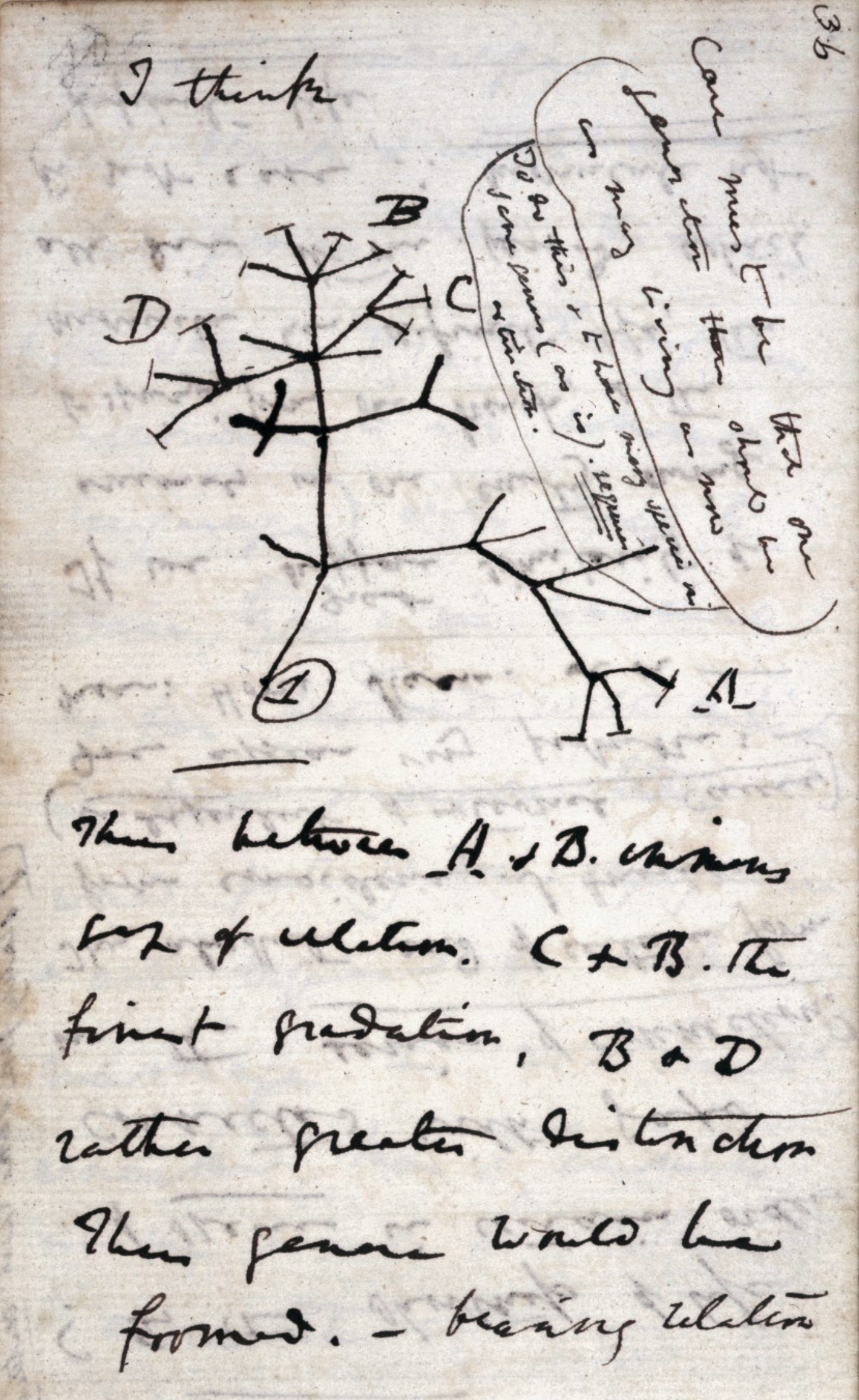 Theory