SHAWORDS

Money is different from all other commodities: other things being equa — Murray Rothbard

"Money is different from all other commodities: other things being equal, more shoes, or more discoveries of oil or copper benefit society, since they help alleviate natural scarcity. But once a commodity is established as a money on the market, no more money at all is needed. Since the only use of money is for exchange and reckoning, more dollars or pounds or marks in circulation cannot confer a social benefit: they will simply dilute the exchange value of every existing dollar or pound or mark. So it is a great boon that gold or silver are scarce and are costly to increase in supply. But if government manages to establish paper tickets or bank credit as money, as equivalent to gold grams or ounces, then the government, as dominant money-supplier, becomes free to create money costlessly and at will. As a result, this inflation of the money supply destroys the value of the dollar or pound, drives up prices, cripples economic calculation, and hobbles and seriously damages the workings of the market economy."
M
Murray Rothbard
Murray Rothbard
author41 quotes

Murray Newton Rothbard was an American economist of the Austrian School, economic historian, political theorist, and activist. Rothbard was a central figure in the 20th-century American libertarian movement, particularly its right-wing strands, and was a founder and leading theoretician of anarcho-capitalism. He wrote over twenty books on political theory, history, economics, and other subjects.

More by Murray Rothbard

View all →
Quote
"A parent does not have the right to aggress against his children, but also that the parent should not have a legal obligation to feed, clothe, or educate his children, since such obligations would entail positive acts coerced upon the parent and depriving the parent of his rights. The parent therefore may not murder or mutilate his child, and the law properly outlaws a parent from doing so. But the parent should have the legal right not to feed the child, i.e., to allow it to die. The law, therefore, may not properly compel the parent to feed a child or to keep it alive. (Again, whether or not a parent has a moral rather than a legally enforceable obligation to keep his child alive is a completely separate question.) This rule allows us to solve such vexing questions as: should a parent have the right to allow a deformed baby to die (e.g., by not feeding it)? The answer is of course yes, following a fortiori from the larger right to allow any baby, whether deformed or not, to die. (Though, as we shall see below, in a libertarian society the existence of a free baby market will bring such "neglect" down to a minimum.)"
M
Murray Rothbard
Quote
"All my life, it seems, I have hated the guts of Max Lerner. Now, make no mistake: there is nothing personal in this rancor. I have never met, nor have I ever had any personal dealings with, Max. No, my absolute loathing for Max Lerner is disinterested, cosmic in its grandeur. Its just that ever since I was a toddler, this ugly homunculus, this pretentious jackass, has been there, towering over the American ideological scene. In the fifty-five years that I have been aware of Maxs presence, in all of his many permutations and combinations and seeming twists and turns, he has taken the totally repellent position at every step of the way."
M
Murray Rothbard
Quote
"Let me take the liberty of being uncharitable but truthful.Rothbard had a problem. He thought he was a great economist, but practically nobody within the profession agreed and most of them had never heard of him. Rothbard had a solution. He was ignored because he held extreme pro-market views, which were ideologically unpopular in the academy. Rothbard had a problem. Milton Friedman held extreme pro-market views--not as extreme as Rothbards, but far enough from academic orthodoxy so that the same effect should have existed. But Milton Friedman not only wasnt ignored, he was viewed within the profession as a leading figure--despite his unpopular political views. Rothbard had a solution--to persuade himself and his followers that Milton Friedman was really one of them instead of one of us, hence his acceptance by the profession didnt contradict Rothbards view of the reason for Rothbards non-acceptance.Maintaining that claim was difficult--at one point I remember being told by a Rothbard supporter, explaining why he was not going to publish a letter of mine in his journal that contained quotes from my father inconsistent with Rothbards account of my fathers views, that if Rothbard and Friedman disagreed about what Friedmans views were, Rothbard was right."
M
Murray Rothbard

More on Dil

View all →
Quote
"Mister Toombs was willing to dissolve the Union to save slavery, Mister Phillips, to save liberty; while Mister Seward, denounced and derided by both, declared that the deepest instinct of the American people was for union. Reserved rights. State rights, limited powers, the advantages of union and disunion, were the cucumbers from which we were busily engaged in distilling light, overlooking the fact of nationality in discussing the conditions of union. We were speculating upon costume. We gravely proved that the clothes were the clothes of a woman, or of a child, without seeing that whatever the clothes might be there was a full-grown man inside of them. "The Constitution is a contract between sovereign States", shouted Mister Toombs, "let Georgia tear it and separate". "The Constitution is a league with hell", calmly replied Mister Phillips, "let New York cut off New Orleans to rot alone". "Oh, dear! it"s a dreadful dilemma", whimpered President Buchanan. "States have no right to secede, and the United States have no right to coerce. Oh, dear me! it"s perfectly awful! I"m the most patriotic of men, but what shall I do? what shall I do?" Separate! Cut off! Secede! It was of a living body they spoke, which, pierced anywhere, quivered everywhere."
Wendell PhillipsWendell Phillips
Quote
"Its never a matter of ethics versus pragmatism; its a question of which informs the other. Humans have shown themselves capable of almost unlimited imagination and innovation—qualities that could be said to define human beings. People have used this capacity to do both great good and great harm. The point is that when humans set their minds to doing something, its frequently possible. It makes sense to first ask what people want to do and why, from an ethical standpoint, and then get to the pragmatic how-to questions. The very process of asking whats right is how people fill out ethics in praxis, to meet new demands and dilemmas, new social conditions and contexts. Anarchism, then, brings an egalitarian ethics out into the world, making it transparent, public, and shared. It maintains an ethical orientation, while continually trying to put such notions into practice, as flawed as the effort might be. When other people come into contact with this ethical compass, they will hopefully "get it" and incorporate the same values into their lives, because it works. It offers directionality to political involvement and buttresses peoples efforts to remake society. It turns surviving into thriving. Thats the crucial difference between a pragmatic versus ethical impulse: people, in cooperative concert, qualitatively transform one anothers lives."
E
Ethics
Quote
"Thats... the big discovery of this principle of computational equivalence of mine. ...This is something which is kind of a follow-on to Gödels theorem, to Turings work on the ... that there is this fundamental limitation built into science, this idea of computational irreducibility that says that even though you may know the rules by which something operates, that does not mean that you can readily... be smarter that it and jump ahead and figure out what its going to do."
S
Stephen Wolfram
Quote
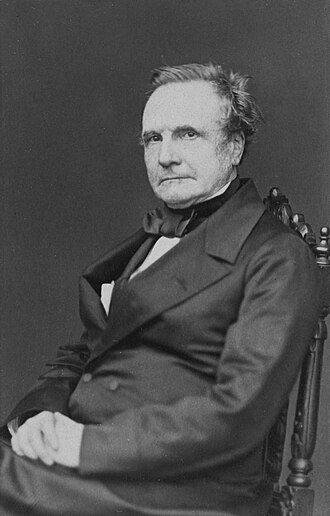
"The establishment of "The Times" newspaper is an example, on a large scale, of a manufactory in which the division of labour, both mental and bodily, is admirably illustrated, and in which also the effect of domestic economy is well exemplified. It is scarcely imagined, by the thousands who read that paper in various quarters of the globe, what a scene of organized activity the factory presents during the whole night, or what a quantity of talent and mechanical skill is put in action for their amusement and information."
Charles BabbageCharles Babbage