SHAWORDS

My specific purpose for the first wiki was to create an environment wh — Ward Cunningham

"My specific purpose for the first wiki was to create an environment where we might link together each others experience to discover the pattern language of programming. I had previously worked with a HyperCard stack that was set up to achieve the same kind of goal. I knew people liked to read and author in that HyperCard stack, but it was single user."
W
Ward Cunningham
Ward Cunningham
author66 quotes

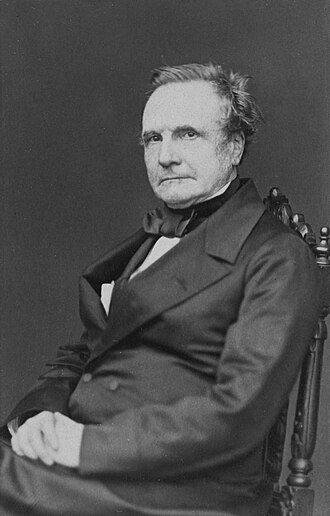
Howard G. Cunningham is an American computer programmer, who developed the first wiki and co-authored the Manifesto for Agile Software Development. Called a pioneer, and innovator, he also helped create both software design patterns and extreme programming. He began coding the WikiWikiWeb in 1994, and installed it on c2.com on March 25, 1995, as an add-on to the Portland Pattern Repository. He co-

More by Ward Cunningham

View all →
Quote
"Often as you move comments around and have similar comments adjacent to each other, you find that half of the words can be cut out. Because a sentence says it all if the sentence is in just the right place. On Wards wiki, the process has been called "refactoring," which is what we call the process in software. Wards wiki is about software and it has software people on it, so they call it refactoring. Anyplace else it would probably be called editing. So on Wards wiki, refactoring is an ongoing process. The assumption is that when something turns out to not be ideal, it will be refactored again. Everything is subject to refactoring."
W
Ward Cunningham
Quote
"It was a turning point in my programming career when I realized that I didnt have to win every argument. Id be talking about code with someone, and Id say, "I think the best way to do it is A." And theyd say, "I think the best way to do it is B. Id say, "Well no, its really A." And theyd say, "Well, we want to do B." It was a turning point for me when I could say, "Fine. Do B. Its not going to hurt us that much if Im wrong. Its not going to hurt us that much if Im right and you do B, because, we can correct mistakes. So lets find out if its a mistake."
W
Ward Cunningham

More on Success

View all →
Quote
"One of the first major steps in the direction of modern skepticism came through the victory of Occam over Aquinas in a controversy about language. The statement that modi essendi were replaced by modi significandi et intelligendi, or that ontological referents were abandoned in favor of pragmatic significations, describes broadly the change in philosophy which continues to our time. From Occam to Bacon, from Bacon to Hobbes, and from Hobbes to contemporary semanticists, the progression is clear: ideas become psychological figments, words become useful signs. ... To one completely committed to this realm of becoming, as are the empiricists, the claim to apprehend verities is a sign of . Probably we have here but a highly sophisticated expression of the doctrine that ideals are hallucination and that the only normal, sane person is the healthy extrovert, making instant, instinctive adjustments to the stimuli of the material world."
O
Ontology
Quote
"I, too, believed it was impossible to change the existing society into one that would be for the benefit of all; neither could I espouse any given ideal for society. But [...] I felt that even if one did not have an ideal vision of society, one could have one’s work to do. Whether it was successful or not was not our concern; it was enough that we believed it to be a valid work. The accomplishment of that work, I believed, was what our real life was about. Yes. I want to carry out a work of my own; for I feel that by so doing our lives are rooted in the here and now, not in some far-off ideal goal."
P
Purpose
Quote
"The war was finished. It had lasted ten equivalent years and taken ten million lives. Thus it was neither of long duration nor of serious attrition. It hadnt any great significance; it was not intended to have. It did not prove a point, since all points had long ago been proven. What it did, perhaps, was to emphasize an aspect, sharpen a concept, underline a trend. On the whole it was a successful operation. Economically and ecologically it was of healthy effect, and who should grumble? And after wars, men go home. No, no, men start for home. Its not the same."
R
R. A. Lafferty