Quote
"Because we cannot save ourselves without contesting oligarchic control, the fight for democracy and justice and the fight against environmental breakdown are one and the same."
G
George Monbiot"Oligarchic control [...] thwarts rational decision-making, because the short-term interests of the elite are radically different to the long-term interests of society."
George Joshua Richard Monbiot is an English journalist, author, and environmental and political activist. He writes a regular column for The Guardian and has written several books.
"Because we cannot save ourselves without contesting oligarchic control, the fight for democracy and justice and the fight against environmental breakdown are one and the same."
"[On the Intergovernmental Panel on Climate Change report from Working Group 1 of the w:IPCC Fifth Assessment Report] What the report describes, in its dry, meticulous language, is the collapse of the benign climate in which humans evolved and have prospered, and the loss of the conditions upon which many other lifeforms depend. Climate change and global warming are inadequate terms for what it reveals. The story it tells is of climate breakdown."
"[T]he Earth’s systems are highly complex, and complex systems do not respond to pressure in linear ways. When these systems interact (because the world’s atmosphere, oceans, land surface and lifeforms do not sit placidly within the boxes that make study more convenient), their reactions to change become highly unpredictable. Small perturbations can ramify wildly. Tipping points are likely to remain invisible until we have passed them. We could see changes of state so abrupt and profound that no continuity can be safely assumed. Only one of the many life support systems on which we depend – soils, aquifers, rainfall, ice, the pattern of winds and currents, pollinators, biological abundance and diversity – need fail for everything to slide."
"Climate change requires the end of capitalism, full-stop. Capitalism has three innate characteristics that drive us towards destruction, and it doesn’t really matter what kind of capitalism it is, whether it’s Keynesian, whether it’s neo-liberal capitalism, whether it’s corporate capitalism, or whether it’s crony capitalism. The problem is not with the adjective, but with the noun. Capitalism has three innate characteristics that drive us towards destruction… firstly, that it generates and relies upon perpetual growth... (Second:)…the idea that our right to own natural wealth equates to the amount of money that we’ve got in the bank or we can borrow. So, you can take as much natural wealth away from other people as you like.... The third characteristic is the one that really ensures that people go along with capitalism, the idea that everyone can pursue — and can expect to find — private luxury."
"On December 12, 2015, official delegates and observers gathered in the plenary hall of COP21. It was there that the Paris Agreement was announced. The end result of decades of work, world leaders hailed it as a great success. "The Paris Agreement is a monumental triumph for people and our planet," UN secretary general Ban Ki-Moon tweeted immediately after the closing gavel fell. Many environmental groups praised the outcome as well…Not everyone agreed. Joining Michael Brune on Democracy Now!, British journalist and author George Monbiot countered, "What I see is an agreement with no timetables, no targets, with vague, wild aspirations. Its almost as if its now safe to adopt 1.5 degrees centigrade as their aspirational target now that it is pretty well impossible to reach. I see a lot of backslapping, a lot of self-congratulation, and I see very little in terms of the actual substance that is required to avert climate breakdown." Monbiot wrote, "By comparison to what it could have been, its a miracle. By comparison to what it should have been, its a disaster."
"The power of consumerism is that it renders us powerless. It traps us within a narrow circle of decision-making, in which we mistake insignificant choices between different varieties of destruction for effective change. It is, we must admit, a brilliant con. It’s the system we need to change, rather than the products of the system. It is as citizens that we must act, rather than as consumers. [...] Only mass political disruption, out of which can be built new and more responsive democratic structures, can deliver the necessary transformation."
"Gentlemen, no fighting please. This is, after all, a council of war. (p. 26)"
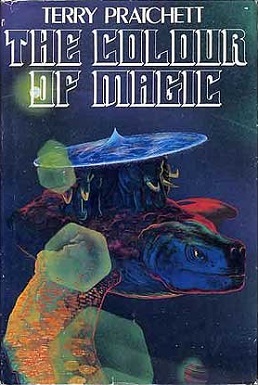 Discworld
"I should say that when people talk about capitalism its a bit of a joke. Theres no such thing. No country, no business class, has ever been willing to subject itself to the free market, free market discipline. Free markets are for others. Like, the Third World is the Third World because they had free markets rammed down their throat. Meanwhile, the enlightened states, England, the United States, others, resorted to massive state intervention to protect private power, and still do. Thats right up to the present. I mean, the Reagan administration for example was the most protectionist in post-war American history. Virtually the entire dynamic economy in the United States is based crucially on state initiative and intervention: computers, the internet, telecommunication, automation, pharmaceutical, you just name it. Run through it, and you find massive ripoffs of the public, meaning, a system in which under one guise or another the public pays the costs and takes the risks, and profit is privatized. Thats very remote from a free market. Free market is like what India had to suffer for a couple hundred years, and most of the rest of the Third World."
"The Dwarf sees farther than the Giant, when he has the Giants shoulders to mount on."
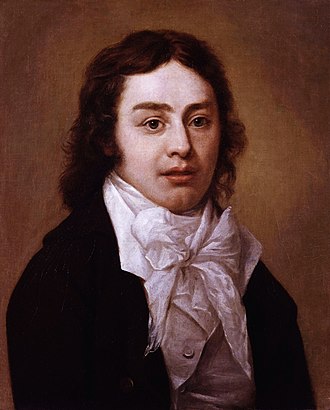 Samuel Taylor Coleridge
"If civilization has an opposite, it is war."
"A word of the faith that never balks, Here or henceforward it is all the same to me, I accept Time absolutely. It alone is without flaw, it alone rounds and completes all, That mystic baffling wonder alone completes all. (23)"
"I am dominated by one thing, an irresistible, burning attraction towards the abstract. The expression of human feelings and the passions of man certainly interest me deeply, but I am less concerned with expressing the motions of the soul and mind than to render visible, so to speak, the inner flashes of intuition which have something divine in their apparent insignificance and reveal magic, even divine horizons, when they are transposed into the marvellous effects of pure plastic art."
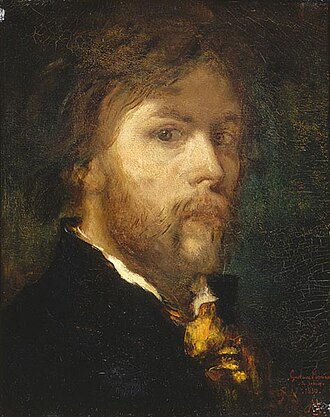 Gustave Moreau