Quote
"The tool user, provided the tool is made well, need not, and indeed should not, know anything about the tool."
P
Peter Drucker"Once a year ask the boss, "What do I or my people do that helps you to do your job?" and "What do I or my people do that hampers you?"
Peter Ferdinand Drucker was an Austrian American management consultant, educator, and author, whose writings contributed to the philosophical and practical foundations of modern management theory. He was also a leader in the development of management education, and contributed to the popularization of the concepts known as management by objectives and self-control, and he has been described as "th
"The tool user, provided the tool is made well, need not, and indeed should not, know anything about the tool."
"Communism is evil. Its driving forces are the deadly sins of envy and hatred."
"Decisions exist only in the present."
"Frederick W. Taylor was the first man in recorded history who deemed work deserving of systematic observation and study. On Taylors scientific management rests, above all, the tremendous surge of affluence in the last seventy-five years which has lifted the working masses in the developed countries well above any level recorded before, even for the well-to-do. Taylor, though the Isaac Newton (or perhaps the Archimedes) of the science of work, laid only first foundations, however. Not much has been added to them since – even though he has been dead all of sixty years."
"Engineers speak half–jokingly about Murphys Law: " If anything can go wrong, it will." But complexity stands under a second law as well. Let me call it Druckers law: "If one thing goes wrong, everything else will, and at the same time."
"There is a point at which a transformation has to take place."
"The smart way to keep people passive and obedient is to strictly limit the spectrum of acceptable opinion, but allow very lively debate within that spectrum - even encourage the more critical and dissident views. That gives people the sense that theres free thinking going on, while all the time the presuppositions of the system are being reinforced by the limits put on the range of the debate."
"With much care and skill power has been broken into fragments in the American township, so that the maximum possible number of people have some concern with public affairs."
"The people reign over the American political world as God rules over the universe. It is the cause and the end of all things; everything rises out of it and is absorbed back into it."
"I should say that when people talk about capitalism its a bit of a joke. Theres no such thing. No country, no business class, has ever been willing to subject itself to the free market, free market discipline. Free markets are for others. Like, the Third World is the Third World because they had free markets rammed down their throat. Meanwhile, the enlightened states, England, the United States, others, resorted to massive state intervention to protect private power, and still do. Thats right up to the present. I mean, the Reagan administration for example was the most protectionist in post-war American history. Virtually the entire dynamic economy in the United States is based crucially on state initiative and intervention: computers, the internet, telecommunication, automation, pharmaceutical, you just name it. Run through it, and you find massive ripoffs of the public, meaning, a system in which under one guise or another the public pays the costs and takes the risks, and profit is privatized. Thats very remote from a free market. Free market is like what India had to suffer for a couple hundred years, and most of the rest of the Third World."
"I appeal to all pupils, students and young people, asking you to focus on the horizons that are opening up for you, and which you could only dream of a year ago. Our future will depend on your desire for education and moral values as well as on your entrepreneurial spirit."
"We have created a wealthy society with tens of millions of talented, resourceful individuals who play virtually no role whatsoever as citizens. Bringing these people in — with their networks of influence, their knowledge, and their resources — is the key to creating the capacity for shared intelligence that we need to solve our problems."
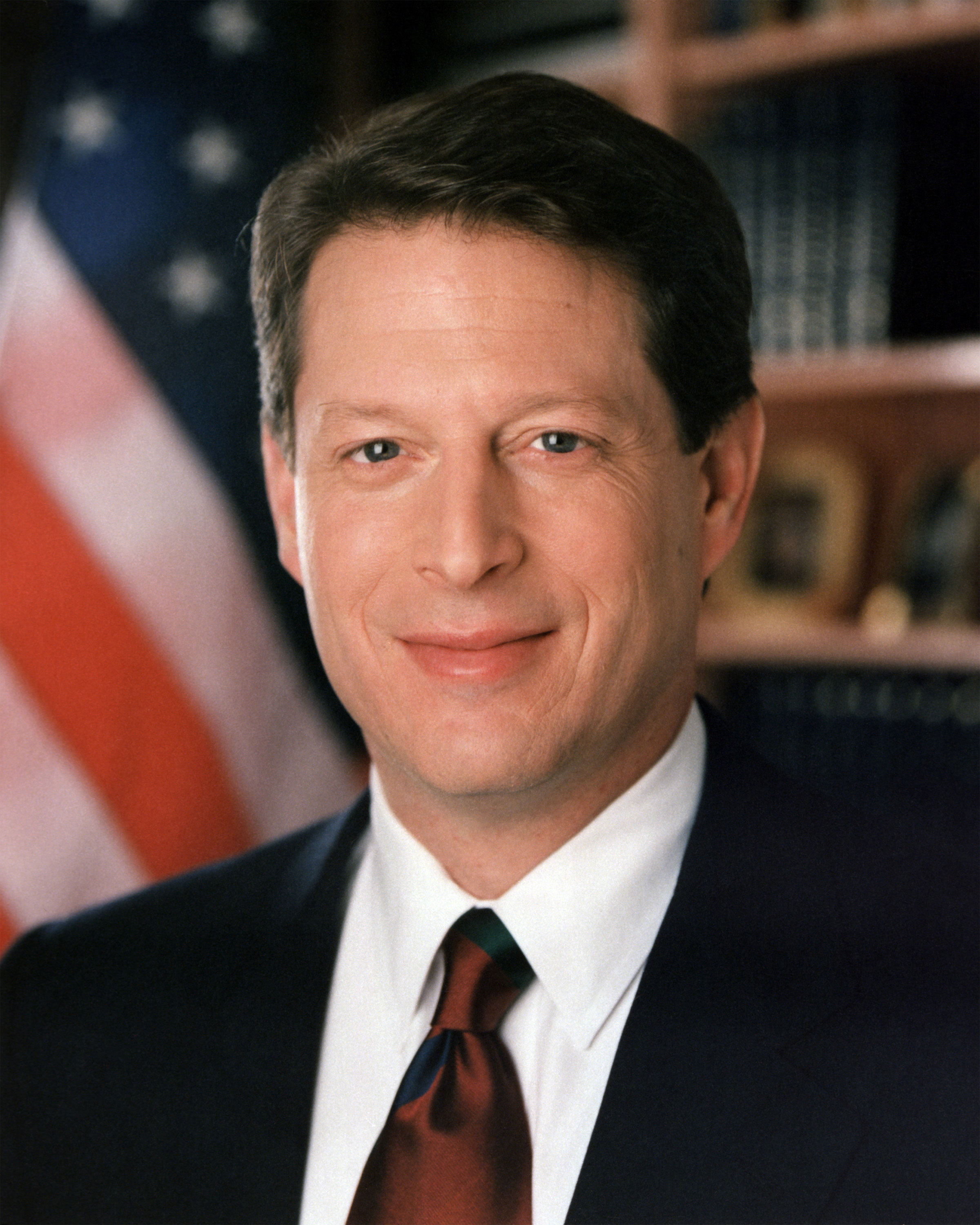 Al Gore