Quote
"The main task of any theory of evolution is to explain adaptive complexity, that is, to explain the same set of facts that Paley used as evidence of a creator."
C
Creationism"One way or another, Darwinists meet the question ‘Is Darwinism true?’ with an answer that amounts to an assertion of power: ‘Well, it is science, as we define science, and you will have to be content with that.’ Some of us are not content with that, because we know that the empirical evidence for the creative power of natural selection is somewhere between weak and non-existent. Artificial selection of fruit flies or domestic animals produces limited change within the species, but tells us nothing about how insects and mammals came into existence in the first place. In any case, whatever artificial selection achieves is due to the employment of human intelligence consciously pursuing a goal. The whole point of the blind watchmaker thesis, however, is to establish what material processes can do in the absence of purpose and intelligence. That Darwinist authorities continually overlook this crucial distinction gives us little confidence in their objectivity."
Creationism is the religious belief that nature, and aspects such as the universe, Earth, life, and humans, originated with supernatural acts of divine creation, and is often pseudoscientific. In its broadest sense, creationism includes various religious views, which differ in their acceptance or rejection of modern scientific concepts, such as evolution, that describe the origin and development o
"The main task of any theory of evolution is to explain adaptive complexity, that is, to explain the same set of facts that Paley used as evidence of a creator."
"Does the evolutionary doctrine clash with religious faith? It does not. It is a blunder to mistake the Holy Scriptures for elementary textbooks of astronomy, geology, biology, and anthropology."
"IN SHORT, three concepts, evolution, in the minimal sense of "descent with modification" (no "emergence," no "higher and lower" allowed), variation, in the sense of Mendelian micromutation, tiny changes in the structure or arrangement of the genes, the ultimate material of heredity (no sweeping or sudden alterations allowed), and natural selection, the decrease in frequency of those variants that happen in each successive generation to be less well adapted than others to their particular environment: these three form a tight circle within which, in happy self-confirmation, neo-Darwinian thinking moves. To those who believe in it, this circle is an ample intellectual dwelling place, roomy enough in fact to house all the immense achievements of modern biological research. To those not so convinced, however, the circle seems a strangely constricted one. They may even agree with the Professor Emeritus of Zoology at Cambridge that ‘no amount of argument, or clever epigram, can disguise the inherent improbability of orthodox (Darwinian) theory.’"
"There is no evidence, scientific or otherwise, to support the theory of evolution."
"The non-existent was not; the existent was not at that time. The atmosphere was not nor the heavens which are beyond. What was concealed? Where? In whose protection? Was it water? An unfathomable abyss?"
"On one point all biologists are agreed: the basic concept of organic evolution has, for a century, stood unrivaled. … The status of natural selection is not quite so high. True, it is the only theory we have; but when judged as a working hypothesis it is disappointing to find so little advance in a hundred years. … No amount of argument, or clever epigram, can disguise the inherent improbability of orthodox theory; but most biologists feel it is better to think in terms of improbable events than not to think at all."
"Be the change that you wish to see in the world."
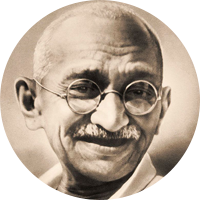 Mahatma Gandhi
"we are engaged in a grim experiment never before attempted. We are subjecting whole populations to exposure to chemicals which animal experiments have proved to be extremely poisonous and in many cases cumulative in their effect. These exposures now begin at or before birth and-unless we change our methods-will continue through the lifetime of those now living. No one knows what the result will be, because we have no previous experience to guide us."
"pity this busy monster, manunkind, not. Progress is a comfortable disease: your victim (death and life safely beyond) plays with the bigness of his littleness"
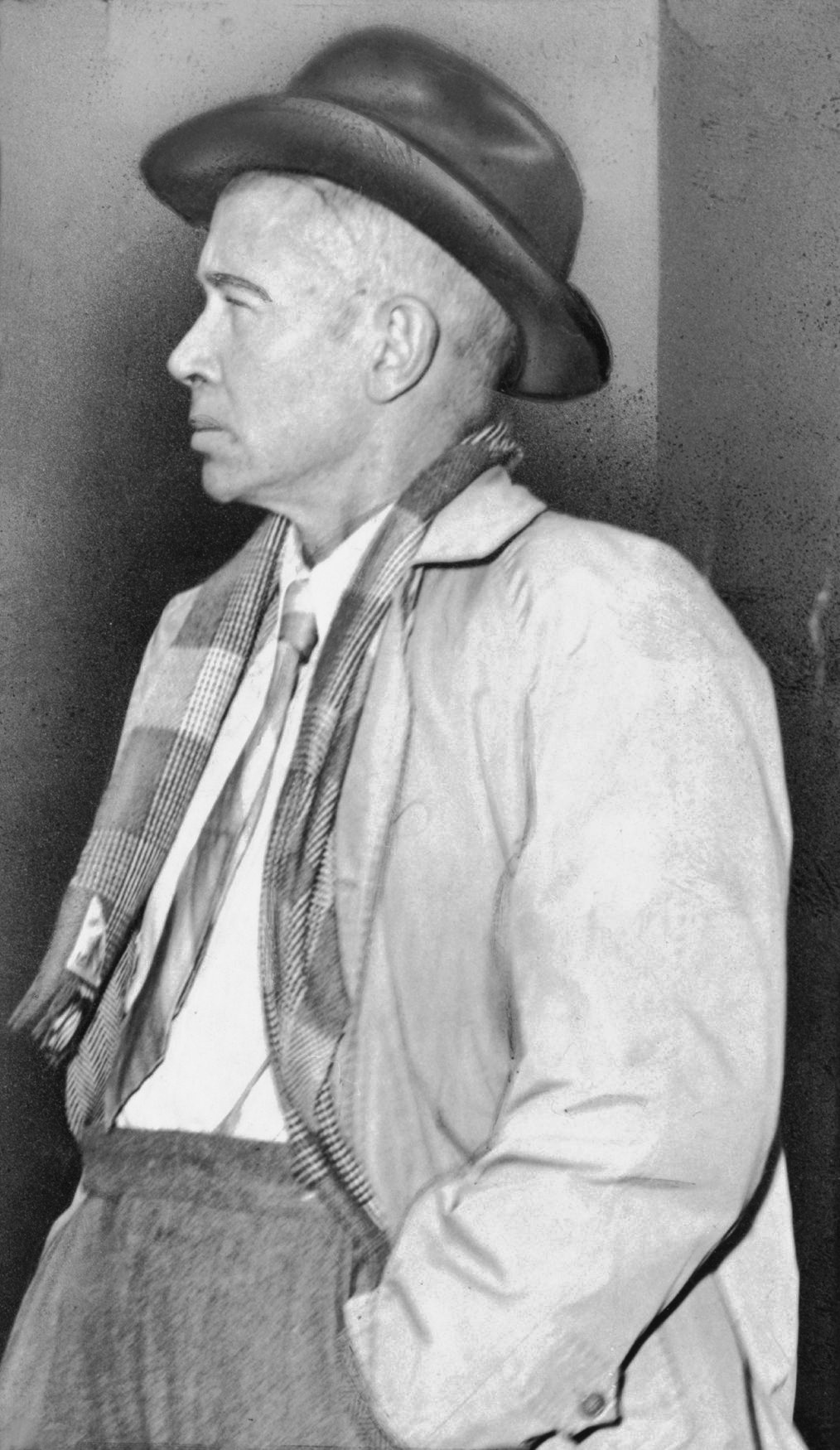 E. E. Cummings
"I believe that the unity of man as opposed to other living things derives from the fact that man is the conscious life of himself. Man is conscious of himself, of his future, which is death, of his smallness, of his impotence; he is aware of others as others; man is in nature, subject to its laws even if he transcends it with his thought."
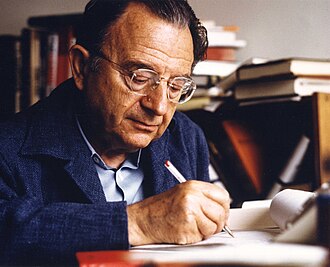 Erich Fromm
"“We need brains, is the bottom line,” Ivy said. “We’re not hunter-gatherers anymore. We’re all living like patients in the intensive care unit of a hospital. What keeps us alive isn’t bravery, or athleticism, or any of those other skills that were valuable in a caveman society. It’s our ability to master complex technological skills. It is our ability to be nerds. We need to breed nerds.”"
"I have been clinically depressed for most of my life. I once used drugs to fix it. Then I stopped. I stopped because I decided they were making me stupid, and Id rather be miserable than stupid. I am what I am."